
Houseplant
Lesser Glory-Of-The-Snow
Scilla sardensis
Also known as Scilla sardensis
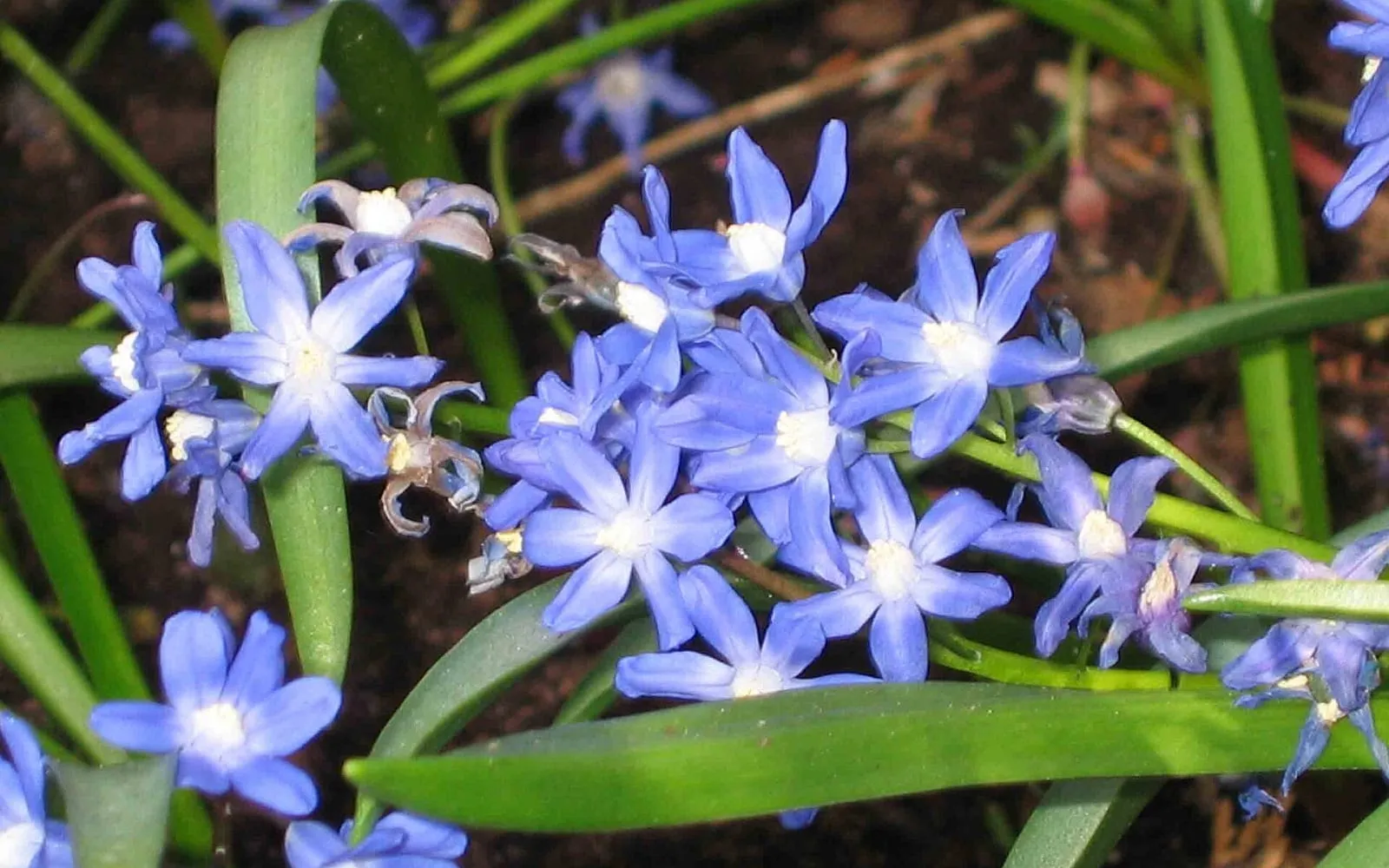
Grow Scilla sardensis for the deepest gentian-blue of the glory-of-the-snows, its small starry flowers carrying little or no white eye.
At a glance
- Difficulty
- Easy
- Water
- While in leaf and flower; dry when dormant
- Light
- Full sun to bright light
- Temperature
- Hardy to about -15 deg C
- Humidity
- Average
- Hardiness
- USDA 4-8, RHS H5, hardy to -15 C
- Type
- Perennial
- Height
- 10-15 cm
- Native to
- western Turkey
A bulb from the mountains of western Turkey, where snow lies over it in winter and the slopes dry out in summer. It needs a cold winter and a dry summer rest, so it does poorly in mild, wet-summer climates on heavy soil. The zone numbers say nothing about summer wet, which rots the resting bulb.
Hardiness zones describe winter cold alone. Summer heat, humidity, rainfall and the length of the growing season decide as much, so treat the range as the outer limit rather than as a recommendation.
Toxic if eaten
- Do not eat
- The bulb most of all, and the leaves
- Harm from
- Eating it
- Affects
- People, cats and dogs
Scilla sardensis, the lesser glory-of-the-snow, is toxic if eaten. Squills (Scilla, which now includes Chionodoxa) contain cardiac glycosides of the bufadienolide group, and swallowing the bulb or leaves can cause drooling, vomiting and diarrhoea and, in larger amounts, an irregular heartbeat. The ASPCA lists glory-of-the-snow as toxic to dogs and cats, and the RHS and poison-plant references class the squills as harmful if eaten. Small bulbs are easy for a child or dog to swallow, so plant them out of reach and wash your hands after handling them. Get medical or veterinary advice if any quantity of bulb has been eaten.
Sources: ASPCA toxic and non-toxic plants, RHS potentially harmful garden plants
About
Scilla sardensis takes its species name from Sardis, the ancient city in what is now western Turkey, near which the plant grows wild. Gardeners came to it as a Chionodoxa and often still find it under that heading, though its correct genus is now Scilla. Among the small early bulbs sold as glory-of-the-snow, this is the one to choose when depth of colour matters more than size, because it has the richest, most saturated blue of the group.
It is a plant of few demands and one clear trait. In a mixed spring planting it gives a strong patch of blue, and it works well by contrast with the paler blues around it.
Appearance and character
The flowers are small, at most a couple of centimetres wide, but a well-grown bulb carries several to a stem, making a dense little cluster of stars. The colour is a deep gentian to cobalt blue that runs almost to the centre, with only a trace of white at the throat or none at all, which is the surest way to distinguish it from the boldly white-eyed forms of its relatives.
Slim, arching leaves accompany the flowers and stay low. They yellow soon after the last bloom fades and vanish quickly, so the plant contributes nothing to the border once its brief season closes.
Where it is from
Native to the mountains of western Turkey, it grows on open stony ground and in short turf where snow covers it through winter and meltwater soaks the soil in early spring. The slopes then dry through summer, and the bulb rests below the surface through the drought. Most of its visible growth happens in the few weeks between thaw and drought.
Grow it around that cycle. A cold, moist dormancy suits it, a damp spring feeds leaf and flower, and a dry summer rest helps build the following season’s display.
How it grows
Plant the small bulbs in autumn, roughly eight centimetres down and a similar distance apart, in ground that lets water through freely. Heavy soil benefits from grit forked into the planting area, and in a pot a gritty loam-based compost holds the balance between moisture in spring and dryness in summer.
The bulb increases by offsets and by seed, and self-sowing is its main route to a colony. Deep blue seedlings appear around the parent plants and reach flowering size after a few years, gradually filling the space around the original planting. Left undisturbed, a group thickens on its own.
Through the seasons
Winter leaves the bulb dormant and cold-proof within its range, with its flower buds already formed below ground.
Spring is its moment, when clusters of dark blue stars open early and hold for a couple of weeks in cool conditions.
Summer is the dry rest. Leaves shrivel, seed drops, and the bulb needs no water and no digging around it.
Autumn is when new bulbs are planted and established ones quietly resume rooting as the ground cools and takes up moisture again.
Care difficulty
This is a beginner’s bulb. It needs no support, no annual lifting where the site suits it, and no feeding programme, and it takes hard frost without harm. The main thing that kills it is waterlogged summer soil, which rots the resting bulb before it can start into growth.
Watering
In open ground the bulb needs no watering, since spring rainfall supports leaf and flower and the soil dries naturally as it goes dormant. Watering only becomes an issue in a container.
A potted bulb should be kept lightly moist while it is in active growth and then allowed to dry out fully as the leaves die down. Withhold water through summer, keeping the pot under cover from rain, and start watering again only as autumn cool and damp return.
Warning signs, diseases and pests
A bulb that fails to emerge in spring has usually rotted during a wet summer rest, and better drainage is the fix. Raise or grit the planting site, and give potted bulbs a dry dormancy away from watered plants.
Slugs and snails find the young foliage and flower buds tempting in mild, damp spells, so shield the shoots as they break the surface. Aphids may settle on the stems and are washed or rubbed off.
Growing environment
A sunny, open position deepens the flower colour and keeps the stems sturdy, but the bulb also copes with the light, temporary shade of deciduous shrubs. It is best planted in a group, at the front of a bed, in a gravel garden, or naturalised in short grass left uncut until the leaves have withered.
Free drainage matters above all else. On clay, plant into a gritted raised bed or a container instead of into ground that stays wet through the dormant months.
Feeding
An established planting in fair soil is self-sufficient. Where vigour flags, a dilute liquid feed while the leaves are green replenishes the bulb, and a light dressing of leaf mould in autumn keeps naturalised groups healthy.
Avoid strong nitrogen feeds, which produce floppy leaves and disappointing flowering.
Troubleshooting
How do I tell it from other glory-of-the-snows? Look at the centre of the flower. Scilla sardensis is a deep, near-uniform blue with little or no white eye, while its relatives show a clear white centre.
Why has flowering tailed off? Overcrowding or a wet summer rest are the usual causes. Divide congested bulbs after the foliage dies, and check that the site drains.
Can I flower it in a pot indoors? Only somewhere cool and bright with a proper cold winter rest; warmth stops the buds forming.
Do I need to deadhead? No, and leaving the seed heads is how the colony spreads. Remove them only if self-sowing is not wanted.
Is it toxic to pets? Yes. The bulbs contain cardiac glycosides and can cause vomiting, diarrhoea and, in larger amounts, an irregular heartbeat in cats and dogs. Plant them where pets cannot dig them up.
Lesser Glory-Of-The-Snow problem guides
Not sure what is wrong? See the common houseplant pests guide.