
Houseplant
Asian Spring Bulb
Scilla forbesii
Also known as Scilla forbesii
Grow Scilla forbesii, the china-blue glory-of-the-snow from Turkey's mountains, for early stars that seed themselves into a lasting spring colony.
At a glance
- Difficulty
- Easy
- Water
- While in leaf and flower; dry when dormant
- Light
- Full sun to bright light
- Temperature
- Fully hardy; needs a cold winter and a dry summer rest
- Humidity
- Average
- Hardiness
- USDA 4-8, RHS H6, hardy to -20 C
- Type
- Perennial
- Height
- 10-15 cm
- Native to
- Western Turkey
A fully hardy bulb from the mountains of western Turkey, flowering in early spring and then resting as a dormant bulb through summer. It needs a bright spot, free-draining soil and a cold winter, and it rots in soil that stays wet through its summer rest. Hot, humid winters with no cold spell suit it poorly, which the zone numbers do not show.
Hardiness zones describe winter cold alone. Summer heat, humidity, rainfall and the length of the growing season decide as much, so treat the range as the outer limit rather than as a recommendation.
Toxic if eaten
- Harm from
- Eating it
- Affects
- People, cats and dogs
Scilla forbesii, the asian spring bulb, is toxic if eaten. Squills (Scilla and related genera) contain cardiac glycosides, and the ASPCA lists squill as toxic to cats and dogs. This species is less studied than sea squill, which is far more potent, so treat it with caution. Swallowing the bulb or leaves can cause drooling, vomiting, diarrhoea and, in larger amounts, an irregular heartbeat. The bulb holds the most. Keep bulbs and plants away from pets and children, and wash your hands after handling them.
Sources: ASPCA toxic and non-toxic plants, RHS potentially harmful garden plants
About
Scilla forbesii belongs to the handful of small bulbs sold as glory-of-the-snow, a name that comes from Turkish mountainsides where the flowers push through the last melting cover of snow. Nurseries listed the plant for decades under the genus Chionodoxa, and many packets still do, but botanists now place that group back in Scilla because of the flower structure. Whichever label a supplier prints, the bulb behaves the same way. It flowers very early, thickens into a colony across a few springs, then disappears below ground for all summer.
It is not a bulb for a long season of interest. You get a brief, generous scatter of blue at the front of a border or in short turf, arriving before most perennials have shown a leaf. Over time, a single planting can turn into a self-sown drift with little further effort from the gardener.
Appearance and character
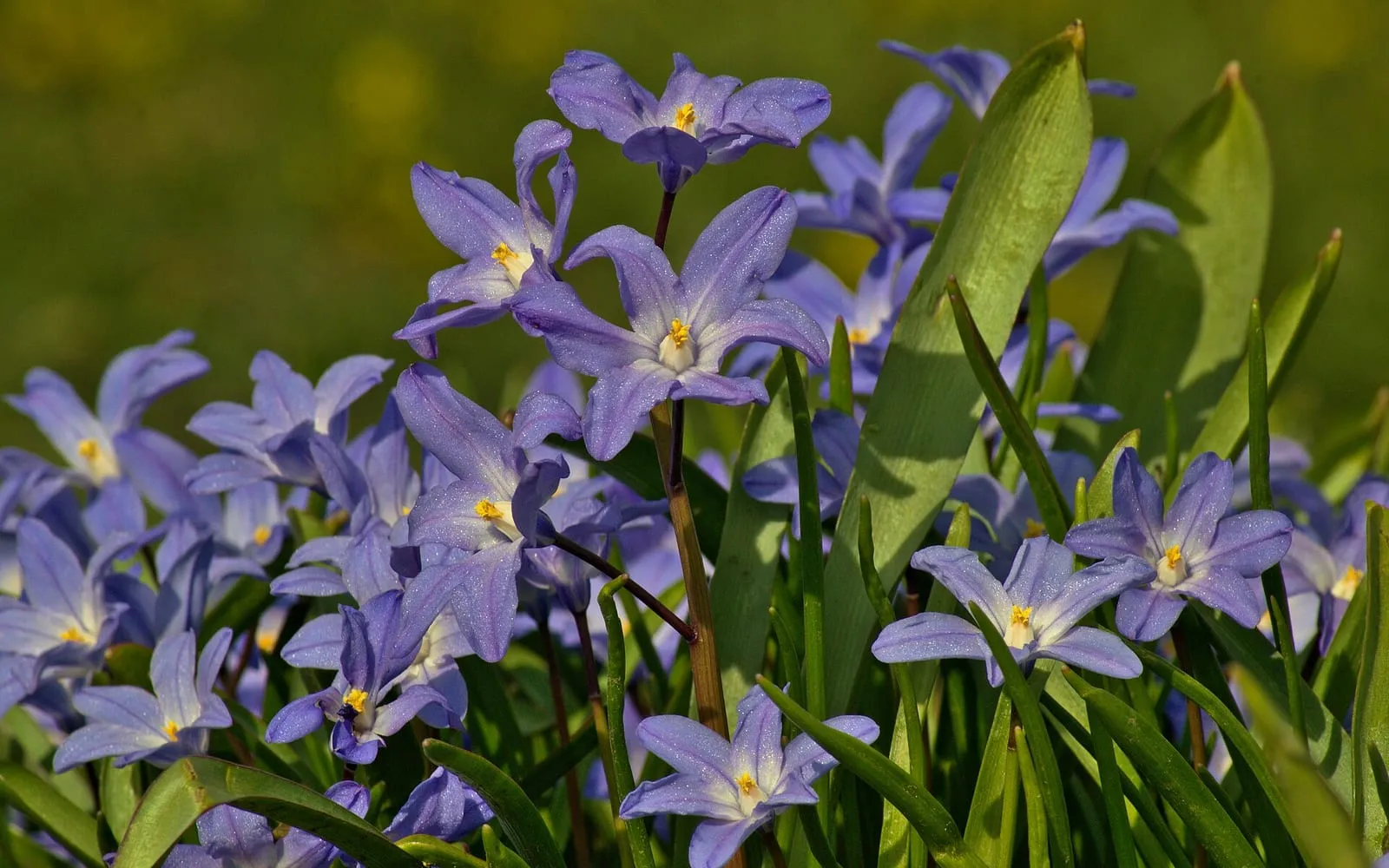
A mature bulb throws up a loose spray of six to a dozen upward-facing stars, each around two centimetres across and coloured a soft china-blue that fades to a clean white eye at the centre. The petals open flat and face outward instead of hanging, which is one of the easier ways to separate the old Chionodoxa kinds from the nodding bells of a true Siberian squill.
Two or three narrow, channelled leaves emerge with the flower stem and lie close to the ground. They are never showy, and they yellow and collapse within weeks of the last flower fading, so the plant needs no tidying beyond the removal of spent stems if seed is not wanted.
Where it is from
The species is native to the mountains of western Turkey, where it grows on stony slopes and in the thin soil at the edge of melting snowfields at moderate altitude. That habitat explains its rhythm. Growth begins when the ground thaws and moisture is plentiful, flowering follows within days, and the bulb has completed its year and gone dormant before the summer sun bakes the slope dry.
The care follows that pattern. It needs a cold, wet dormancy under snow, a short damp spring for leaf and flower, and a dry, undisturbed rest through the hottest months. Soil that stays wet all summer prevents that rest and rots the bulb.
How it grows
Plant the small, rounded bulbs in early autumn, around eight centimetres deep and the same apart, setting them in ground that drains freely. They dislike a rich, sticky bed, so work a handful of grit into heavy soil. In a pot, a gritty loam-based compost suits them better than a peat-based houseplant mix.
Once settled, the bulb multiplies in two ways at once. It splits off small offset bulbs around the parent, and it sets abundant seed that ripens as the leaves die back. Ants carry the seed short distances, so a colony spreads outward year on year and often appears in gaps in paving or lawn some distance from where it started. Leave the seed heads in place if you want the colony to spread.
Through the seasons
Winter holds the bulb dormant below ground, and cold does it no harm within its range; the buds are already formed inside the bulb, waiting for the thaw.
Spring is the flowering season. Leaves and flower stems rise together as the soil warms, the stars open for two to three weeks, and pollinated flowers begin swelling their seed capsules.
Summer is dormancy. Foliage withers, seed scatters, and the bulb needs no water and no disturbance until autumn.
Autumn is the planting and settling window, when new bulbs go in and established ones begin rooting for the year ahead.
Care difficulty
Few spring bulbs are easier. Given free-draining ground and a position that is not waterlogged in summer, the plant needs no feeding, staking, deadheading or lifting, and it tolerates the cold. The main mistake is heavy, wet soil that stays sodden through the dormant months, which turns the resting bulb to mush.
Watering
Outdoors, rainfall covers the plant’s needs and no watering is required in an ordinary spring. The bulbs draw on natural moisture while in leaf and then want the ground to dry as they die down.
In a container the balance matters more, since a pot cannot drain and dry like open ground. Water while leaves and flowers are present, then stop entirely once the foliage yellows and keep the compost dry and the pot on its side or under cover through summer, bringing it back into growth only when autumn cooling begins.
Warning signs, diseases and pests
A soft, discoloured bulb that fails to appear in spring has almost always rotted in summer wet. Move plantings off any spot that puddles, and lift potted bulbs into dry storage for their rest.
Slugs and snails graze the tender young leaves and can shred a flower before it opens, so a scatter of grit or wool around emerging shoots helps in a damp spring. Aphids occasionally cluster on the flower stems and are best rubbed off by hand or washed away with a jet of water.
Growing environment
An open position in sun or dappled light suits it, and it copes with the light shade cast by deciduous shrubs before they leaf up. Naturalised in short grass, in a gravel garden or along the front of a bed, it looks far more natural than when dotted singly, so plant in generous groups and let them fill in.
The one condition to insist on is sharp drainage. A raised bed, a gritty pot or a slope all suit the bulb well, while a low, wet corner will usually rot it.
Feeding
An established colony in reasonable soil needs nothing. Where growth looks weak, a dilute balanced liquid feed once or twice while the leaves are green builds the bulb up for next year, and a light autumn topdressing of leaf mould around a border planting keeps the soil in good condition.
Avoid rich, nitrogen-heavy feeding, which pushes soft leaf at the expense of flower.
Troubleshooting
Is this the same as Chionodoxa? Yes. Scilla forbesii is the current name for a plant long sold as Chionodoxa forbesii, and the two names refer to one species.
Why are there leaves but no flowers? Usually a dormancy spent too warm or too wet, or a colony so congested the bulbs are starved. Lift and space a crowded clump after the leaves die down.
Can I grow it as a houseplant? It can be flowered in a cool pot, but it needs a cold, dry winter rest to set buds and a bright spring, so an unheated porch suits it better than a warm room.
How do I get it to spread? Leave the seed heads on, resist tidying the dying foliage, and let ants and self-sowing spread the plant over a few seasons.
Is it safe around pets? No. Squills contain cardiac glycosides, so keep the bulbs and plants away from pets and children, and plant bulbs where dogs cannot dig them up.
Asian Spring Bulb problem guides
Not sure what is wrong? See the common houseplant pests guide.