
Houseplant
Triostar
Stromanthe tonckat
Also known as Stromanthe tonckat
How to grow Stromanthe tonckat, a green-and-pink prayer plant sold under the triostar name, with notes on its muddled naming, warmth and humidity needs.
At a glance
- Difficulty
- Easy
- Water
- When the top few centimetres of mix have dried
- Light
- Bright indirect light to light shade
- Temperature
- Warm; keep above about 13 deg C
- Humidity
- Average to high
- Hardiness
- USDA 10-12, RHS H1b, hardy to 13 C
- Type
- Perennial
- Height
- 50-100 cm
- Native to
- tropical South America
A tender tropical foliage plant from tropical South America, growing in warm, humid, shaded to filtered light. It needs warmth, humidity and bright indirect light, and it cannot take frost or chill. It is safest above about 13 deg C, and cold, wet compost or dry air spoils it.
Hardiness zones describe winter cold alone. Summer heat, humidity, rainfall and the length of the growing season decide as much, so treat the range as the outer limit rather than as a recommendation.
Not known to be toxic
Stromanthe tonckat, the triostar, is not recorded among the seriously toxic plants, and related plants in its group are not listed as toxic by the ASPCA or the RHS. A pet or child that chewed a leaf would be unlikely to come to real harm beyond a possible mild stomach upset.
Sources: ASPCA toxic and non-toxic plants, RHS potentially harmful garden plants
A quieter member of the genus
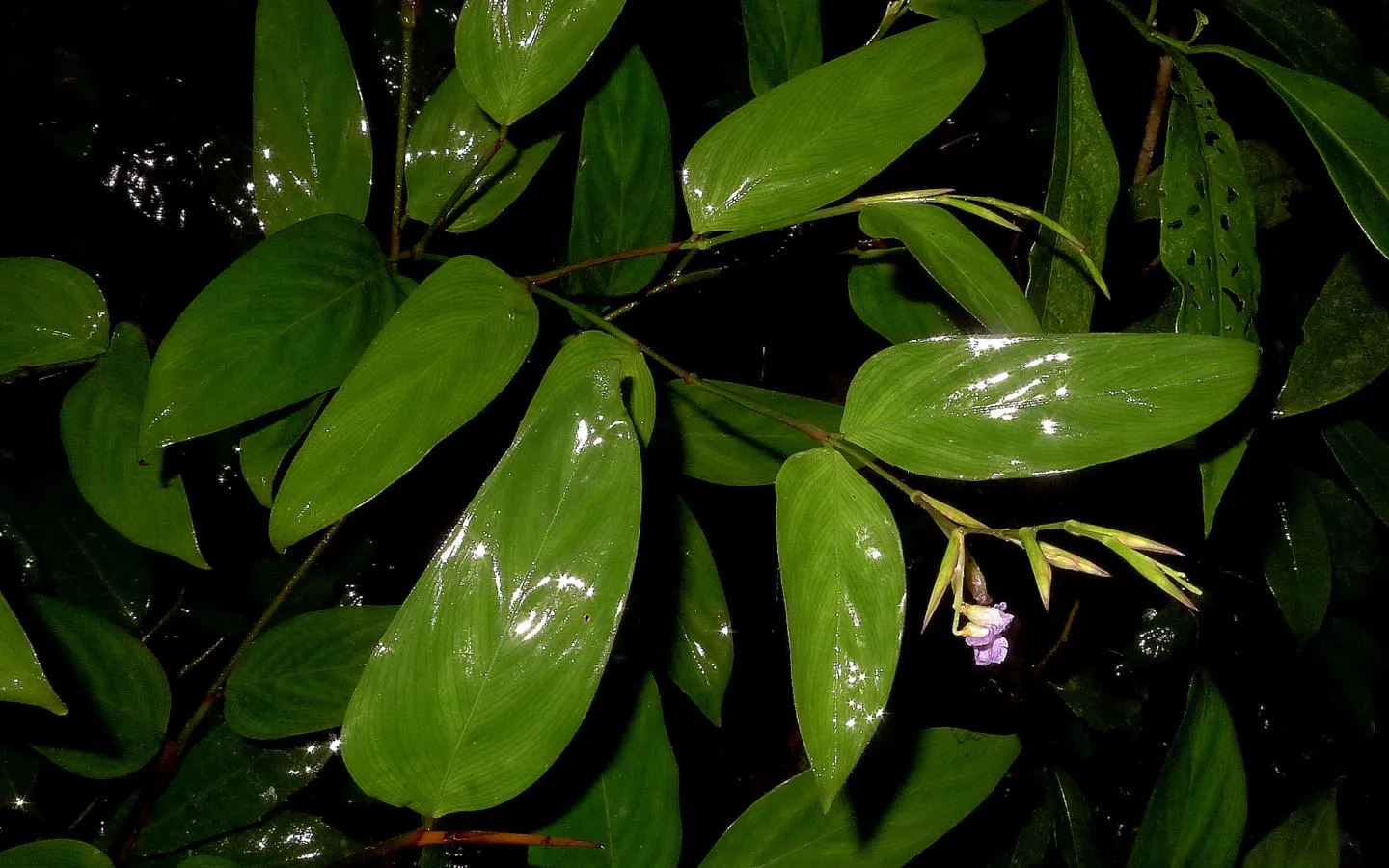
Where the variegated ‘Triostar’ selection carries cream and white all over its blades, Stromanthe tonckat is plainer. The upper surface is a clean glossy green, often with a paler stripe running down the midrib, and here and there a plant shows a little cream marbling instead of the bold banding of its variegated relative. The underside identifies it as a prayer-plant relative, flushed pink to deep maroon across the whole leaf. Held on slim upright stalks that pack together, the strap-to-lance-shaped leaves build a tight, reed-like clump that widens from the base as new shoots crowd in.
Untangling the name on the label
The trade calls almost any pink-backed Stromanthe a triostar, and that has left Stromanthe tonckat in a muddle. It reaches shops under the same popular name as Stromanthe sanguinea, the two are closely allied, and the botanical standing of tonckat itself is unsettled, so a plant sold under one label may sit under another in a reference book. For a grower this matters less than it sounds. Every plant in the genus needs the same care, so once you recognise the glossy green blade over a pink underside you can care for it without pinning down which name is correct. Treat the label as a rough guide and use the leaf as your practical clue.
Prayer movement, morning and night
Stromanthe tonckat belongs to the prayer-plant family Marantaceae, and it keeps the family habit. At dusk the leaves lift from their daytime spread and draw upright, exposing the coloured undersides, then open out again after dawn. A thickened joint at the top of each leaf stalk, the pulvinus, works the hinge by moving water in and out of its cells to change their firmness. The cycle keeps its own clock, so the plant folds each evening whether the room is bright or dim. A clump that holds its leaves flat and slack around the clock usually has roots that are too cold or too dry.
Where it comes from
The species grows wild across the warm lowlands of tropical South America, in the shaded, humid understorey where rain is frequent and the temperature holds steady all year. Sunlight arrives already broken by the canopy above, the air stays damp, and the soil is loose, leafy and quick to drain. None of that includes frost, drought or harsh overhead light, so an indoor plant does best in a warm, sheltered, well-lit corner instead of on a hot sill or in a chilly hall.
Getting the light right
Give Stromanthe tonckat bright light that never lands on it directly. A position a step back from an east or north window suits it, as does a spot behind a light curtain at a sunnier aspect. Direct sun bleaches the green and dulls the pink of the reverse, and a scorched leaf browns along its edge. In gloom the plant grows slowly, the new leaves come up small, and the clump loosens and leans. Rotate the pot a quarter turn each week to keep the upright shoots balanced instead of crowding towards the glass.
Watering through the year
Let the top few centimetres of the mix dry, then water thoroughly and drain off whatever runs through, so the compost stays evenly damp and never waterlogged. This genus dislikes the salts in hard tap water, which collect in the leaf and singe the margins, so rainwater or filtered water is the safer choice where the mains runs hard. As the light fades in autumn, growth eases and the roots want far less water. Cold, wet compost in winter is the surest way to rot them, so err towards keeping the mix on the dry side while the plant rests.
Warmth, humidity and potting
Ordinary room warmth of roughly eighteen to twenty-six degrees C keeps Stromanthe tonckat growing, and it must not drop below about thirteen degrees C. Shield it from draughts, radiators and cold glass. Damp air matters as much as warmth; a tray of wet gravel under the pot, a group of nearby plants or a small humidifier all raise the moisture around the leaves, while a dry room crisps the edges. Pot into a loose, peat-free mix loosened with bark and perlite so water drains through fast. Feed fortnightly at half strength from spring to early autumn, and stop over winter. To make more plants, divide a mature clump in spring into rooted sections, each carrying a few shoots, and grow them on somewhere warm and humid.
Reading the trouble signs
Brown, crisp leaf edges point to dry air or hard-water salts, so lift the humidity and switch your watering to rainwater. Yellowing leaves standing over soggy, sour compost mean the roots are drowning, and the fix is to dry the mix and improve the drainage. Faded, washed-out green with weak new growth calls for brighter, filtered light. In warm dry air the usual pests move in: spider mites speckle the undersides and cast fine webs, and mealybugs settle as white cottony spots where leaf meets stalk. Wipe the plant down, raise the humidity, and dab mealybugs with a cotton bud soaked in dilute alcohol before they spread through the clump.
Flowers and the resting months
Given a settled spot and a year or two to bulk up, a mature clump may push up short branched flower stems, most often as the days shorten. The blooms themselves are small and white, cupped inside stiff bracts that flush red or salmon, and the coloured bracts outlast the flowers by weeks. Nothing is lost by removing a spent stem once it browns. Through the darkest weeks the plant mostly stops, holding its leaves without adding new ones. Do not feed, water little, and wait for the lengthening light of spring to restart growth. A clump left cold and wet at this point can rot, while one kept warm and barely moist usually resumes quickly.
Quick answers
Is this the same as the cream-splashed triostar? No. Both are sold as triostar, but Stromanthe tonckat is the plain green form with a pink underside, while the heavily variegated plant is Stromanthe sanguinea.
Why do the leaf edges brown? Dry air or a build-up of tap-water minerals. Raise the humidity and water with rainwater.
Why has it stopped folding? Cold or thirst. Warm it, water it, and the nightly movement comes back.
How do I propagate it? Split a full clump in spring, keeping shoots and roots on each division.
Triostar problem guides
Not sure what is wrong? See the common houseplant pests guide.