
Houseplant
Fetssacco
Ischnosiphon puberulus
Also known as Ischnosiphon puberulus
How to grow Ischnosiphon puberulus, the fetssacco, a reed-like arrowroot relative of the Amazon understorey with softly downy leaves.
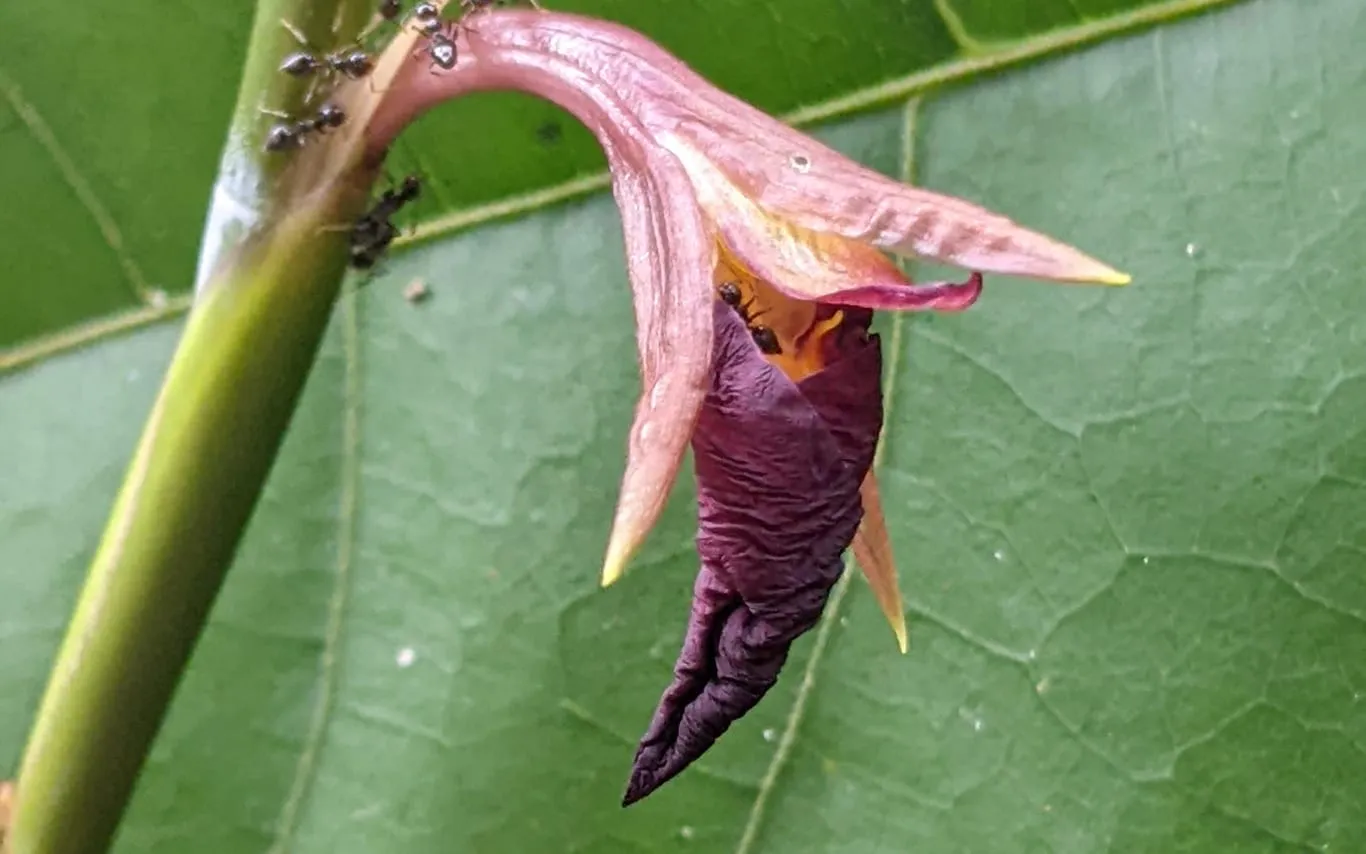
At a glance
- Difficulty
- Easy
- Water
- When the top few centimetres of mix have dried
- Light
- Bright indirect light to light shade
- Temperature
- Warm; keep above about 13 deg C
- Humidity
- Average to high
- Hardiness
- USDA 10-12, RHS H1b, hardy to 13 C
- Type
- Perennial
- Height
- 1-2 m
- Native to
- tropical South America
A tender tropical foliage plant from tropical South America, growing in warm, humid, shaded to filtered light. It needs warmth, humidity and bright indirect light, and it cannot take frost or chill. It is safest above about 13 deg C, and cold, wet compost or dry air spoils it.
Hardiness zones describe winter cold alone. Summer heat, humidity, rainfall and the length of the growing season decide as much, so treat the range as the outer limit rather than as a recommendation.
Not known to be toxic
Ischnosiphon puberulus, the fetssacco, is not recorded among seriously toxic plants, and related plants in its group are not listed as toxic by the ASPCA or the RHS. A pet or child that chewed a leaf would be unlikely to have more than a mild stomach upset.
Sources: ASPCA toxic and non-toxic plants, RHS potentially harmful garden plants
A reed of the Amazon understorey
Ischnosiphon puberulus belongs to the arrowroot family, the Marantaceae, alongside calatheas and prayer plants, but it grows taller and more reed-like than most of those windowsill plants. From a creeping underground rhizome it sends up slim, springy canes, each topped by a few broad, oblong blades on long sheathing stalks. The name puberulus refers to the fine down on the young canes and the underside of the leaves, which feels soft and gives the surface a faint sheen. This is an understorey plant from the dim forest floor, not a plant for bright, open conditions.
Across tropical South America, people use Ischnosiphon canes for weaving. The tough, pliant stems split cleanly and plait into baskets, sleeping mats and the long woven tube used to press the toxic juice out of grated cassava. The same flexibility shows in a potted specimen, whose upright canes bend and spring back instead of snapping.
Leaves that lift at dusk
Fetssacco has the daily leaf movement typical of its family. A swollen hinge of tissue sits where each blade joins its stalk, and this pulvinus tilts the leaves upward as evening falls and lays them flat again by first light. The plant therefore looks different at midday and at night. The blades are an even green, sometimes a shade lighter along the central vein, broad and drawn to a soft point, with the faint downy sheen underneath that gives the species its name. Older growth firms up and darkens while fresh leaves unroll from the cane tips a paler, tender green.
Where it belongs
This species grows in humid lowland forest, often on damp or seasonally flooded soil near creeks and river margins, in filtered understorey light. Warmth is constant there and the air rarely dries out, so indoor care should start from those conditions. It needs gentle light, steady warmth, moist air and a compost that stays lightly damp without becoming compacted.
Light without direct sun
Stand fetssacco in a bright room but out of any beam of direct sun, which scorches pale patches and fades the green blades within days. An east-facing sill, a spot a pace or two back from a brighter window, or the dappled light behind a light curtain all suit it. Deep shade causes thin canes, wider spacing between leaves and duller colour. Turn the pot every week or so, because the plant leans steadily towards its light source and grows lopsided if left facing one way.
Watering and moist air
Keep the compost lightly and evenly damp through the warm months, letting only the top few centimetres dry before you water again, and never allowing the pot to stand in a saucer of water. Tepid rainwater or filtered water suits it better than hard tap water, whose lime and chlorine can brown the fine leaf edges over time. Through the cooler, darker weeks growth slows and the plant uses less water, so let it dry a little further between waterings then. Humid air matters as much as the watering. Group it with other foliage, set it above a tray of damp gravel, or keep it in a naturally moist room such as a bathroom. That helps stop the leaf tips crisping.
Potting and compost
Pot it in a light, open mix that holds moisture yet lets surplus water drain freely, such as a peat-free houseplant compost loosened with fine bark, coir and a handful of perlite. The rhizome creeps sideways, so a wider pot suits it better than a deep, narrow one. Lift and refresh it each spring before it grows congested. Bury the rhizome only shallowly and firm the mix gently around the cane bases. A plant left too long in tired, compacted compost often browns and grows poorly, so regular repotting is worth the small effort.
Feeding
Through spring and summer, feed with a balanced liquid fertiliser diluted to half the label strength, roughly once a month while the plant is in active growth. The fine roots scorch easily on strong feed, so err on the weak side and flush the pot with plain water now and then to clear any build-up of salts. Stop feeding altogether once growth slows for winter, and wait a few weeks before feeding a freshly repotted plant.
Propagation
Division is the straightforward way to make more. In spring, lift the whole plant, tease or cut the rhizome into sections that each carry a few healthy canes and their own roots, and pot these up separately into the same open mix. Keep the divisions warm, humid and lightly shaded while they recover, and they usually root within a few weeks. Seed is seldom available and slower, so dividing the clump is the reliable route to new plants.
Problems
Brown, crisp leaf edges are the commonest complaint, almost always a sign of air too dry or water too hard instead of disease; raise the humidity and switch to rainwater. Faded, scorched blotches follow direct sun, so move the plant into softer light. A soft, collapsing base points to root rot from cold, wet compost, so cut away any mushy tissue, let the plant drain and water more sparingly after that. In warm, dry air spider mites may stipple the leaves with fine pale speckling and spin faint webbing beneath them, while mealybugs tuck white woolly dots into the leaf sheaths. Treat both by raising humidity and wiping the foliage with a damp cloth or a weak soap solution.
Is fetssacco a type of prayer plant? It sits in the same family, the Marantaceae, as the prayer plants and calatheas, and it shares their nightly leaf movement, though it grows as a taller, reed-like plant.
Why are the leaf tips turning brown? Dry air or hard tap water is the usual cause. Raise the humidity around the plant and water with rainwater or filtered water.
How much light does it need? Bright but indirect light suits it best, out of any direct sun, which scorches the soft blades.
Is it safe around pets? No serious toxicity is recorded for it, and related marantas are on the ASPCA’s non-toxic list, so a chewed leaf should cause no more than a mild stomach upset.
Fetssacco problem guides
Not sure what is wrong? See the common houseplant pests guide.