
Houseplant
Many-Spiked Monotagma Prayer Plant
Monotagma plurispicatum
Also known as Monotagma plurispicatum
How to grow Monotagma plurispicatum, a creeping Amazonian prayer-plant relative of the dim forest floor, and how to water and site it.
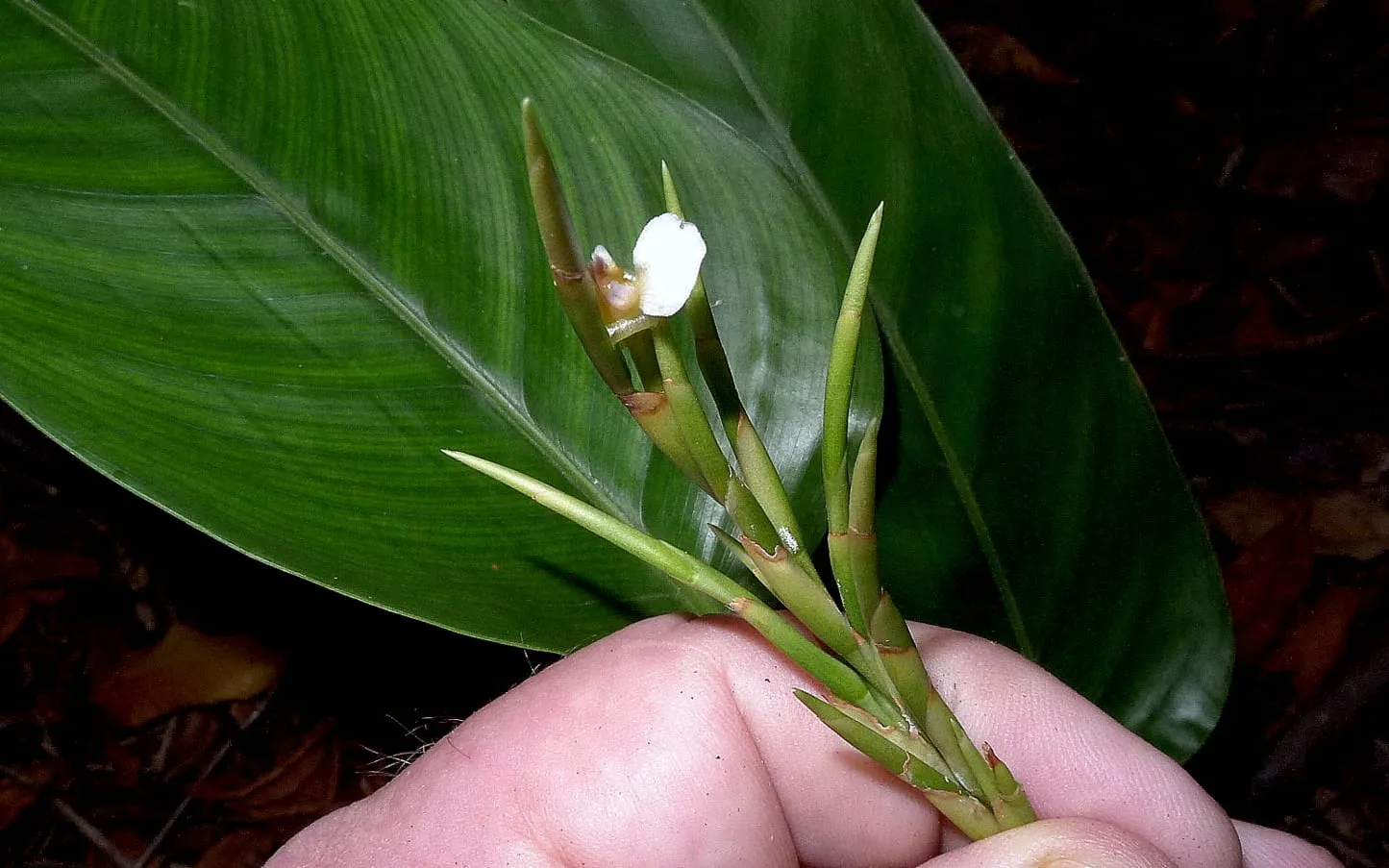
At a glance
- Difficulty
- Easy
- Water
- When the top few centimetres of mix have dried
- Light
- Bright indirect light to light shade
- Temperature
- Warm; keep above about 13 deg C
- Humidity
- Average to high
- Hardiness
- USDA 10-12, RHS H1b, hardy to 13 C
- Type
- Perennial
- Height
- 60-120 cm
- Native to
- Central America, tropical South America
A tender tropical foliage plant from tropical South America, growing in warm, humid, shaded to filtered light. It needs warmth, humidity and bright indirect light, and it cannot take frost or chill. It is safest above about 13 deg C, and cold, wet compost or dry air spoils it.
Hardiness zones describe winter cold alone. Summer heat, humidity, rainfall and the length of the growing season decide as much, so treat the range as the outer limit rather than as a recommendation.
Not known to be toxic
Monotagma plurispicatum, the many-spiked monotagma prayer plant, is not recorded among the seriously toxic plants, and related plants in its group are not listed as toxic by the ASPCA or the RHS. A pet or child that chewed a leaf would be unlikely to have more than a mild stomach upset.
Sources: ASPCA toxic and non-toxic plants, RHS potentially harmful garden plants
An American prayer plant of the forest floor
Monotagma is an American genus of the prayer-plant family, and Monotagma plurispicatum grows in the rainforests of Central America and tropical South America, through the Amazon basin. It is a slender herb of the deep forest floor, with leafy shoots rising from a creeping rhizome. It lives in dim, humid air beneath a tall, closed canopy where direct sun almost never reaches the ground. Plants of this kind spread slowly sideways over the years, forming loose patches among fallen leaves and tree roots.
Reading the name
The epithet plurispicatum means “many-spiked”, and it records a real feature: the plant carries several flower spikes instead of a single one. Monotagma sits within the prayer-plant family. While some of its relatives have finely marked foliage, this species is rarely grown and is more of a botanical curiosity than a showy patterned plant. The botanist Koernicke first described it as Ischnosiphon plurispicatus in 1862, and Karl Schumann transferred it to Monotagma in 1902. It is more widely spread than so seldom-grown a herb might suggest, growing from Honduras, Costa Rica and Panama south through Colombia, Venezuela and the Guianas to the western Amazon, Bolivia and northern Brazil.
What the plant looks like
Each leaf is carried on a long stalk that finishes in a short swollen joint, the pulvinus, just below the blade. That small hinge is typical of the family. It tilts the leaf to catch what light there is, and it powers the daily movement described below. The blades are the elongated ovals typical of forest-floor Marantaceae, held towards the scattered light that filters down through the canopy.
The daily leaf movement
When evening comes the blades lift and press together, then relax and spread flat again as morning arrives. Scientists know this rhythm as nyctinasty. The pulvinus at the base of each blade is full of cells that move water in and out, and the change in their pressure tips the leaf up or lets it fall. A plant that folds at dusk is usually healthy and well watered. Leaves that stay rigid and still tend to mean cold or drought.
A rarely grown understorey plant
Few people outside botanical collections have grown this species, so it carries little folklore or garden tradition. In the wild it is one of many understorey herbs on the Amazon forest floor, in a crowded, shaded layer of vegetation. Because it is so seldom cultivated, care advice for it comes from its better-known relatives and from its forest habitat, rather than from long garden experience. Its climate at home is warm every month of the year, soaked by heavy rain, and lit only by the soft green light that passes through the canopy. Frost is unknown to it.
Light and where to stand it
Give it shade to gently filtered light, the sort of brightness a fern would enjoy rather than a succulent. A north aspect, or a position well back from a brighter window, suits it. Strong direct sun scorches and bleaches the blades within days, while deep gloom stalls growth and stretches the shoots thin. Turn the pot now and then so the leaves do not all lean towards the glass.
Watering with care
Let the top few centimetres of the mix dry before you water again, then wet the rootball thoroughly and let the surplus run away. The roots rot quickly if they sit in cold, saturated compost, so prioritise free drainage. This plant can mark on hard water, with dissolved minerals browning the leaf edges, so rainwater or filtered water is the safer choice. Water much less through the cool, dark months.
Warmth, humidity and shelter
Keep it warm and steady, above roughly 13 deg C, and clear of cold draughts and the chill from a winter window. Coming from the constantly damp forest floor, it responds poorly to dry indoor air and shows it by browning at the leaf tips. A wide tray of wet gravel beneath the pot, a cluster of other humidity-loving plants, or a small humidifier all help hold moisture around the foliage.
Compost, feeding and increase
Pot it into an airy, peat-free mix loosened with bark and perlite, so the compost stays damp but never claggy. Feed lightly through spring and summer with a balanced liquid fertiliser diluted well below the label rate, since the fine roots do not tolerate a strong dose, and stop over winter. The reliable way to make more is division: lift a settled clump in spring and part the rhizome into pieces that each keep roots and a shoot or two.
Things that go wrong
Yellowing leaves and a wet, sour-smelling pot mean the roots are sitting in cold, wet compost. Dry it out and check that water is draining. Papery brown margins follow dry air or mineral-laden water. In warm, dry rooms spider mites speckle the undersides and lay down fine webbing, and mealybugs tuck white waxy clusters into the leaf joints. Rinse the plant, raise the humidity, and wipe pests away with a cotton bud dipped in dilute alcohol.
Is it safe with pets and children
There is no record marking this plant or its family as seriously poisonous, and its relatives are listed as non-toxic to cats and dogs. A curious bite is unlikely to bring more than a mild, brief stomach upset. No assessment of this exact species exists, so the toxicity note above rests on the record for the genus and family. Keep it out of a chewing pet’s reach all the same.
Questions growers ask
Where does it come from? Monotagma is an American genus. This species grows from Central America through tropical South America, including the Amazon.
Why are the leaf tips browning? Dry air or hard water. Raise the humidity and use rainwater or filtered water.
It has stopped folding at night. What is wrong? The plant is probably cold, thirsty or too dark. Fix those conditions and the nightly movement should return.
How do I propagate it? Divide the rhizome in spring, keeping roots and a shoot on every section.
Many-Spiked Monotagma Prayer Plant problem guides
Not sure what is wrong? See the common houseplant pests guide.