
Houseplant
Flesh-Colored Sinningia Gesneriad
Sinningia incarnata
Also known as Sinningia incarnata
How to grow Sinningia incarnata, the flesh-colored sinningia gesneriad, a tall caudex-forming plant with salmon-pink tubular flowers and a dry winter rest.
At a glance
- Difficulty
- Easy
- Water
- When the top few centimetres of mix have dried
- Light
- Bright indirect light to light shade
- Temperature
- Warm; keep above about 13 deg C
- Humidity
- Average to high
- Hardiness
- USDA 10-12, RHS H1b, hardy to 13 C
- Type
- Perennial
- Height
- 30-60 cm
- Native to
- Southern Mexico to tropical South America
A tender tropical foliage plant from tropical South America, growing in warm, humid, shaded to filtered light. It needs warmth, humidity and bright indirect light, and it cannot take frost or chill. It is safest above about 13 deg C, and cold, wet compost or dry air spoils it.
Hardiness zones describe winter cold alone. Summer heat, humidity, rainfall and the length of the growing season decide as much, so treat the range as the outer limit rather than as a recommendation.
Not known to be toxic
Sinningia incarnata, the flesh-colored sinningia gesneriad, is not recorded among seriously toxic plants, and related plants in its group are not listed as toxic by the ASPCA or the RHS. A pet or child that chewed a leaf would be unlikely to have more than a mild stomach upset.
Sources: ASPCA toxic and non-toxic plants, RHS potentially harmful garden plants
About
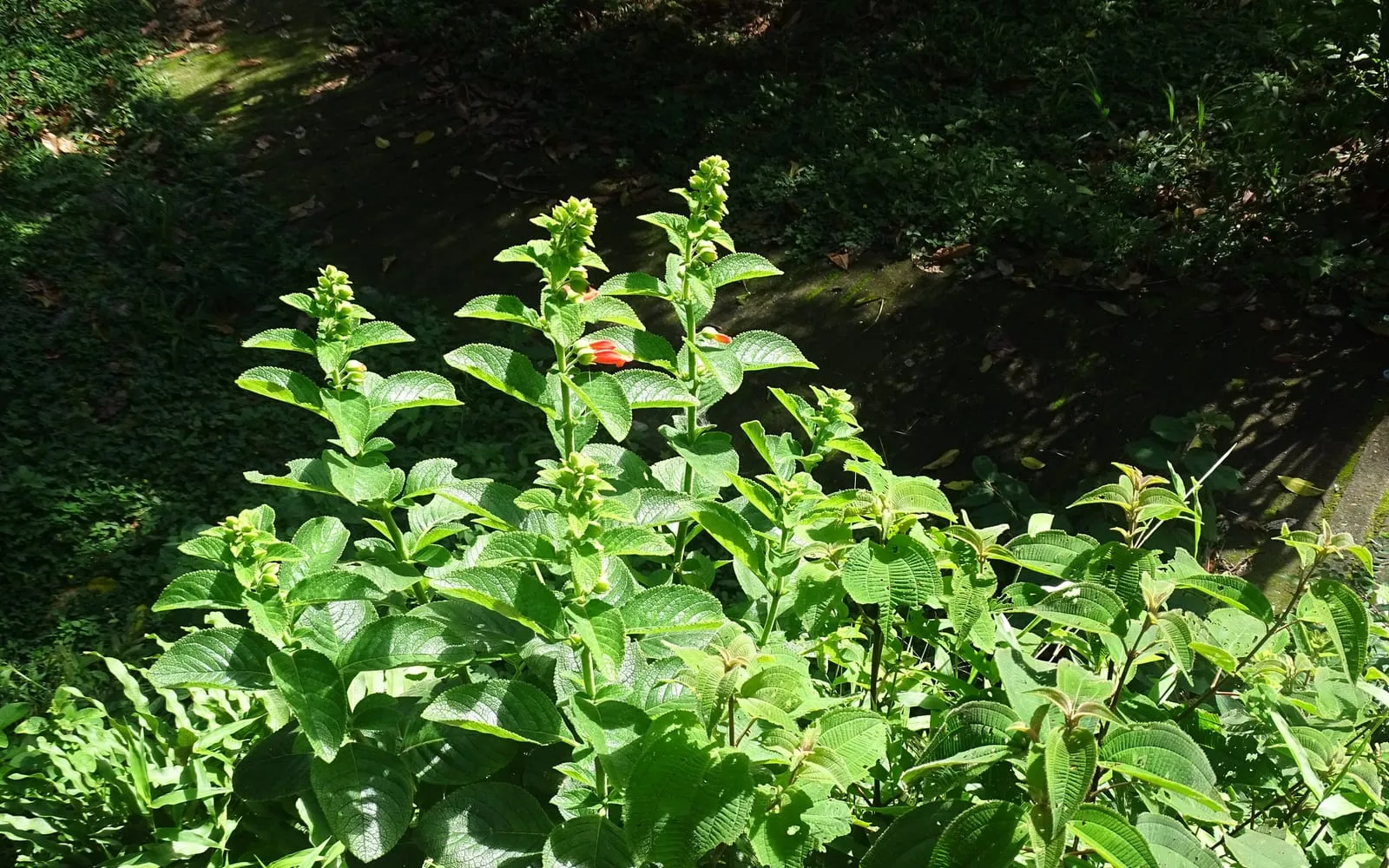
Sinningia incarnata is a tall, upright member of a genus better known for lower, velvety-leaved tuberous plants. From a knobbly, semi-woody caudex it sends up reddish, cane-like stems set with whorls of softly downy leaves, and in season it produces clusters of slender tubular flowers in the muted salmon-to-flesh pink that its epithet incarnata describes. Some plants are closer to greenish cream. The blooms are lightly fragrant, a sign that moths and long-tongued insects pollinate them in the wild.
The plant ranges from southern Mexico to South America, in warm, seasonally dry country where the swollen caudex stores water and energy. When the dry season comes the top growth withers and the plant survives in its caudex before producing new shoots with the rains. That rhythm shapes its care indoors: water and feed it in the warm months, then keep it nearly dry through winter.
For a tall gesneriad it is undemanding. It needs warmth, bright screened light, a gritty free-draining compost and a proper dry rest. The caudex tolerates a good deal of neglect once it has gone dormant.
Appearance and character
The stems are upright and somewhat woody at the base, flushed red and rising from a rough caudex that thickens with age. Along them the leaves sit in whorls, oval and pointed, matt green and covered in the soft down typical of the genus.
The flowers come in loose heads towards the stem tips, each a narrow tube flaring into small lobes, coloured a soft flesh-pink to salmon or greenish cream. They open in succession over several weeks and have a light evening scent. As the growing season closes the whole top dies back, leaving the caudex dormant.
Where it is from
Sinningia incarnata ranges from southern Mexico through warm parts of tropical South America, growing in bright, seasonally dry places with a clear wet-and-dry year. Its caudex swells to store water and starch for the dry season, and the leafy stems it produces in the rains die away when drought returns.
Indoors, that means warmth, bright light filtered from strong sun, and a sharply draining, gritty compost that mimics a well-drained slope. Above all it needs seasonal watering: water freely in growth and keep it nearly dry while the caudex rests.
How it grows
Growth begins when warmth and water return. The caudex sends up red stems, which lengthen, leaf out and then flower through the warm months. As the days shorten and watering is withdrawn, the stems yellow and die back, and the caudex stays dormant and almost dry until the cycle restarts.
Propagation is by seed, by stem cuttings taken from firm young growth in warmth, or by careful division of a large caudex that carries more than one growing point. Cuttings root in humid warmth and build their own small caudex over time; seed-raised plants are slower but often more vigorous.
Through the seasons
Spring starts new growth from the caudex. As new shoots appear, resume watering gradually and begin a dilute feed.
Summer is the season of full growth and flowering. Water freely once the compost surface dries, keep the plant warm and brightly lit, and feed while growth is active.
Autumn is when flowering ends. As the stems begin to yellow, taper watering so the plant can move into rest.
Winter is the dormant season. Let the top growth die away, keep the caudex barely moist and warm, and hold off feeding until spring.
Care difficulty
It is easy once the dry rest is understood, and that dormant period is where most problems start. Growers either water a resting caudex until it rots or let it shrivel bone-dry in a cold room. Kept warm and only just moist through winter, and watered generously in growth, it is straightforward. Cold, wet compost in the dormant months can kill it.
Watering
Through the growing season, water thoroughly once the top of the compost has dried, then let it drain and approach dryness again before the next drink. The caudex does badly with constant wet, so a rhythm of soak and partial dry-down suits it far better than steady moisture.
As autumn advances and the stems fade, cut watering right back, and through dormancy give only a little water now and then to stop the caudex shrivelling, keeping the compost almost dry. Tepid water is better than cold water for the roots.
Warning signs, diseases and pests
A soft, rotting caudex is the most serious problem, caused by wet compost in cool conditions, above all during dormancy. Prevent it with sharp drainage, warmth and a much drier winter regime. Stems that flop and yellow prematurely in summer usually mean overwatering or too little light.
Under cover it may pick up aphids on soft shoots and flower buds, and mealybugs in the leaf axils. Clear both with an insecticidal soap or by hand. Spider mites can trouble it in hot, dry air, showing as fine stippling on the leaves; higher humidity helps control them.
Growing environment
Bright light filtered from the harshest midday sun keeps the stems sturdy and supports flowering. Too little light produces weak, stretched growth and few flowers. A little gentle direct sun morning or evening does no harm.
Warmth suits it, above about 13 deg C in growth, with ordinary to moist room air. It dislikes cold draughts and a chilly, damp winter, so the dormant caudex must be kept almost dry.
Feeding
Feed through the growing season with a balanced feed at half strength, moving to a higher-potash feed as flower buds form to support the bloom. Steady, moderate feeding builds a strong caudex for the following year.
Stop feeding entirely as the plant slows into dormancy, and give none while the caudex rests. Resume only when new growth is clearly under way in spring.
Troubleshooting
The stems have died back completely. In autumn this is the normal onset of dormancy. Reduce watering, let the caudex rest, and expect fresh shoots in spring.
The caudex has gone soft. Rot from wet, cold compost, most often from watering during dormancy. Improve drainage, keep it warmer, and water far less in winter.
Why is it tall and floppy with few flowers? Too little light. Move it somewhere brighter, out of scorching sun, and feed to support flowering.
How do I start new plants? From seed, from softwood stem cuttings in warmth, or by dividing a large caudex with more than one shoot.
Is it toxic to pets? No toxicity is recorded for it, so a nibbled leaf should cause no more than a passing stomach upset.
Flesh-Colored Sinningia Gesneriad problem guides
Not sure what is wrong? See the common houseplant pests guide.