
Houseplant
Trailing Jade
Peperomia rotundifolia
Also known as Peperomia rotundifolia
How to grow Peperomia rotundifolia, the trailing jade, a tropical American trailer with button-round leaves on thread stems, from watering to siting.
At a glance
- Difficulty
- Easy
- Water
- When the top few centimetres of mix have dried
- Light
- Bright indirect light to light shade
- Temperature
- Warm; keep above about 13 deg C
- Humidity
- Average to high
- Hardiness
- USDA 10-12, RHS H1b, hardy to 13 C
- Type
- Perennial
- Height
- 30-50 cm
- Native to
- tropical America
A tender tropical foliage plant from tropical America, growing in warm, humid, shaded to filtered light. It needs warmth, humidity and bright indirect light, and it cannot take frost or chill. It is safest above about 13 deg C, and cold, wet compost or dry air spoils it.
Hardiness zones describe winter cold alone. Summer heat, humidity, rainfall and the length of the growing season decide as much, so treat the range as the outer limit rather than as a recommendation.
Not known to be toxic
Peperomia rotundifolia, the trailing jade, is not recorded among the seriously toxic plants, and related plants in its group are not listed as toxic by the ASPCA or the RHS. A pet or child that chewed a leaf would be unlikely to come to real harm beyond a possible mild stomach upset.
Sources: ASPCA toxic and non-toxic plants, RHS potentially harmful garden plants
About
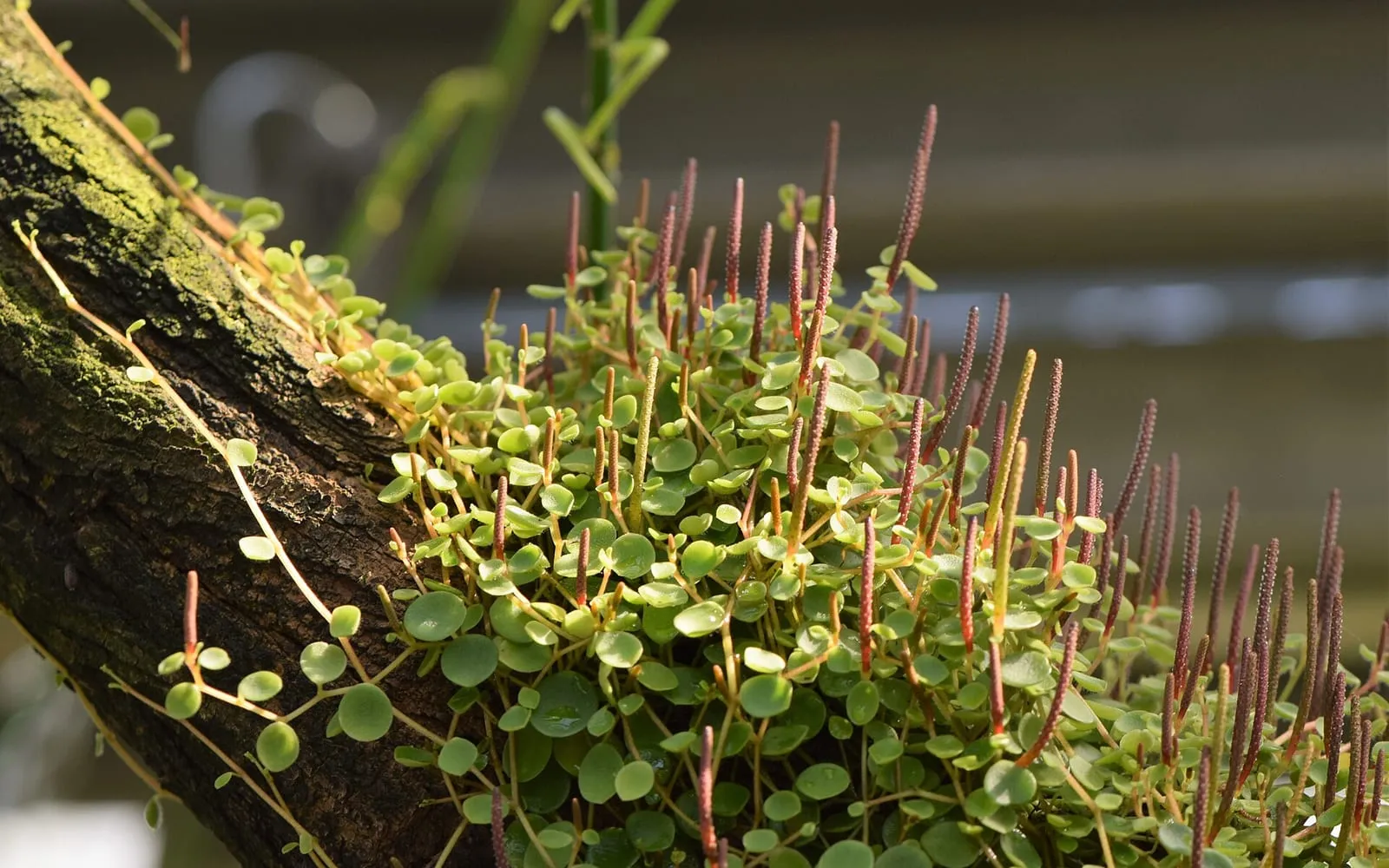
Peperomia rotundifolia is a delicate trailing plant strung with tiny, round, jade-green leaves no bigger than a shirt button. It comes from the warm forests of tropical America, where it creeps over damp mossy bark and rock as a half-epiphyte, rooting as it goes and hanging in fine curtains from branch and ledge. The rounded leaf gives the species name, rotundifolia, and the fresh green gives the common one, trailing jade, though it is unrelated to the true jade plant.
Each leaf is slightly fleshy, storing a little water, which lets the plant cope with the brief dry spells between rains without wilting. Its stems are threadlike and wiry, weaving through the moss instead of standing up on their own.
Grown indoors it makes a fine plant for a small hanging pot or a shelf edge, spilling over the rim in trailing sprays. It stays modest, needs little, and carries no serious toxicity, so it suits a home with curious pets or children better than many trailers.
Appearance and character
The leaves are the main feature: round to faintly heart-shaped, a few millimetres to a centimetre across, thick and smooth, in a clear light green with a slightly deeper venation showing through. They sit close along the stem in loose pairs, so a run of stem looks like a string of small coins.
Stems are fine, pale and flexible, branching freely and trailing to twenty or thirty centimetres over time. They root at the nodes wherever they touch damp mix, which lets a single plant thicken into a dense mat if the pot is wide and shallow.
Flowers, when they come, are the usual peperomia rat-tails, slim greenish spikes held clear of the foliage. They add nothing to the look and can be left or removed as you please.
Where it is from
The trailing jade grows through the humid tropics of the Americas, from the West Indies down into South America, always in shade and always in moist, still air. It anchors to tree bark, fallen logs and mossy boulders not open ground, taking water from damp air and passing rain, its shallow roots gripping a thin skin of leaf litter and moss.
Give it warmth, humidity and gentle, indirect light, a footing that stays lightly moist yet never sodden, and freedom from cold. A heavy, wet, cold compost suffocates its fine roots, and dry heated air shrivels the little leaves.
How it grows
Trailing jade grows in slow, continuous flushes through the warm part of the year, extending its wiry stems a little at a time and dropping roots along them. The slight succulence of the leaves gives it some patience with a missed watering, though it is far less drought-hardy than a true desert succulent and dislikes drying out completely.
Keep it warm, humid and brightly shaded, in an open, moisture-holding mix, and it trails steadily. In deep shade the stems thin and the leaves space out; in direct sun the little discs bleach and crisp.
Propagation is simple. Lay a length of stem on damp mix, or pot up a rooted section, and it takes within a couple of weeks.
Through the seasons
Spring brings the plant back into active growth. Resume steady watering and start a light monthly feed.
Summer is the main growing period. Keep the air from drying out, water once the surface dries, and shade it from any direct glass.
Autumn slows the pace. Reduce feeding and let the mix dry a little more between drinks.
Winter is a rest. Keep it warm and bright, water sparingly, and keep the fine leaves away from cold panes and draughts.
Care difficulty
The trailing jade is an easy plant, well suited to a beginner who wants a small trailer. Its main dislikes are cold, sodden compost and parched air, so a warm bright spot and careful watering cover most of what it needs. Because the roots are fine and shallow, it prefers a small pot and does badly if drowned in a large one.
Watering
Let the top few centimetres of the mix dry, then water thoroughly and drain the surplus away. The slightly fleshy leaves let it wait between drinks, so it is better kept a touch dry than constantly damp. Cut watering back through winter, when the plant is resting and cold wet compost turns dangerous. Fine wiry roots rot quickly in a pot that stays wet, so always tip out any water left standing in the saucer.
Warning signs, diseases and pests
Sudden yellowing, translucent leaves and collapsing stems point to root rot from overwatering or cold. Because the roots are so fine, a badly rotted plant is hard to save.
Brown, shrivelled leaves usually mean the air has dried out, often near a radiator; move it and raise the local humidity. Mealybugs may hide in the leaf pairs and spider mites can appear in warm dry air. Wipe mealybugs off with a swab dipped in diluted alcohol, and treat mites with a rinse followed by a horticultural soap spray.
Growing environment
A bright, sunless position gives the best growth, such as an east window or a spot set back from a brighter one. Warmth is essential; it should not sit in the low teens for long. Humidity above the dry-room average keeps the leaves plump, so a bathroom, a kitchen or a cluster of plants suits it, and it enjoys a hanging pot where the air moves gently around the trailing stems.
Pot it in a light, open, peat-free mix with added perlite or fine bark, in a small hanging pot or shallow container with good drainage. Repot only when it has plainly filled its pot, since it dislikes a lot of cold wet compost around its roots.
Feeding
Feed with a balanced houseplant food at half strength once a month through spring and summer, while the plant is growing. It needs little, and its small leaves do not benefit from heavy feeding, which only forces soft, spindly stems. Stop feeding altogether in autumn and winter. Fresh mix supports a newly potted plant for its first weeks without any added food.
Troubleshooting
Why are the leaves turning yellow and see-through? Overwatering or a cold, wet pot rotting the roots. Water less, warm the plant up, and re-root healthy stems if the base has gone.
The little leaves are drying and dropping. The air is too dry. Raise the humidity around it and move it clear of heating.
The stems have gone long and bare between leaves. Too little light. Move it somewhere brighter, though still out of direct sun.
How do I make more? Lay a length of stem on damp mix, or pot up a section that has already rooted at the nodes.
Is it safe around pets? Peperomias are not on the toxic lists, so a nibble is unlikely to cause real harm, though it is wise to keep any houseplant out of a determined chewer’s reach.
Trailing Jade problem guides
Not sure what is wrong? See the common houseplant pests guide.