
Houseplant
Jelly Plant
Peperomia clusiifolia
Also known as Peperomia clusiifolia
How to grow Peperomia clusiifolia, the jelly plant, from its thick red-rimmed paddle leaves and Caribbean roots to watering, feeding and siting it.
At a glance
- Difficulty
- Easy
- Water
- When the top few centimetres of mix have dried
- Light
- Bright indirect light to light shade
- Temperature
- Warm; keep above about 13 deg C
- Humidity
- Average to high
- Hardiness
- USDA 10-12, RHS H1b, hardy to 13 C
- Type
- Perennial
- Height
- 20-30 cm
- Native to
- the Caribbean
A tender tropical foliage plant from the Caribbean, growing in warm, humid, shaded to filtered light. It needs warmth, humidity and bright indirect light, and it cannot take frost or chill. It is safest above about 13 deg C, and cold, wet compost or dry air spoils it.
Hardiness zones describe winter cold alone. Summer heat, humidity, rainfall and the length of the growing season decide as much, so treat the range as the outer limit rather than as a recommendation.
Not known to be toxic
Peperomia clusiifolia, the jelly plant, is not recorded among the seriously toxic plants, and related plants in its group are not listed as toxic by the ASPCA or the RHS. A pet or child that chewed a leaf would be unlikely to have more than a possible mild stomach upset.
Sources: ASPCA toxic and non-toxic plants, RHS potentially harmful garden plants
About
Peperomia clusiifolia is a stout little Caribbean plant grown for thick, glossy leaves with coloured edges. It sits in the vast Peperomia genus, the radiator plants, and shares their habit of storing water in fleshy foliage while keeping only a shallow, wiry root system below. The best-known forms have a bold cream, pink or red rim around each leaf, and these variegated selections are often sold as Jelly or Red Edge.
It comes from warm, shaded rock ledges and tree bases of the West Indies and nearby coasts, where it grows among leaf litter instead of rooting deep in soil. Give it warmth and steady humidity, filtered light instead of the direct sun a true succulent enjoys, and a mix that holds a little moisture without staying wet.
In those conditions it is slow, tidy and happy in a small pot for years.
Appearance
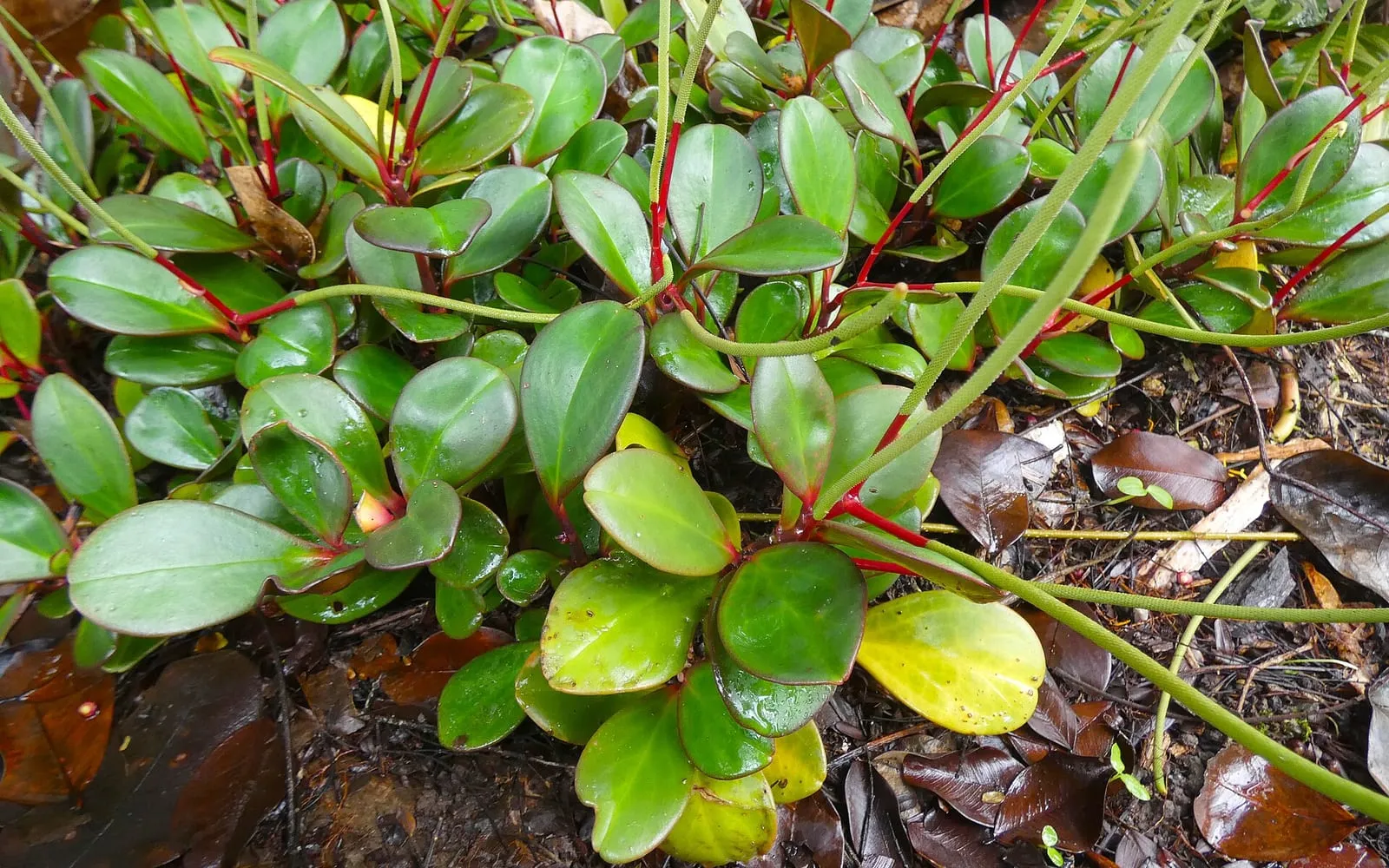
The leaves are the main feature. Each is a rounded, spoon-shaped paddle, firm and cupped, in a deep glossy green edged with a clean band of cream that turns rose or scarlet in good light. They are arranged in whorls up short, upright, reddish stems, so a mature clump looks like a low dome of overlapping discs instead of a leafy stem.
Growth stays compact, rarely topping twenty-five centimetres, and the plant clumps outward from the base instead of climbing or trailing. Older stems may lean under their own weight and can be pinched back to keep the rosette full.
When it flowers, it produces slim greenish spikes like miniature bottlebrushes, held above the foliage. They are normal and not a sign that anything is wrong.
Where it is from
Peperomia clusiifolia ranges through the Caribbean islands and the humid fringes of tropical America, growing in the dappled shade of forest and coastal scrub. It clings to bark, rotten logs and mossy rock, using moisture from damp air and brief rains instead of a deep soil reserve. Frost is unknown there, and the light is broken by canopy above.
Those conditions point to a warm, bright but sunless spot, air that does not get too dry, and a mix that drains freely while staying just moist. Cold and wet roots, or very dry air around the leaves, are the two main problems.
How it grows
The jelly plant grows in slow, steady spurts through the warm months, adding a few thick leaves at a time and widening its clump. It carries its water in those leaves, so it tolerates a missed watering far better than a thin-leaved houseplant, and it responds poorly to being kept constantly damp.
Give it bright, filtered light, a peat-free airy mix, and warmth that stays comfortably above room-cool, and it needs little intervention. In deep shade the variegation dulls and the stems stretch; in direct summer sun the leaves scorch and bleach.
Propagation is simple. A single leaf with a scrap of stem, or a short stem tip, pushed into damp gritty compost roots within a few weeks.
Through the seasons
Spring starts active growth. Resume regular watering as the days lengthen, and begin a light monthly feed.
Summer is the main growing spell. Keep the air from getting too dry, water once the surface has dried, and shade it from any harsh midday glass.
Autumn slows growth. Ease back on water and stop feeding as the light weakens.
Winter is a quiet holding period. Keep it warm and bright, let the mix dry further between drinks, and guard it from cold draughts and chilly sills.
Care difficulty
This is a forgiving plant that suits a beginner. Its thick leaves tolerate irregular watering, and its small root system means it seldom needs repotting. The usual mistake is treating it like a thirsty leafy houseplant and keeping it wet, which softens the base and encourages rot. Water less than instinct suggests and it thrives.
Watering
Wait until the top few centimetres of the mix feel dry, then water thoroughly and let the surplus drain right out. The fleshy leaves mean it prefers to be a little dry rather than damp, so water sparingly, and cut back noticeably in winter when growth slows. A pot that stays sodden after a week is holding too much water; check the drainage and the mix instead of watering again.
Warning signs, diseases and pests
Limp, blackening stems at soil level signal root or stem rot from cold, wet compost, the most common way this plant is lost. Unpot it, cut away every soft part, and re-root a firm leaf or stem tip in fresh open mix instead of trying to save a rotted base.
Brown, crisping leaf edges usually mean the air has dried out, often beside a radiator; move it and raise the humidity around it. Mealybugs may settle in the leaf whorls as white fluff, and spider mites can appear in hot dry air. Wipe mealybugs off with a cloth dampened with dilute alcohol, and rinse mites away under a tepid shower before treating with a horticultural soap.
Growing environment
A bright spot out of direct sun suits it best, an east window or a step back from a brighter one. Warmth matters, and it should never drop into the low teens for long. Steady, moderate humidity keeps the leaf edges clean, so a kitchen, a bathroom or a grouped shelf of plants suits it well.
Pot it in a light, open, peat-free houseplant mix with extra perlite or fine bark, in a small container with good drainage. Its shallow roots dislike a large pot of wet compost, so pot on only when the plant is clearly crowded.
Feeding
Feed lightly during spring and summer with a balanced houseplant food at half the label strength, roughly once a month. The plant is not a heavy feeder, and its compact growth needs little encouragement. Stop entirely through autumn and winter. Overfeeding produces soft, oversized leaves that lose their firm texture and crisp edge colour.
Troubleshooting
Why are the stems flopping and going black at the base? Stem rot from overwatering or cold. Cut back to firm tissue, re-root a healthy leaf or tip, and water more sparingly from now on.
The cream edges have faded to plain green. Why? Too little light. Move it somewhere brighter, though still out of direct sun, and new leaves will show the colour again.
The leaf tips and margins have gone brown and papery. Dry air, usually from nearby heating. Shift it away from the heat source and group it with other plants to lift the local humidity.
How do I make more? Take a leaf with a short piece of stem, or a stem tip, and root it in damp gritty compost in warmth.
Is it safe around pets? Peperomias are not listed among the toxic houseplants, so a nibble is unlikely to cause more than mild stomach upset, though it is sensible to keep any plant away from a determined chewer.
Jelly Plant problem guides
Not sure what is wrong? See the common houseplant pests guide.