
Houseplant
Thorn-Crest Agave
Agave lophantha
Also known as Agave lophantha, Lechuguilla
How to grow Agave lophantha, the thorn-crest agave, a slim striped rosette from Texas and eastern Mexico that suckers fast, with marginal teeth.
At a glance
- Difficulty
- Easy
- Water
- Only once the mix has dried right through
- Light
- Full sun to light shade
- Temperature
- Hardy to about -10 deg C when dry; cold, wet winters rot it
- Humidity
- Low to average
- Hardiness
- USDA 8-11, RHS H4, hardy to -10 C
- Type
- Perennial
- Height
- 30-60 cm
- Native to
- Mexico, Texas
An agave of limestone hills and thorn woodland in Texas and north-eastern Mexico, with hot summers and a marked dry season. It survives dry frost to about -10 deg C, and the variegated 'Quadricolor' is a little tenderer. Cold, wet winter soil rots it, which the zone numbers do not show.
Hardiness zones describe winter cold alone. Summer heat, humidity, rainfall and the length of the growing season decide as much, so treat the range as the outer limit rather than as a recommendation.
Toxic if eaten
- Do not eat
- The leaves and sap
- Harm from
- Eating it and handling it
- Affects
- People, cats and dogs
The leaves and sap hold saponins and needle-like calcium oxalate crystals. Sap on skin can cause itching, redness and blistering, and chewing the plant can cause drooling, vomiting and mouth irritation in people, cats and dogs. The ASPCA lists agaves as toxic to cats and dogs. Wear gloves and eye protection when cutting it, and keep pets from chewing it.
Sources: ASPCA toxic and non-toxic plants, RHS potentially harmful garden plants
About
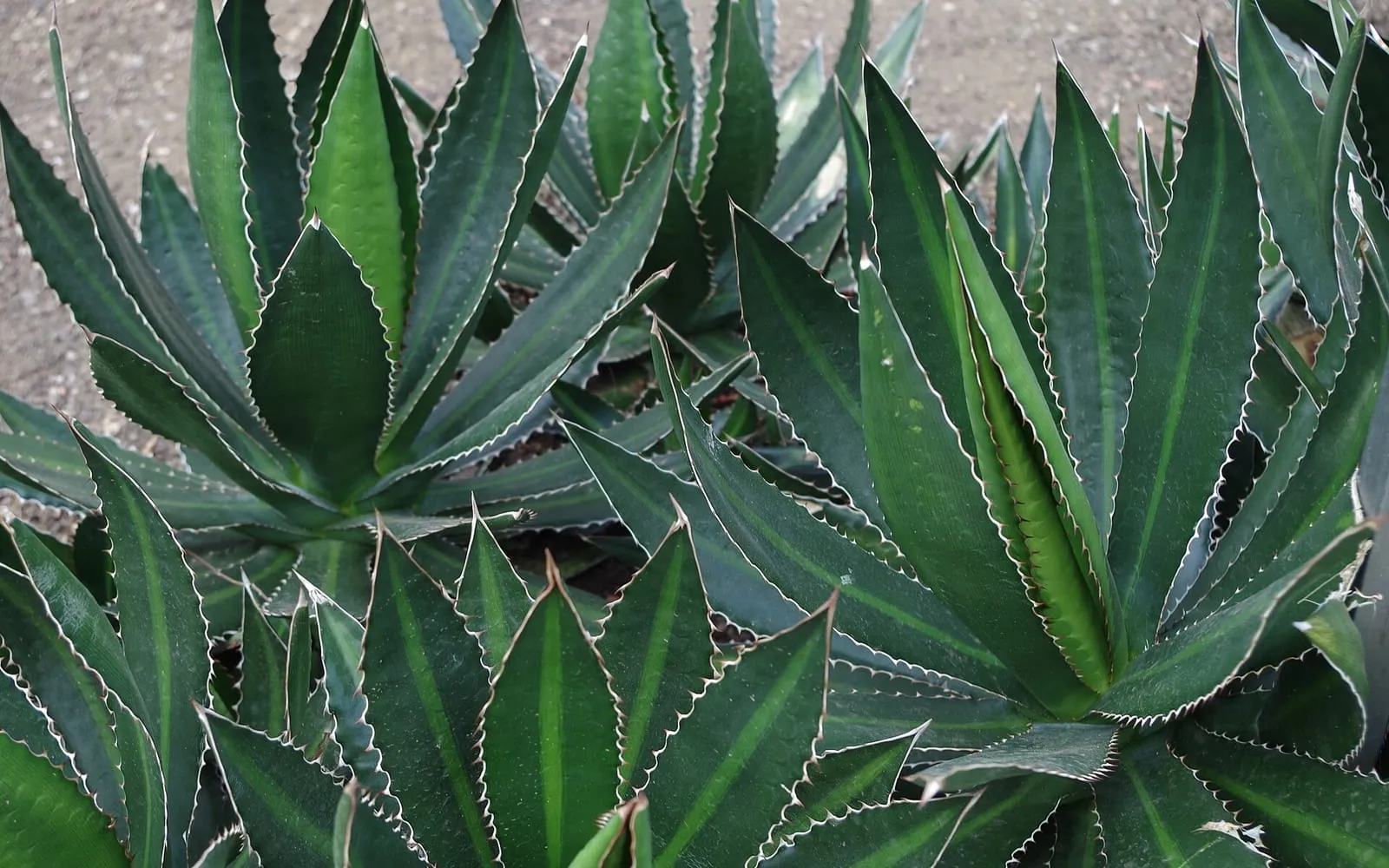
Two very different plants of the borderlands answer to the folk name lechuguilla, and this is the eastern one, Agave lophantha, which growers more often call the thorn-crest agave to keep them apart. It forms a slim, deep green rosette, and a paler band runs the length of each leaf down its centre, giving the whole plant a brighter, more polished look than the ashen desert species it is confused with.
Its range takes in the lower Rio Grande valley of Texas and the neighbouring states of eastern Mexico, on limestone hills and in dry thorn woodland. It grows faster and stays greener than most agaves, offsets freely, and has produced a striking cultivar, ‘Quadricolor’, whose leaves are striped in cream, gold and two shades of green and which is common in collections.
For a grower it is quick and easy to increase. It stores water in its leaves, multiplies into a cluster, and needs only good light and gritty drainage. A cold, waterlogged root run is the sole condition it will not survive, so careful watering does most of the work.
Appearance and character
The leaves are narrow and lance-shaped, held stiffly and coloured a rich green, each marked along its midline by a lighter stripe. Regular teeth line the margins, and every blade ends on a firm, dark terminal spine.
Pups gather at the base from an early age, so a lone rosette soon becomes a tight cluster that divides and grows on with ease. That suckering habit makes it one of the simplest agaves to bulk up and one of the quickest to fill a container.
It flowers once, sending up a dense, spike-like stalk of greenish blooms after a few years, then that rosette dies while the offsets around it carry on. Under a household roof the flowering event is uncommon, and the striped rosette is what draws people to it.
Where it is from
Limestone outcrops, dry hillsides and thorn woodland along the lower Rio Grande and across the bordering states of eastern Mexico make up its range. The air stays warm through a marked dry season, and the stony soil drains quickly once a shower has passed.
Its care works well in a pot. It grows well under strong light in a compost that dries between waterings, and a cold, boggy container is unsafe for it. Warmth, brightness and grit help it settle into cultivation within a season or two.
How it grows
Warm weather lengthens the leaves and sends up a fresh crop of pups, and the plant slows once the light falls off. Bright conditions keep the blades rigid and the pale midline crisp; a dim corner softens them and the stripe washes out.
Give it a coarse, quick-draining compost and water once its surface has dried. The fleshy leaves hold a water store, so a dry interval passes without harm, whereas roots left wet begin to rot.
Dry frost to about -10 deg C does not harm it, but cold, wet winter soil does, so keep it dry through the cold months. Since the pups root readily, snapping one off is the fastest route to another plant.
Through the seasons
Spring brings the cluster back into growth as light returns. Increase watering and pot up any spare pups.
Summer brings the fastest growth, when a well-lit plant produces its quickest flush of pups. Water once the surface dries, and keep the rosette in strong light to hold the central stripe bright.
Autumn slows it down. Reduce feeding and let the compost dry longer as the days shorten.
Winter is a dry pause. A rare drink is enough, and the cluster must stay clear of cold and wet.
Care difficulty
Easy, and among the quickest agaves to get established where light and drainage suit it. It pups, stores water and needs little feeding. The main risk is a cold, saturated pot rotting the roots, so keep it dry through the cold months, and give its teeth and end-spine room away from passing hands.
Watering
Once the top few centimetres have dried, pour water through until it runs from the base, then let the pot finish draining. The thick leaves store water, so a dry gap between drinks suits it, while roots standing in wet begin to rot.
Pull the watering right back for winter, when a chilled root run does the most damage. Go by how dry the gritty mix has gone instead of a set day. This is a plant of limestone hills with a long dry season behind it, and one cold soaking sets it back far more than a fortnight left dry.
Warning signs, diseases and pests
Rot from a cold, waterlogged root run shows first as a soft, darkened patch where the outer leaves meet the base, or a whole rosette that pulls loose when you lift it. Open up the drainage, cut the watering right back, above all in winter, and keep it in bright light.
Because the thorn-crest suckers so freely, mealybugs can hide among the crowded pups, and spider mites may follow. Part the tight cluster, look down into the leaf crowns, and deal with any early colony by wiping it off and following with a suitable spray.
Browning along the narrow blades, or a fading of the pale midline stripe, points to sun scorch, shade or watering that swings from flood to drought. Even out the watering and adjust the light.
Growing environment
Give it strong, direct light. In it the leaves stay rigid and the pale stripe sharp; in shade they loosen and the marking dulls.
It survives dry frost to about -10 deg C, but winter wet rots it, so in a damp climate grow it in a pot under cover or on a raised, gritty bed. A sunny sill keeps it growing well, and it can go outdoors through the summer.
Grow it in a light, sharp, gritty compost in a pot that empties freely, and give the cluster room. Handle it by the pot to keep the spined leaves off your hands.
Feeding
One or two weak, balanced feeds across the growing season keep the cluster strong. Too much produces soft, overlong leaves, so keep it thin.
Nothing over winter. When you split off a pup and set it into fresh gritty compost, that new mix supports it through its early weeks unaided, so hold the first feed back until spring warmth returns.
Troubleshooting
Why is my thorn-crest soft at the base? A chilled, wet root run is usually to blame. Improve the drainage, ease right off the water, and move it somewhere brighter.
How much light does it need? As much direct sun as you can find for it. In shade the blades loosen and the pale central stripe washes out.
How often should I water it? Once the top has dried, and only sparingly in winter, going by the compost.
How do I propagate it? Snap a rooted pup off the clustering base and grow it on.
Is it safe around pets? No. The sap irritates skin and mouth and the ASPCA lists agaves as toxic to cats and dogs, so a chewer may drool or vomit. The bigger hazard is physical, the row of marginal teeth and the hard end-spine, so stand it where no pet or child brushes past.
Thorn-Crest Agave problem guides
Not sure what is wrong? See the common houseplant pests guide.