
Houseplant
Butterfly Agave
Agave potatorum
Also known as Agave potatorum
How to grow Agave potatorum, the butterfly agave, a small wavy-leaved rosette from the Mexican highlands with scalloped teeth and a red spine.
At a glance
- Difficulty
- Easy
- Water
- When the mix has dried right through
- Light
- Full sun to bright light
- Temperature
- Warm; keep dry and above freezing in winter
- Humidity
- Low
- Hardiness
- USDA 9b-11, RHS H3, hardy to -4 C
- Type
- Perennial
- Height
- 40-60 cm
- Native to
- Mexico
A rosette succulent from the dry uplands of Oaxaca and Puebla, with hot, wet summers and a dry cool winter. It takes a light frost only when dry, and it rots in cold, wet compost. It needs strong light and sharp drainage, and a pot is safest kept frost-free.
Hardiness zones describe winter cold alone. Summer heat, humidity, rainfall and the length of the growing season decide as much, so treat the range as the outer limit rather than as a recommendation.
Toxic if eaten
- Do not eat
- The leaves and sap
- Harm from
- Handling it, sap in the eyes and eating it
- Affects
- People, cats and dogs
Agave potatorum, the butterfly agave, has sap with calcium oxalate crystals and saponins that irritate skin, eyes and the mouth. Handling the leaves can cause itching, redness and blistering in sensitive people, and the ASPCA lists Agave as toxic to cats, dogs and horses. A pet or child that chews it may drool, vomit or have swelling of the mouth. Wear gloves when cutting it, rinse sap off skin and out of eyes with water, keep the plant from pets that chew, and mind the sharp red terminal spine.
Sources: ASPCA toxic and non-toxic plants, RHS potentially harmful garden plants
About
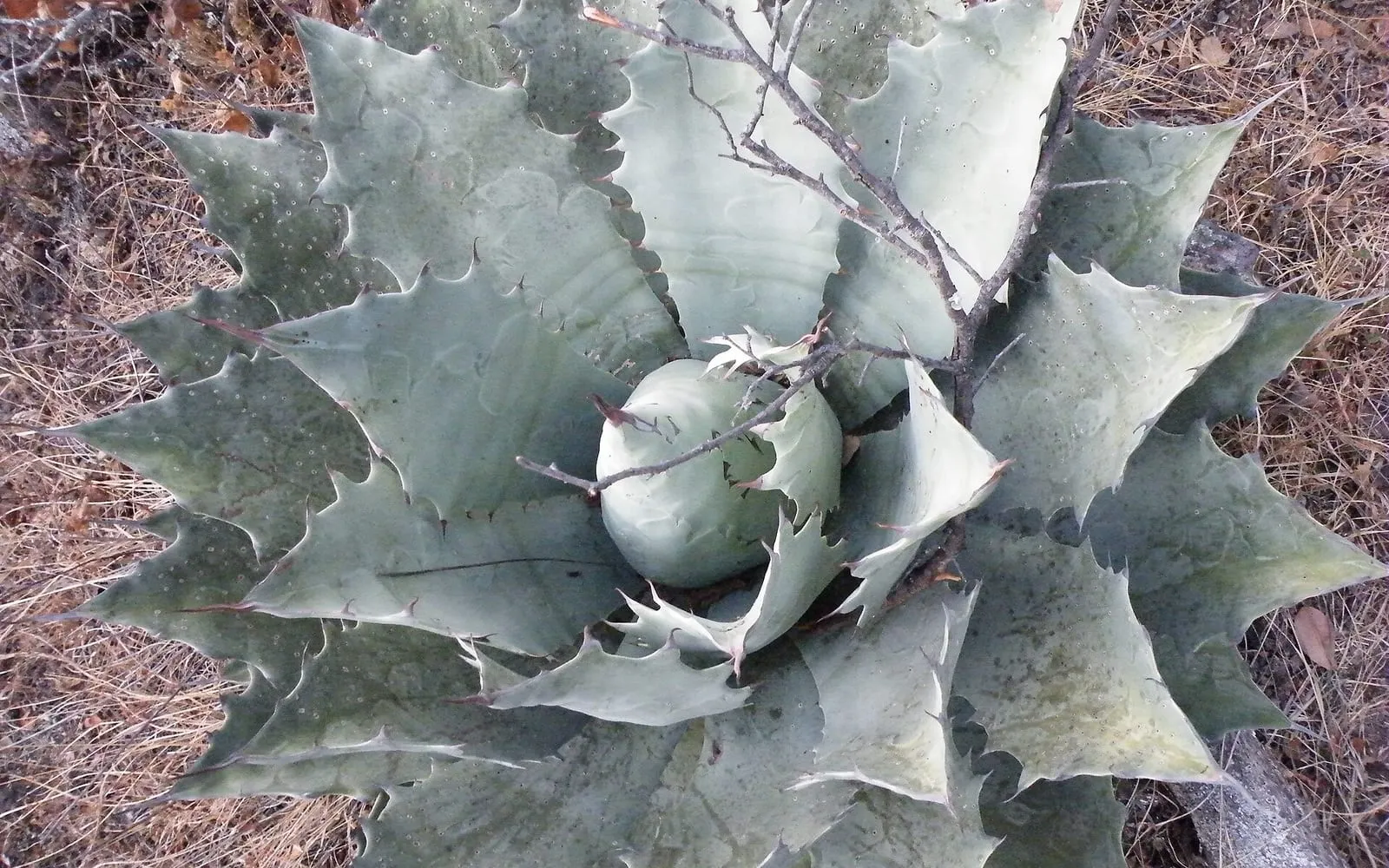
Agave potatorum is a compact rosette agave whose broad grey leaves ripple along their edges and end in a reddish-brown spine. Nurseries in Japan and beyond have bred it into rounded cultivars, and even the wild plant has a neat, arranged look, with scalloped margins that explain the butterfly name.
It comes from the semi-arid uplands of Oaxaca and Puebla in southern Mexico, where it grows scattered on rocky scrub at moderate altitude. There it is also a mezcal plant, the source of the sought-after tobala spirit distilled from the roasted heart of mature rosettes.
For the grower it stays small, which is much of its appeal on a crowded sill. It needs bright light, gritty footing and warmth, stores water in its plump leaves, and does worst in a chilly pot left standing wet. Keep it on the dry side and in strong light.
Appearance and character
The leaves are short, wide and cupped, a soft blue-grey with a chalky finish, and their margins undulate in a series of low humps. Along each hump sits a dark tooth, and the leaf tapers to a long, mahogany-red terminal spine that is both a feature and a hazard.
The rosette stays tight and symmetrical, rarely much wider than a dinner plate, and some forms barely offset at all while others cluster into small groups. That compactness is why it slots so easily into a windowsill collection where a larger agave would crowd its neighbours.
Being monocarpic, a mature plant eventually throws a slender flowering stalk metres tall, blooms once, and then the flowered rosette dies. A container specimen almost never flowers, and its main appeal is the leaf form.
Where it is from
The species belongs to the Sierras of Oaxaca and Puebla, on stony, well-drained slopes at middling elevation where the climate is dry for much of the year and never sodden. Sun is strong, and the thin upland soils release water quickly after the summer rains.
That setting explains its care. It needs bright light and a lean, mineral mix that drains in an instant, and a cold, boggy root run quickly rots it. A warm, sunny position with a gritty pot keeps it close to its native conditions.
How it grows
The rosette gains a few leaves each warm season and then holds still through the cool months. Strong light keeps the blades short, cupped and richly coloured, while a shady spot flattens the form and pales the grey.
Set it in a sharp, grit-rich blend in a shallow-ish pot that suits its modest roots, and water it only after the mix has parched right through. The swollen leaves store a reserve, so a run of dry days does it good instead of harm.
It takes a light frost only when dry, so keep a potted plant above freezing and clear of cold glass. Where offsets form, they can be teased away with a few roots and grown on; otherwise it comes from seed.
Through the seasons
Spring starts rosette growth as light lengthens. Water lightly again and repot a crowded plant into fresh grit.
Summer is the growing season. Wet the pot when the blend has dried out, and stand the plant in the strongest light available.
Autumn slows growth. Widen the gaps between waterings and stop feeding as the season closes.
Winter is a cool, dry pause. Water only enough to keep the leaves firm, and shield the plant from cold and damp.
Care difficulty
Easy, and among the better agaves for a small space. It needs little water, little feed and no grooming, only light and drainage. The main risk is a cold, wet root run, which rots the base, so keep it dry through winter. The red spine ends in a hard point, so place it where fingers and faces stay clear.
Watering
Let the gritty mix dry down completely, then soak it thoroughly and tip away whatever the pot cannot hold. The plump leaves store water, so the rosette weathers a dry stretch easily and dislikes standing moisture.
Over winter cut the water right back, because a chilled, saturated pot is what rots a healthy rosette. If a watering is in doubt, skip it, since this agave suffers far more from wet than from drought.
Warning signs, diseases and pests
Rot from a cold, wet root run is the main danger, appearing as a soft, discolouring centre or a rosette that lifts loose from the compost. Open up the drainage, water much less, and keep it warm and bright to stop it spreading.
Mealybugs favour the tight leaf crevices, and spider mites turn up in dry indoor air. Inspect the folds between the leaves, and treat any infestation before it moves through the rosette.
Scorched or browned tips can follow harsh sun through glass or erratic watering. A little shade at the hottest hour and steadier moisture usually put it right.
Growing environment
Bright, direct light suits it best and keeps the rosette tight and colourful. In shade the leaves lengthen, the cupping relaxes, and the grey washes out.
It takes a light frost when dry but rots in cold damp, so a potted plant needs a frost-free spot sheltered from cold draughts. A sunny sill or a bright glasshouse bench holds it in good form.
Grow it in a lean, free-draining, gritty mix in a pot that drains freely, and lift it by the container rather than the leaves to avoid the spine. A shallow pan shows off its low, wide profile well.
Feeding
One or two weak balanced feeds across the growing season are plenty. Overfeeding stretches the leaves and spoils the compact shape, so keep the strength down.
Feed nothing in winter while it rests. A repot into fresh grit gives it enough nutrient, so the feed can wait until growth resumes.
Troubleshooting
Why is my butterfly agave collapsing at the centre? Rot from a cold, wet pot. Improve the drainage, water much less, and keep it warmer.
How much light does it need? As much direct light as you can give. Shade loosens the rosette and dulls the colour.
How often should I water it? When the mix has dried through, sparingly in winter, led by the state of the compost and leaves.
How do I propagate it? Remove a rooted offset where one forms, or raise it from seed.
Is it safe around pets? The sap is a mild irritant and the ASPCA lists Agave among plants harmful to cats and dogs, so keep chewing animals off it, and mind the sharp red spine.
Butterfly Agave problem guides
Not sure what is wrong? See the common houseplant pests guide.