
Houseplant
Caribbean Agave
Agave angustifolia
Also known as Agave angustifolia
How to grow Agave angustifolia, the caribbean agave, the wide-ranging narrow-leaved rosette behind tequila and mezcal, from watering to propagation.
At a glance
- Difficulty
- Easy
- Water
- When the mix has dried right through
- Light
- Full sun to bright light
- Temperature
- Warm; keep above about 5 deg C
- Humidity
- Low
- Hardiness
- USDA 9-11, RHS H3, hardy to -2 C
- Type
- Perennial
- Height
- Up to 1.5 m
- Native to
- Mexico, Central America
A rosette succulent from the dry scrub, hillsides and sandy coastal flats of Mexico and Central America, hardy to about minus 4 deg C for short spells in dry ground. It needs full sun, very sharp drainage and long dry spells between drinks. Cold combined with wet kills it, so in a wet winter it is safest in a pot kept above about 5 deg C.
Hardiness zones describe winter cold alone. Summer heat, humidity, rainfall and the length of the growing season decide as much, so treat the range as the outer limit rather than as a recommendation.
Toxic if eaten
- Do not eat
- The sap in the leaves, which carries calcium oxalate crystals and saponins
- Harm from
- Handling it, sap in the eyes and eating it
- Affects
- People, cats and dogs
Agave sap contains needle-like calcium oxalate crystals and saponins. On skin it causes itching, redness and sometimes blistering, especially where a spine has broken the leaf and released the juice, and in the eyes it brings pain and inflammation. Chewed or swallowed, it burns the mouth and can cause drooling, vomiting and diarrhoea in people, cats and dogs. The ASPCA and the RHS do not name this species, and the evidence comes from agaves generally, reported as toxic to cats and dogs by veterinary references. Wear gloves and eye protection when cutting it, wash off any sap, and keep pets and children away from the leaf tips.
Sources: ASPCA toxic and non-toxic plants, RHS potentially harmful garden plants, IVIS guide to poisonous plants, Agave species
About
Agave angustifolia has one of the widest ranges in the genus, from the dry north of Mexico through Guatemala, Honduras and Nicaragua and on into Costa Rica. Growers value the background as much as the plant, since the blue agave that fills the tequila distilleries of Jalisco was selected out of this variable wild species, and mezcal and bacanora are drawn from it too.
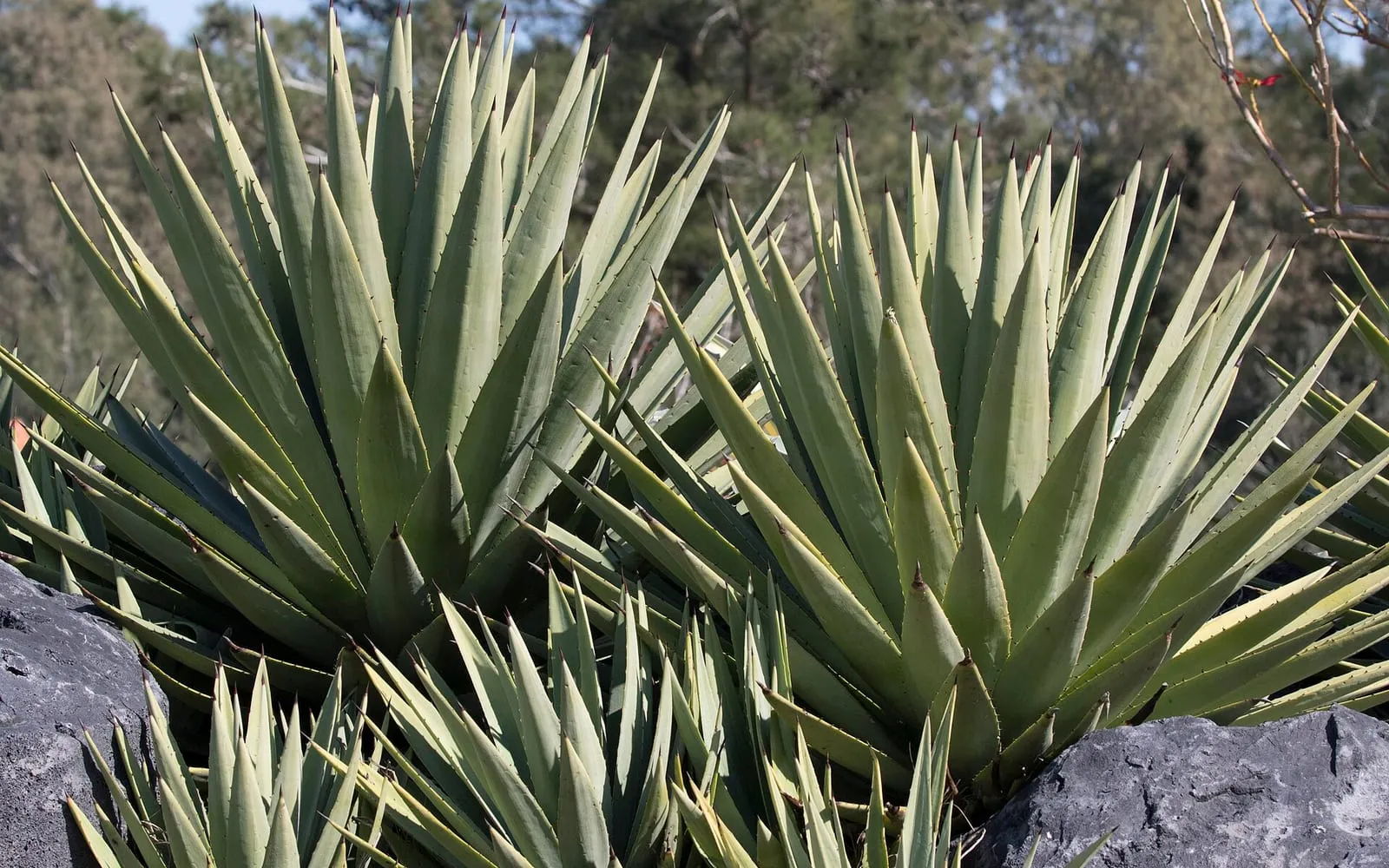
The rosette looks like a pale starburst, its many slim leaves tapering to points and radiating from a low centre. Leaf colour ranges from a soft grey-green to a chalkier blue between populations, and a thin white line traces each blade. The banded form sold as ‘Marginata’, with leaves edged in cream, is the one most collectors meet on a bench.
It is not a fussy plant if the roots stay dry. It produces pups until a single crown becomes a thicket, holds a store of water in every leaf, and tolerates a skipped watering. Give it light, coarse compost and warmth. A cold pot standing in water is the mistake that causes most failures.
Appearance and character
Each leaf is narrow, straight and firm, narrowing to a fine tip and ending in a hard chestnut spine that draws blood from a careless hand. Small, regular teeth run the margins along a thread of white cartilage, and the blades stay rigid enough to hold the starburst as the plant widens.
A short woody stem builds up over the years as the oldest leaves wither and fall, lifting the crown a little off the ground. Pups crowd in around that base and root as they go, so this is among the readiest agaves to lift, divide and pass around.
Flowering ends the life of any one rosette. A tall stem rises and branches near its head into candelabra tiers of yellow-green bloom, seed follows, and the spent rosette collapses while its offsets carry the clump on. Under a household ceiling the bloom stays a rarity, and the leaves are the reason to keep it.
Where it is from
This agave grows in thornscrub, dry hillsides and sandy coastal flats across its long north-to-south range, in country that alternates a drenching summer wet season with months of hard drought. The sun beats down, the ground is stony and quick to shed a shower, and frost reaches only the very edges of its territory.
Set the pot up to match that and it settles fast. The distilleries plant it on open, sun-scorched slopes in loose ground that never stays wet, and it fails where a chilled container traps moisture around the crown. Warmth, grit and strong light indoors stand in for a Mexican hillside.
How it grows
New blades push out of the centre across the warm half of the year while fresh pups break the surface around the rim, and the whole clump slows once daylight shortens. In strong light the leaves stay lean, rigid and white-edged; in dim conditions they grow long, soft and lose the pale rim.
Root it in an open, mineral mix that drains within seconds of a soaking. After potting, do not water again until the top layer feels dry against a fingertip, since the leaves use their own stored water between drinks and the crown needs to dry.
Held above roughly 10 deg C it may keep growing through mild winters, where a true desert agave would stop. Detaching a rooted pup and setting it in its own pot is the fastest way to make another plant.
Through the seasons
Spring brings the clump back into growth as the light strengthens. Increase watering and lift any surplus pups into pots of their own.
Summer is the main growing season. Wet the mix once its surface has dried, and stand the rosette in the brightest position you can find.
Autumn slows growth. Stop feeding and let more time pass between waterings as the sun weakens.
Winter needs very little water. A rare splash keeps it ticking over, and the clump must stay clear of chill and damp.
Care difficulty
Forgiving, and quick to take hold wherever light and drainage are right. Its free suckering, stored water and low need for feed all make it tolerant of missed care. The main cultivation hazard is a chilled, sodden root run, so keep it on the dry side through the cold months, and give the spined tips clearance from where people brush past.
Watering
Check the mix with a finger and wait until the surface has crumbled dry, then soak it until water runs from the drainage holes and let the surplus drain away. The plump leaves store water, so a long dry gap is safer than roots left standing wet.
Cut right back once the cold sets in, when a waterlogged pot does the most damage. Judge each drink by the state of the mix, since this plant is at greater risk from wet compost than from drought.
Warning signs, diseases and pests
A cold, wet root run shows first as a soft, browning patch low on the crown, or a rosette that tips loose when you rock it. Sharpen the drainage, cut the watering hard, above all in winter, and shift the plant somewhere warm and well lit.
Mealybugs hide in the tight leaf joints and spider mites move in once the air turns dry. Look down into the crowded centre of the rosette and deal with any early colony by wiping it off and following up with a suitable spray.
Browning along the slim leaf tips points to erratic watering or a pot that has stayed wet. Steadier watering and sharper drainage should improve new growth.
Growing environment
Direct sun gives the best growth. In strong sun the leaves stay narrow, hard and crisply outlined; in poor light they flop and the rosette loses its clean shape.
Treat it as tender to a hard freeze. Stand it somewhere bright and free of cold draughts, above about 5 deg C, on a bright sill or in an airy, light room, and give it a spell outdoors through high summer.
Pot it in a loose, fast-draining, grit-rich mix in a container that empties freely, and leave the clump room to widen. Move it by taking hold of the pot so the spined tips stay well clear of your fingers.
Feeding
A dose or two of weak, balanced feed across the warm months is all the clump needs. Too much feed and the leaves turn soft and overlong, so keep the strength low.
Give nothing through winter. A fresh potting into gritty mix supports a young plant for a long time, so the feed can wait for the warmth to return.
Troubleshooting
Why is my caribbean agave going soft at the base? A chilled, wet root run is the likely cause. Improve the drainage, water far less, and keep it warm.
How much light does it need? As much direct sun as you can offer. Shade opens the rosette out and bleaches the white leaf margins.
How often should I water it? Once the top of the mix has dried, and only now and then in winter, reading the mix instead of a fixed day.
How do I propagate it? Detach a rooted pup from the crowded base and grow it on in its own pot.
Is it safe around pets? No. The sap is an irritant that burns the mouth and skin, and veterinary references report agaves as toxic to cats and dogs, so keep chewing pets away and mind the sharp leaf tips.
Caribbean Agave problem guides
Not sure what is wrong? See the common houseplant pests guide.