
Outdoor plant
Saw Palmetto
Serenoa repens
Also known as Sabal palmetto (a separate but related species, often confused)
How to grow saw palmetto, Serenoa repens, in a garden. Its low, spreading habit, the saw-toothed leaf stalks behind its name, and its extreme hardiness for a palm.
At a glance
- Difficulty
- Easy
- Water
- Regular watering while young, drought-tolerant once established
- Light
- Full sun to partial shade
- Temperature
- Tolerates brief hard frost once established
- Hardiness
- USDA 7-11, RHS H4, hardy to -12 C
- Type
- Evergreen perennial palm
- Height
- 1-3 m, spreading 2-4 m wide
- Native to
- Southeastern United States
Unusually cold-hardy for a palm, tolerating brief spells well below freezing once established, which has made it one of the few palms reliably grown well outside the tropics and subtropics, including sheltered gardens in cooler temperate regions. Its low, ground-hugging growth habit also helps it shrug off wind and salt spray that would damage a taller, more exposed palm.
Hardiness zones describe winter cold alone. Summer heat, humidity, rainfall and the length of the growing season decide as much, so treat the range as the outer limit rather than as a recommendation.
Harmful to dogs if eaten
- Do not eat
- The dark purple-black berries, in large quantities
- Harm from
- Eating it
- Affects
- Dogs
The berries, widely used in herbal supplements marketed for prostate health, can cause vomiting and digestive upset in dogs that eat a significant quantity, according to veterinary poison control sources, though serious poisoning is uncommon. No toxicity to people is documented; the berries have a long history of both wild harvest and commercial supplement use. Fronds carry sharp, saw-toothed edges along their stalks that can cut skin, which is a physical hazard rather than a toxic one but worth the same caution.
Source: ASPCA
About
Saw palmetto is a low, tough, ground-hugging palm of the southeastern United States, forming dense, spreading clumps rather than growing a tall upright trunk like most other palms. It takes its common name from the sharp, saw-toothed spines lining the edges of its long leaf stalks, a distinctive and slightly hazardous feature that makes handling mature foliage without gloves inadvisable.
Beyond horticulture, its berries have become widely known as a herbal supplement marketed for prostate health, harvested commercially from wild stands across its native range, though the clinical evidence for that use remains debated among researchers; this entry concerns growing the plant rather than any medicinal claim about it.
Appearance and character
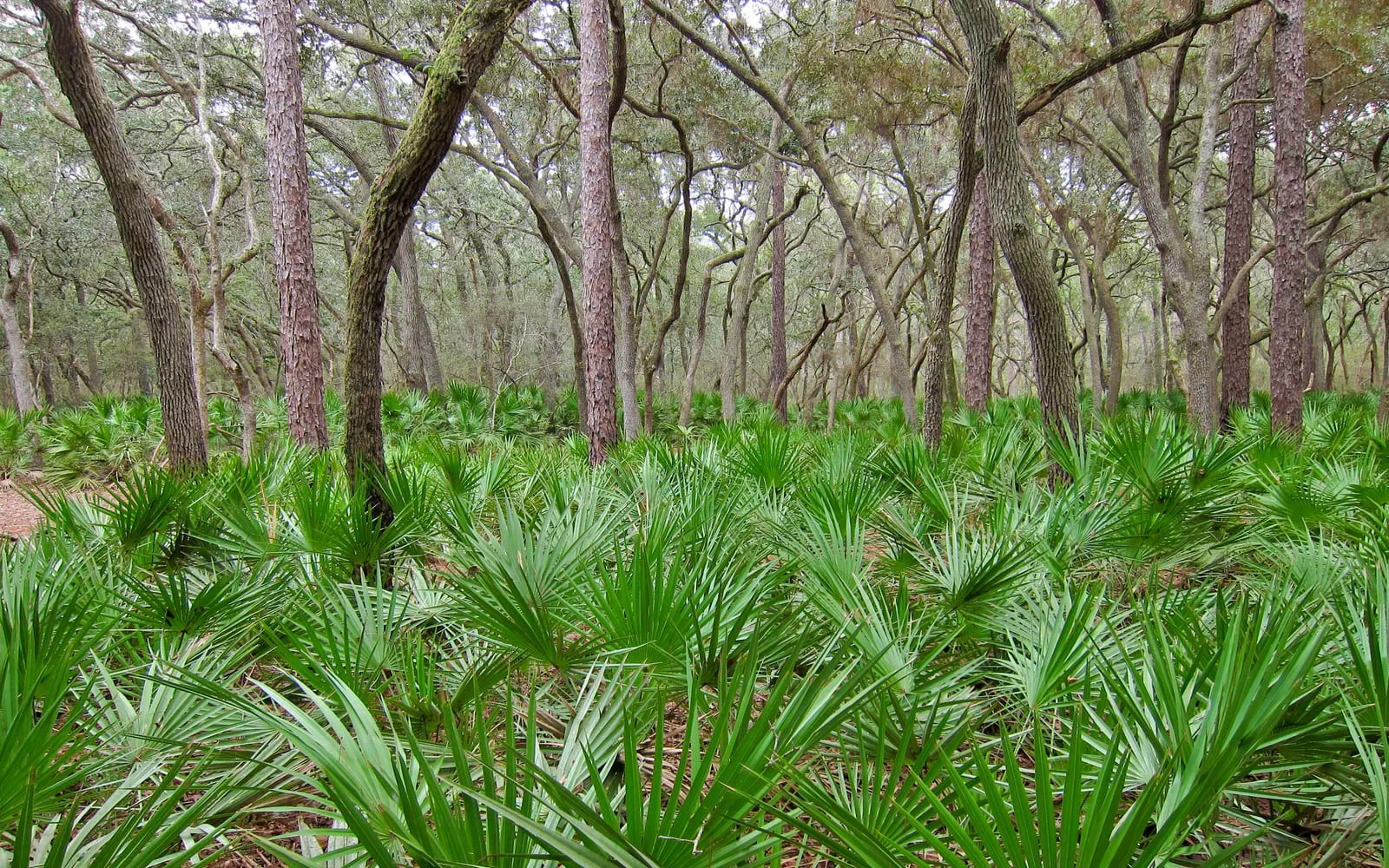
Fan-shaped, blue-green to silvery-green fronds arise on long stalks edged with sharp, forward-curving spines, directly from a trunk that typically creeps horizontally along or just below the soil surface rather than growing upright, giving mature clumps a low, sprawling, shrub-like silhouette quite unlike a typical single-trunked palm.
Creamy white, fragrant flowers appear in branched clusters among the foliage in late spring, an important nectar source for bees in its native range, followed by clusters of dark purple-black berries that ripen through autumn and are eaten by a range of native wildlife.
Where it is from
Sandy pine flatwoods, coastal scrub and open understorey across the southeastern United States, from South Carolina to Louisiana and throughout Florida, typically on poor, free-draining, sandy soil in full sun to light shade.
That native habitat, exposed to periodic fire, salt spray and drought, explains the plant’s considerable toughness: it resprouts readily from its below-ground trunk after fire damage and tolerates coastal exposure and poor soil that would trouble most other ornamental palms.
How it grows
An evergreen, clump-forming palm with a trunk that grows horizontally, often buried or partly buried in the soil, extending slowly outward over many years rather than gaining height the way most palms do. Individual clumps can live for a very long time, with some wild specimens in Florida estimated to be many centuries old thanks to this slow, resilient, horizontal growth habit.
Because the growing point sits low, at or near ground level, this species copes with fire and frost damage to its foliage far better than a tall-trunked palm whose single crown is more exposed and vulnerable.
Through the seasons
Spring: Fresh fronds appear. Mature clumps also produce fragrant white flower clusters.
Summer is the main growing period, with berries developing and ripening from the earlier flowers.
Autumn berries ripen fully to dark purple-black and are taken readily by wildlife.
Winter established plants tolerate real cold remarkably well for a palm, with foliage sometimes showing minor frost damage that is trimmed away in spring.
Care difficulty
Easy, and one of the most trouble-free palms available for a garden setting once established. Its tolerance of poor soil, drought, salt exposure and real cold makes it a reliably low-maintenance choice compared with most other ornamental palms, which typically demand at least one of warmth, rich soil or reliable moisture that this species does not.
Watering
Regular watering supports good establishment in the first year or two. Once settled, it tolerates real drought thanks to its adaptation to poor, free-draining sandy soil, and deep, infrequent watering suits it better than frequent light watering, which encourages shallow rooting.
Warning signs, diseases and pests
Scale insects occasionally appear on the fronds and respond to a horticultural oil treatment where infestations are heavy. Palmetto weevil, a pest more commonly associated with taller palm species, can attack saw palmetto that is already stressed or physically damaged, though healthy plants are rarely seriously affected.
Slow growth and a somewhat sparse appearance are normal characteristics of this species rather than signs of ill health; it is a slow-growing palm by nature, and impatience for rapid results is the most common misplaced concern gardeners have with it.
Browning or damaged fronds after a hard frost are usually cosmetic rather than a threat to the plant’s survival, given its low growing point and resilience to cold; trim away the damaged foliage once the risk of further frost has passed.
Growing environment
Full sun suits established plants best, though it tolerates a good deal of shade, particularly when young. Poor, sandy, free-draining soil is tolerated well, and this species is especially more tolerant of coastal salt exposure than most other ornamental palms, making it a useful choice for an exposed coastal garden.
Feeding
A palm-specific fertiliser containing adequate magnesium and potassium, applied two to three times through the growing season, supports healthy green fronds, though this species performs reasonably well even without regular feeding thanks to its adaptation to naturally poor soil.
Troubleshooting
Growth seems very slow. This is normal for the species, which spreads and gains height gradually over many years rather than quickly. Consistent but modest care over a long period, rather than heavy feeding, is the appropriate approach.
Fronds are damaged after a hard frost. Established plants generally survive with only cosmetic damage thanks to their low growing point. Trim away damaged foliage once the risk of further frost has passed.
A dog has eaten a quantity of fallen berries. Watch for vomiting or digestive upset and contact a vet if symptoms appear or if a large quantity was eaten, though serious poisoning is uncommon.
Handling the plant has caused cuts or scratches. The leaf stalks carry sharp, saw-toothed spines along their edges. Wear thick gloves and long sleeves when pruning or dividing an established clump.
A clump seems to be spreading sideways rather than staying compact. This is normal for the species, whose trunk grows horizontally along or just below the ground rather than staying upright in one place. Give it room to spread from the outset, or plan on periodically trimming back the outer edge of an established clump if space is limited.
You are trying to establish this species after a wildfire or hard pruning removed the top growth. Established plants generally resprout readily from the below-ground trunk, reflecting their natural adaptation to periodic fire in their native range, and new fronds typically appear within a season provided the root system was not also destroyed.