
Outdoor plant
Tansy
Tanacetum vulgare
Also known as Common tansy
How to grow tansy in a border or wildlife garden. Its button-like yellow flowers, aromatic fern-like foliage, and why it needs firm control to stop it spreading.
At a glance
- Difficulty
- Easy
- Water
- Naturally rain-fed once established
- Light
- Full sun to light shade
- Hardiness
- USDA 3-9, RHS H7, hardy to -35 C
- Type
- Hardy herbaceous perennial
- Height
- 60-120 cm
- Native to
- Europe, Temperate Asia
Extremely hardy and highly adaptable, tolerating cold winters, poor soil and considerable drought once established. Its main challenge in cultivation is not survival but containment, since it spreads readily by both rhizome and self-seeding and has naturalised widely outside its native range as a result.
Hardiness zones describe winter cold alone. Summer heat, humidity, rainfall and the length of the growing season decide as much, so treat the range as the outer limit rather than as a recommendation.
Toxic if eaten
- Do not eat
- The whole plant, particularly the leaves and flowers
- Harm from
- Eating it
- Affects
- People, cats, dogs and horses
Tansy contains thujone, a compound that is toxic in significant quantity, historically linked to poisoning cases when the plant or its essential oil was used carelessly in traditional medicine or as an abortifacient. The ASPCA lists it as toxic to cats, dogs and horses, and eating a substantial quantity can cause vomiting, convulsions and, in serious cases, organ damage. Ordinary garden contact and incidental grazing rarely cause problems, since the plant is strongly bitter and unpalatable, but it should not be used as a home herbal remedy and is worth keeping away from livestock pasture and inquisitive pets.
About
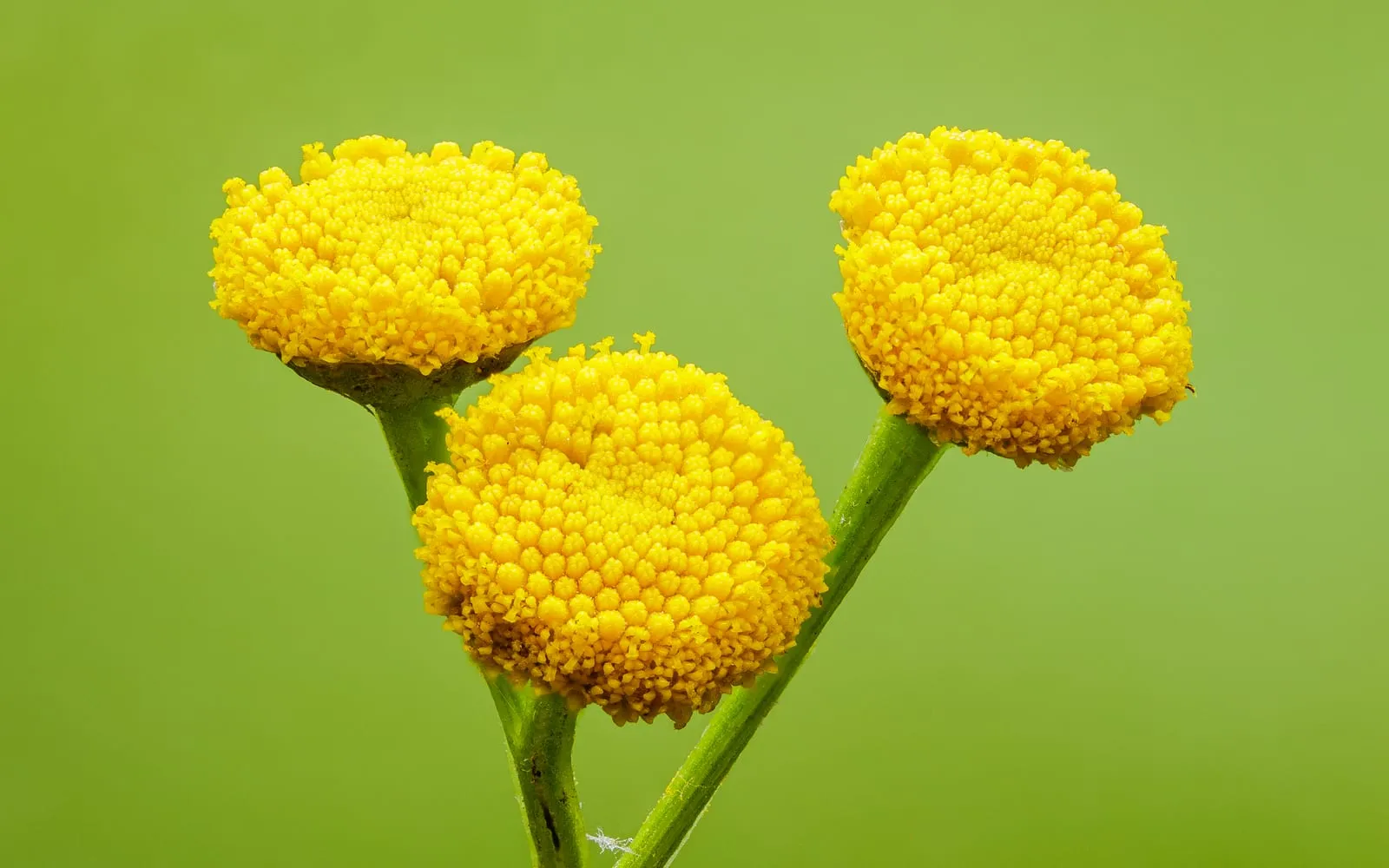
Tansy is a tough, aromatic perennial grown for its clusters of small, flat, button-like yellow flowers held above finely divided, fern-like foliage that releases a strong, distinctive scent when brushed or crushed. It has a long history of use as a strewing herb, an insect repellent and a traditional, though risky, herbal medicine, and its flat flower clusters are attractive to a range of pollinating insects, particularly hoverflies and smaller bees.
The same vigour that makes it easy to grow has also made it a significant naturalised weed across parts of North America and elsewhere, spreading by both rhizome and prolific self-seeding, so it is worth planting with a clear plan for containing it rather than letting it roam freely through a border or, worse, into nearby grassland or waste ground.
Appearance and character
Deeply divided, fern-like leaves, dark green and strongly aromatic when crushed, clothe upright, sometimes reddish stems that carry flat clusters of small, round, golden-yellow flower heads in late summer, each individual flower head resembling a tight button rather than having the more familiar ray petals of a typical daisy. The overall effect is a somewhat coarse, vigorous plant rather than a refined border specimen.
Left to its own devices, the plant spreads readily by underground rhizomes as well as by seed, and an unmanaged patch can expand much within just a few growing seasons, which is worth allowing for from the outset rather than discovering later.
Where it is from
Grassland, hedgerows and disturbed ground across Europe and temperate Asia, tolerant of a wide range of soil types and conditions, which underlies both its usefulness as a tough, low-maintenance garden plant and its capacity to become a persistent weed where it escapes cultivation.
That broad tolerance for poor soil, cold and drought has let this species establish successfully well beyond its native range wherever it has been introduced, and it is now considered an invasive species in parts of North America, a status worth checking against local regulations before planting it deliberately.
How it grows
A hardy perennial spreading by both rhizome and seed, building an increasingly wide patch from a single original planting within a few years unless actively contained. Growth is vigorous and largely untroubled by poor soil, drought or cold, reflecting the plant’s origins as a tough, adaptable species of disturbed and marginal ground.
Because both spreading mechanisms are effective, containing this species usually means either planting it in a large container sunk into the ground to block rhizome spread, or committing to regular deadheading before seed disperses and periodic division to keep the clump within bounds.
Through the seasons
Spring fresh, feathery foliage emerges as growth resumes, spreading outward from the previous year’s rhizome network.
Summer is the main flowering period, with flat clusters of yellow button flowers opening from midsummer.
Autumn deadhead promptly if self-seeding is unwanted, since seed disperses readily once flower heads mature and dry.
Winter the plant dies back to ground level, fully hardy and needing no protection, ready to resprout vigorously from its rhizome the following spring.
Care difficulty
Easy to the point of needing active management rather than encouragement. This is an especially low-maintenance plant in terms of keeping it alive, and the real skill is limiting where it is allowed to spread.
Watering
Regular watering supports establishment in the first year. Once settled, this species tolerates real drought and generally needs no supplemental watering at all, reflecting its tolerance of poor, dry ground.
Warning signs, diseases and pests
This is an unusually trouble-free plant, with few significant pests or diseases reported in typical cultivation; aphids occasionally colonise soft new growth but rarely cause lasting harm.
The main practical issue with this species is uncontrolled spread rather than any disease, and the appropriate response is physical containment, whether a barrier to block rhizome spread or regular deadheading to prevent self-seeding, rather than treating the growth itself as a problem to diagnose.
Growing environment
Full sun to light shade both suit it, and this species tolerates a unusually wide range of soil types and conditions with little complaint. Consider containment from the outset, whether a sunken barrier, a large container, or a spot chosen so its spread will not threaten neighbouring plants or nearby natural areas.
Feeding
None needed. This species thrives on poor soil without any supplemental feeding, and richer conditions mainly encourage even more vigorous spread rather than any particular improvement in flowering.
Troubleshooting
The plant has spread far beyond its original planting area. This is normal for the species without active containment. Install a barrier to block rhizome spread, or lift and divide regularly, discarding unwanted growth.
Unwanted seedlings are appearing in other parts of the garden. Deadhead spent flower heads promptly before seed disperses, since this species self-seeds readily wherever conditions allow.
A pet or child may have eaten a significant quantity of the plant. Treat this as a real concern given the thujone content, and seek prompt veterinary or medical advice rather than waiting to see if symptoms develop.
You are considering this species for a wildlife-friendly border. Weigh its value to certain pollinators against its vigorous spreading habit, and check local invasive species guidance, since this plant is restricted or discouraged in some regions due to its history of escaping cultivation.
You want to grow it purely for its historic insect-repellent use. A single contained clump, kept firmly within a sunken barrier, provides plenty of aromatic foliage for drying or strewing without risking the wider spread the species is prone to if left unchecked in open ground.
A neighbouring plant seems to be struggling since tansy was planted nearby. Check whether the tansy’s spreading rhizomes have moved into the neighbour’s root zone, since this vigorous species can outcompete less robust plants for space and moisture at the root level even before its top growth visibly encroaches on the space above ground, making the underlying cause easy to miss at first glance.