
Outdoor plant
Ox-Eye Daisy
Leucanthemum vulgare
Also known as Moon daisy, Marguerite
How to grow ox-eye daisy in a wildflower meadow or border. Its classic white and yellow flowers, why it needs lean soil, and how it differs from Shasta daisy.
At a glance
- Difficulty
- Easy
- Water
- Naturally rain-fed once established
- Light
- Full sun to light shade
- Hardiness
- USDA 3-8, RHS H7, hardy to -35 C
- Type
- Hardy herbaceous perennial
- Height
- 30-90 cm
- Native to
- Europe, Temperate Asia
Extremely hardy through cold temperate winters, and best suited to lean, unimproved soil rather than a rich, well-fed border, where it competes poorly against more vigorous plants. It self-seeds readily in a suitable meadow or rough grass setting and tolerates a wide range of temperature conditions across its broad native range.
Hardiness zones describe winter cold alone. Summer heat, humidity, rainfall and the length of the growing season decide as much, so treat the range as the outer limit rather than as a recommendation.
Not known to be toxic
Ox-eye daisy has no toxicity listing from the RHS or the ASPCA and is considered safe around pets and children. There is no documented history of poisoning associated with this species.
Source: RHS
About
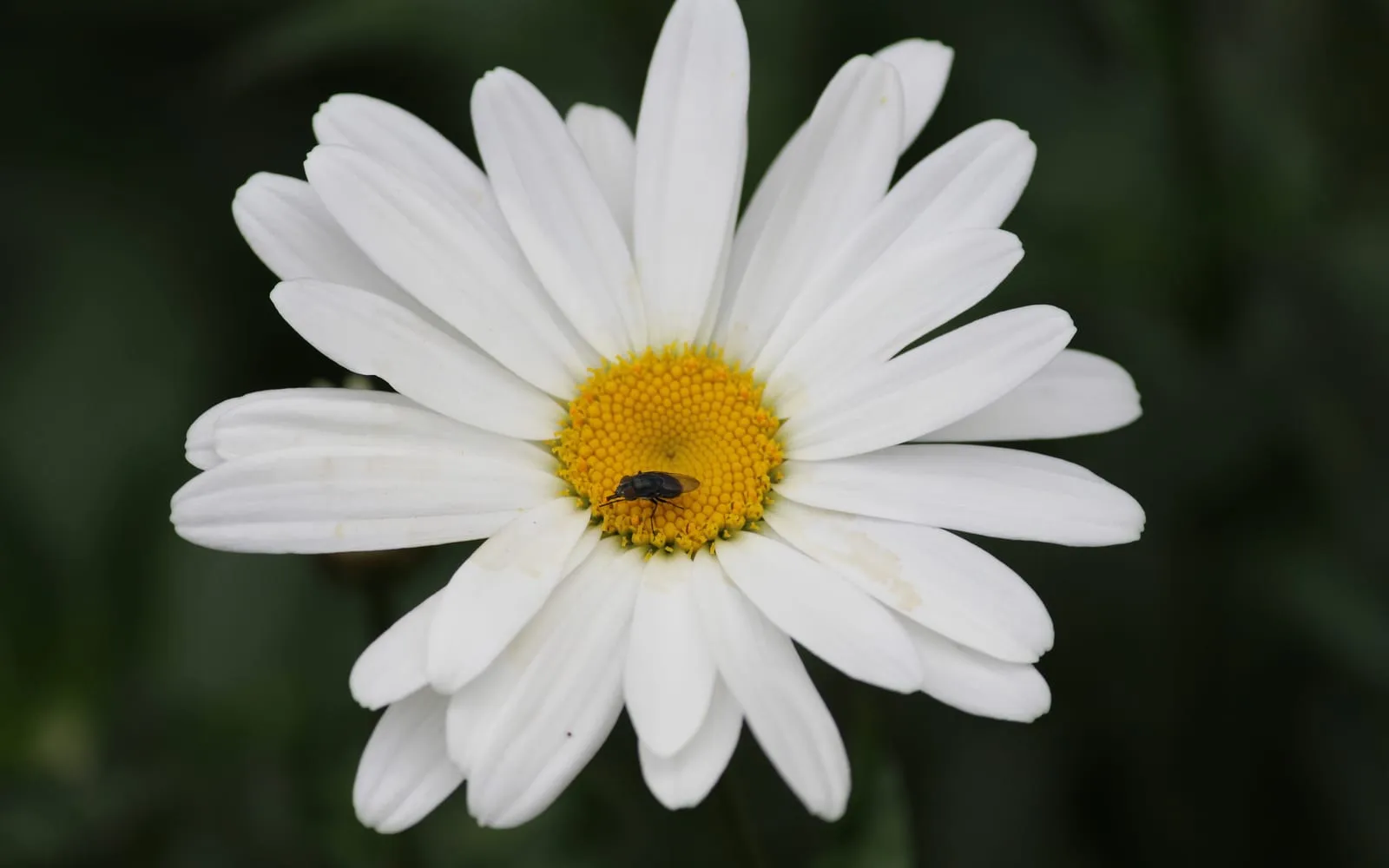
The ox-eye daisy is the classic wild daisy of European meadows and roadside verges, its simple white-petalled, yellow-centred flowers held on wiry stems above a low rosette of foliage, instantly recognisable and a familiar sight through early to midsummer across a huge native range. It is a mainstay of wildflower meadow seed mixes, thriving on the lean, unimproved soil that lets more delicate wildflowers compete against vigorous grasses.
It is often confused with the larger, more refined Shasta daisy grown in borders, a garden hybrid bred partly from this species but holding especially bigger flowers and a bushier, more clump-forming habit; the wild ox-eye daisy is smaller, more delicate in appearance, and much better suited to a naturalistic meadow than a formal border display.
Appearance and character
A low rosette of spoon-shaped, toothed leaves gives rise to upright, branching flower stems. Each stem is topped with a single classic daisy flower, white, slightly drooping outer petals surrounding a flat, golden-yellow centre. Flowers are held well above the foliage on wiry stems that move readily in a breeze, giving a meadow full of them a characteristic nodding, shimmering quality in early summer.
Individual plants form a modest clump, and a well-established meadow planting produces a dense scatter of flowers across the whole area rather than the flowers being confined to a few concentrated clumps, particularly once self-seeding has had a season or two to spread the population naturally.
Where it is from
Meadows, grassland and roadside verges across a broad native range spanning Europe and temperate Asia, typically on lean, unimproved, free-draining soil rather than rich, fertile ground.
That preference for lean soil is central to how the species behaves in cultivation: it competes poorly against vigorous grasses and other plants on rich ground, and its presence in a lawn or meadow is often a useful sign that the soil has not been heavily fertilised over the years, in the same way several other classic wildflower meadow species behave.
How it grows
A hardy perennial forming a modest rosette and clump, flowering on upright stems each summer and self-seeding readily where conditions suit it. Growth is not especially vigorous compared with many garden perennials, which is precisely why it needs lean, uncompetitive soil to thrive rather than being crowded out by faster-growing neighbours.
In a wildflower meadow setting, mowing timing matters: cutting before flowers have set and dispersed seed prevents the self-seeding that keeps a meadow population going from year to year, so the first cut is generally delayed until well after flowering and seed dispersal have finished.
Through the seasons
Spring a rosette of foliage develops, with flower stems beginning to rise as temperatures increase.
Summer is the main flowering period, typically peaking in June, with classic white and yellow daisies opening across an established planting.
Autumn seed disperses from flowers left unmown, supporting the following year’s self-seeding into a meadow or rough grass planting.
Winter the plant dies back to its basal rosette, fully hardy and needing no protection through even a severe winter.
Care difficulty
Easy in the right setting, lean, unimproved soil in a meadow or informal border, and much harder to maintain in a rich, well-fed position where more vigorous plants outcompete it easily over time.
Watering
This species relies on natural rainfall once established in a suitable meadow or border setting, and supplemental watering is rarely necessary except during establishment or an unusually severe drought.
Warning signs, diseases and pests
Few pests or diseases trouble this species in a typical meadow or wildflower border setting; aphids occasionally appear on flower stems but rarely cause lasting harm.
A declining presence within an established wildflower meadow often signals that the soil has become more fertile over time, whether from fertiliser use, mowing and leaving clippings to rot down, or nutrient runoff from elsewhere in the garden, since richer conditions favour more vigorous competing grasses and plants over this lean-ground species.
Growing environment
Full sun to light shade both suit it, and lean, free-draining, unimproved soil is the single most important condition for a thriving, self-sustaining population. Avoid fertiliser and remove mown clippings rather than leaving them to rot down, both of which help keep soil fertility low enough for this species to compete successfully.
Feeding
None at all. Feeding actively works against this species by favouring more vigorous competing plants, so the best approach is to leave the area unfertilised where this species is wanted.
Troubleshooting
This species is disappearing from an established wildflower area. Check whether soil fertility has increased over time, whether from fertiliser, left clippings or nutrient runoff, since richer soil favours more vigorous competing plants over this lean-ground species.
You want to encourage more of this species in a meadow. Delay the first mowing of the year until well after flowering and seed dispersal have finished, since cutting too early removes the plant’s main means of spreading each year.
You are trying to tell this apart from a garden Shasta daisy. Check flower and plant size: the wild ox-eye daisy is noticeably smaller and more delicate in every respect than the larger-flowered, bushier Shasta daisy bred partly from it for border use.
Flowering seems sparse in an otherwise healthy-looking planting. Check that the soil has not become too rich, and consider whether nearby vigorous grasses or plants are outcompeting it for light and space, since this species performs best with relatively little competition.
You are sourcing seed for a new wildflower area. Choose a mix specifically described as native or wild-origin rather than one bred for larger, showier flowers, since the goal for a naturalistic meadow is this species’ modest, delicate wild form rather than a garden-bred selection.
You want to combine this species with other wildflowers in the same area. Choose companions with a similar preference for lean, unimproved soil, such as field scabious or knapweed, rather than richer- loving border perennials, so the whole planting competes on an even footing rather than one group swamping the rest.