
Houseplant
Tall Sinningia Gesneriad
Sinningia elatior
Also known as Sinningia elatior
How to grow Sinningia elatior, the tall sinningia gesneriad, a grassland plant with a deep fire-proof caudex and upright stems of red tubular flowers.
At a glance
- Difficulty
- Easy
- Water
- When the top few centimetres of mix have dried in growth; almost dry when dormant
- Light
- Bright filtered light, with some direct sun once growing
- Temperature
- Warm; keep above about 13 deg C in growth and keep the dormant caudex dry and warm
- Humidity
- Average
- Hardiness
- USDA 10-12, RHS H1b, hardy to 13 C
- Type
- Perennial
- Height
- 60-100 cm
- Native to
- South America
A tuberous South American perennial that dies back to a buried caudex each year. It grows in warmth and strong filtered light, then needs a dry, warm winter rest, since cold, wet compost around the dormant caudex rots it. It cannot take frost.
Hardiness zones describe winter cold alone. Summer heat, humidity, rainfall and the length of the growing season decide as much, so treat the range as the outer limit rather than as a recommendation.
Not known to be toxic
The tall sinningia gesneriad is not recorded among the seriously toxic plants, and related plants in its group are not listed as toxic by the ASPCA or the RHS. A pet or child that chewed a leaf would be unlikely to come to real harm beyond a possible mild stomach upset.
Sources: ASPCA toxic and non-toxic plants, RHS potentially harmful garden plants
About
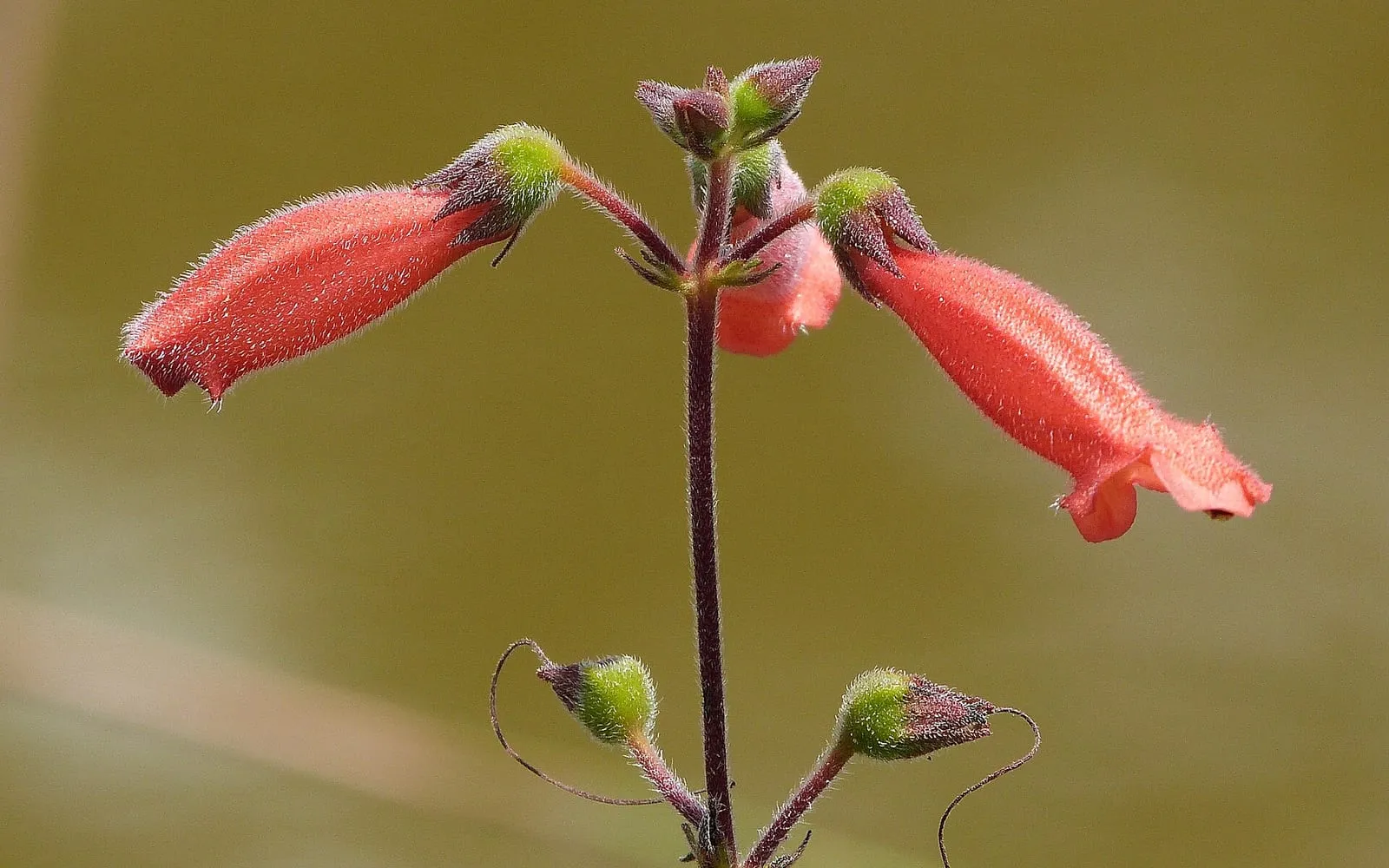
Sinningia elatior is a tall grassland gesneriad, its epithet elatior meaning “taller”, raised from a large caudex buried well below the surface. In the growing season it sends up upright leafy stems topped with tubular red flowers, the sort of narrow scarlet trumpet that hummingbirds visit, and then it dies back entirely to that hidden storage organ. The growth above ground is only the summer phase of the plant.
It belongs to the open, seasonally dry grasslands and savannas of South America, the Brazilian cerrado among them, where fire and drought are regular events. The deep, woody caudex protects the plant from both, sitting below the flames and storing water and starch, so it survives the burn and the dry season and resprouts when the rains return. Few houseplants show their fire-prone habitat so plainly.
Grown in a pot it behaves as a tuberous perennial with a firm dry rest. Warmth, strong filtered light, a lean gritty compost and a dry dormant winter keep it healthy, and the buried caudex slowly bulks up, sending stronger stems each year.
Appearance and character
The stems are erect and leafy, taller than most of the tuberous sinningias, and they arise from a caudex that sits deep in the pot instead of perching at the surface. The leaves are oval and softly hairy in the manner of the genus, carried up the stems in pairs or whorls.
The flowers cluster towards the stem tips, each a slim red tube built for a long-tongued bird, opening in succession through the warm months. When the season turns the stems yellow and die back to the ground, and the caudex holds the plant safely below until spring, exactly as it would after a dry-season fire in the wild.
Where it is from
Sinningia elatior grows across the seasonally dry grasslands and savannas of South America, the Brazilian cerrado among them, in open, sunny, fire-prone country. Its caudex sits deep, shielded from grass fires and drought alike, and drives fresh growth once the rains break.
That origin shapes a pot-grown plant’s needs towards strong light, real warmth, and a lean, sharply drained compost closer to a gritty slope than a rich woodland floor. The seasonal swing is pronounced, so it is watered freely while in leaf and kept dry and dormant once the stems have gone.
How it grows
Spring warmth and moisture wake the buried caudex, which sends up tall leafy stems that flower through summer. As autumn shortens the days the stems fade and die back to the caudex, which rests dry and dormant through the cool months before shooting again. The caudex enlarges year on year, and an older one supports taller, freer-flowering growth.
Propagation is by seed, by stem cuttings taken from firm growth in warmth, or by dividing a large caudex into budded sections. Seedlings raise their own caudex from the start and often make the sturdiest plants, though they take a season or two to reach flowering size.
Through the seasons
Spring wakes the caudex. As shoots break the surface, water gradually more and start a dilute feed.
Summer is the tall growing and flowering season. Water once the compost surface dries, give strong filtered light and warmth, and feed to carry the flowers.
Autumn ends the display. As the stems yellow, reduce watering to draw the plant down into rest.
Winter is the dormant season. Let the stems die back, keep the caudex dry and warm, and withhold feed until spring growth shows.
Care difficulty
It is easy provided the dormant caudex is kept dry and warm, and that winter rest is the point most growers get wrong, drowning or chilling the resting organ. Watered generously in summer and left almost dry in winter, in gritty compost and good light, it is a strong and long-lived plant. Cold, sodden compost around a dormant caudex is what kills it.
Watering
Water freely in the growing season once the surface of the compost has dried, always letting the pot drain so the deep caudex never sits in standing water. The plant takes plenty while in full leaf, then wants progressively less as the stems begin to fade.
Through dormancy keep the compost close to dry, with only an occasional light watering to stop the caudex desiccating. Because the caudex sits deep, err on the dry side in winter, since moisture lingers longer down in the pot than at the surface.
Warning signs, diseases and pests
A soft or hollow caudex usually means rot from wet, cold compost during the rest; lift the plant if in doubt, cut away any rot, and repot into fresh gritty mix, keeping it warm and much drier. Weak, drawn stems with few flowers in summer mean too little light or too little warmth.
Aphids cluster on young shoots and buds and mealybugs hide in the leaf joints, both cleared by hand or with insecticidal soap. Spider mites may appear in hot, dry air as fine leaf stippling, checked by raising the humidity a little.
Growing environment
Strong, filtered light suits this grassland plant, brighter than most sinningias will take, with some direct sun tolerated once the plant is growing hard. Poor light leaves it tall, floppy and flowerless.
Warmth above about 13 deg C in growth and ordinary room humidity keep it thriving. It comes from open, sunny country, so it is less fussy about damp air than the forest gesneriads, though it still dislikes cold draughts and a wet, chilly dormancy.
Feeding
Feed in the growing season with a balanced feed at half strength, turning to a higher-potash feed as buds set to support the bloom and to build the caudex for next year. Steady feeding through summer pays off in a stronger plant.
Stop feeding as the stems fade, and give none while the caudex rests. Start again only when new spring growth is clearly moving.
Troubleshooting
The whole plant has collapsed in autumn. Normal dormancy. Ease off watering, let the caudex rest dry and warm, and look for shoots in spring.
The caudex has rotted. Wet, cold compost during the rest is the usual cause. Cut out the rot, repot into fast-draining mix, and keep it drier and warmer next winter.
Why is it so tall and sparse? Too little light. This is a grassland plant that needs strong, filtered light and some sun to grow sturdy and flower.
How do I propagate it? From seed, from stem cuttings in warmth, or by dividing a large caudex into budded pieces.
Is it a risk to pets? Nothing toxic is on record for it, so a chewed leaf should amount to no more than a mild, short-lived stomach upset.
Tall Sinningia Gesneriad problem guides
Not sure what is wrong? See the common houseplant pests guide.