
Houseplant
Purple Shamrock
Oxalis triangularis
Also known as Oxalis triangularis
How to grow Oxalis triangularis, the purple shamrock, a South American plant with deep-purple triangular leaflets that fold shut at night and reopen by day.
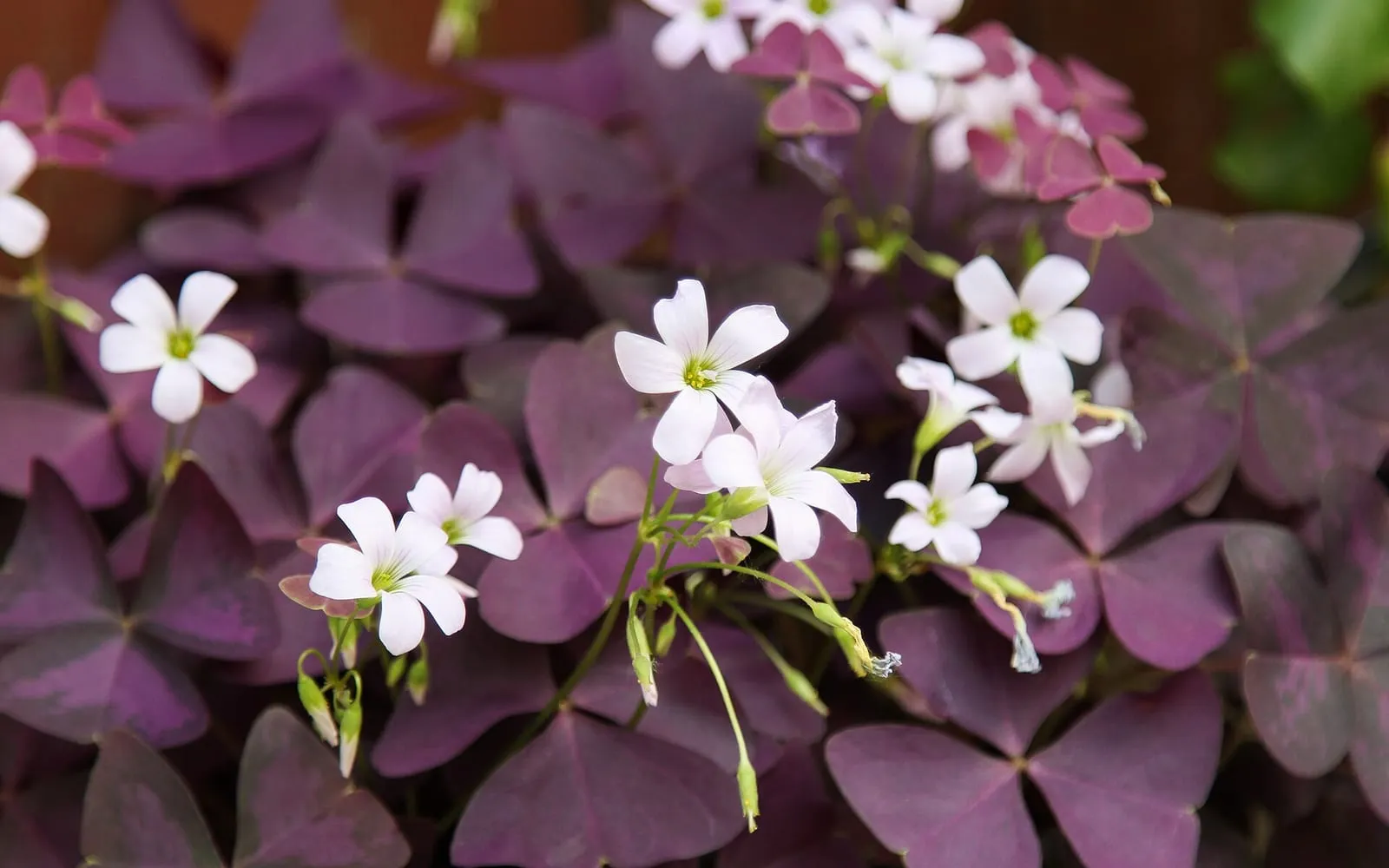
At a glance
- Difficulty
- Easy
- Water
- When the top few centimetres of mix have dried
- Light
- Bright indirect light to light shade
- Temperature
- Average room warmth; frost-tender, so keep above about 5 deg C
- Humidity
- Average to high
- Hardiness
- USDA 8-10, RHS H3, hardy to -5 C
- Type
- Perennial
- Height
- 15-25 cm
- Native to
- South America
A rhizomatous perennial from South America that takes light frost to about -5 deg C in well-drained soil and is grown outdoors in mild climates. It grows in flushes and rests dry, and warm, wet compost rots the rhizomes.
Hardiness zones describe winter cold alone. Summer heat, humidity, rainfall and the length of the growing season decide as much, so treat the range as the outer limit rather than as a recommendation.
Harmful to pets if eaten
- Harm from
- Eating it
- Affects
- Cats, dogs and horses
Oxalis triangularis, the purple shamrock, is toxic to cats and dogs if eaten in quantity. The leaves are high in soluble oxalates, and a large amount can irritate the mouth and gut and, rarely, affect the kidneys by binding calcium. A nibble is unlikely to harm a person, but keep pots away from pets that graze foliage.
Sources: ASPCA toxic and non-toxic plants, RHS potentially harmful garden plants
About
Oxalis triangularis is a low, clump-forming plant from South America, grown for its striking deep-purple leaves instead of for size or stature. Each leaf is split into three broad triangular leaflets, held out like the wings of a butterfly on a slender stalk, and the colour ranges from rich plum to near-black depending on the form and the light it gets.
The plant has a visible daily rhythm: its leaflets fold and unfold each day. They open flat through the day and close down like a shutting umbrella at dusk, then lift and reopen in the morning, and they also close in response to sudden changes in light. Slender flowers in white or pale pink rise above the foliage on thin stems and add to the display.
Beneath the surface the plant grows from small, scaly rhizomes, and this explains much of its behaviour. It grows in flushes and then rests, sometimes dying back almost completely before returning, so a purple shamrock that seems to collapse may be behaving normally.
Appearance and character
The purple leaflets are the main feature, and they are unusual enough for the plant to work on foliage alone. A well-grown clump is a low mound of overlapping triangles in deep colour, lightened by the pale flowers that rise on wiry stalks through the growing season.
The nightly folding gives the plant a changing outline through the day, and the movement is quick enough to notice over an evening. In strong light the leaves colour most deeply, while in dimmer conditions they grow larger, thinner and more greenish-purple, so the exact look depends a good deal on where you place it.
Where it is from
The species comes from South America, where it grows as a small perennial arising from clustered underground rhizomes in warm, seasonal conditions. Its habit of building up growth and then dying back to those storage organs is an adaptation to a climate with distinct wetter and drier or cooler spells.
Indoors this means the plant needs warmth, bright light and a moist but free-draining root run while it is growing, followed by periods of rest. Understanding that cycle prevents the commonest worry with the plant: mistaking natural dormancy for death and throwing out a pot that would have regrown.
How it grows
Growth comes in flushes from the rhizomes, with a crop of leaves and flowers pushing up, maturing and then fading before the next flush. Over time the rhizomes multiply, so an established pot becomes congested and can be lifted and split to make new plants or to refresh a tired clump.
To divide it, tip the plant out during a rest or at the start of a growth flush, separate the small rhizomes, and pot several together just below the surface of fresh compost for a full display. This is the easiest way to increase it, and a single pot can soon make several.
Through the seasons
Spring usually brings a strong flush of new leaves and flowers as light and warmth increase. Resume regular watering and feeding, and divide or repot a congested clump now if it needs it.
Summer is peak growth and flowering. Keep the plant in bright light for the deepest leaf colour, water when the top of the mix dries, and remove spent flower stems to keep it tidy.
Autumn often sees growth begin to slow, and some plants start to die back. Ease off water and feed as the foliage fades, and do not force a plant that is going dormant.
Winter may be a full or partial dormancy. If the leaves die down, keep the rhizomes cool and barely moist and stop feeding, then restart watering when new shoots appear. A plant that holds its leaves through winter needs only bright light and sparing water.
Care difficulty
An easy and rewarding plant, provided its rest periods are normal. It needs bright light, moderate warmth and water in growth, and it renews itself readily from its own rhizomes, which makes it hard to kill outright.
Dieback is the part that worries people. A purple shamrock that loses its leaves has usually gone dormant, not died. Cut off the dead foliage, rest the pot on the dry side, and it comes back, often stronger than before, once conditions suit it again.
Watering
Water when the top few centimetres of the mix have dried, giving enough to moisten the roots and letting the surplus drain, then wait until the surface dries again. The rhizomes rot if left in cold, wet compost, so free drainage matters as much as regular watering.
During a rest or dormancy, cut watering right back and keep the compost only just moist until new growth shows. Overwatering a resting clump can rot the rhizomes, so let the plant’s cycle guide how much you give.
Warning signs, diseases and pests
A sudden dieback of the foliage is normal. Reduce watering, remove the dead leaves, and wait for the plant to reshoot from the rhizomes.
Soft, translucent, collapsing leaves and a sour smell mean rot from waterlogging. Tip the plant out, discard any mushy rhizomes, and repot the firm ones into fresh, free-draining compost.
Aphids, red spider mite and mealybug can all appear, particularly in warm, dry air and on soft new growth. Rinse or wipe them off and treat early, and lift the humidity a little to discourage the mite.
Growing environment
Give it bright light for the richest leaf colour, with some direct morning sun tolerated but harsh midday glare through glass avoided. In too little light the leaves pale, enlarge and lose their depth of colour, and the plant grows lax.
Pot it into a light, free-draining but moisture-retentive houseplant mix in a container with drainage holes, setting the rhizomes just below the surface. Keep it warm and out of cold draughts, and refresh the compost by dividing and repotting every year or two.
Feeding
Feed with a dilute balanced liquid fertiliser through the active growth in spring and summer, at a modest strength, to support the flushes of leaves and flowers.
Stop feeding as growth slows and during any dormancy, since a resting plant cannot use it. After dividing or repotting, wait a few weeks before feeding while the rhizomes root into the fresh mix.
Troubleshooting
All the leaves died back. Is it dead? Almost certainly not. This plant goes dormant and dies back to its rhizomes. Rest it on the dry side, and it will reshoot when conditions suit it.
The leaves have gone green instead of purple. Too little light. Move it somewhere brighter and the new growth will colour up more deeply.
Why do the leaves fold up in the evening? That is the plant’s natural daily rhythm. The leaflets open by day and close at night, and they also react to sudden changes in light. It is normal and healthy.
How do I make more plants? Tip out a congested clump, separate the small rhizomes, and pot several together just under the surface of fresh compost.
Is it safe around pets? See the toxicity note above. The ASPCA lists shamrock plants (Oxalis) as toxic to cats, dogs and horses because the leaves carry soluble oxalates. A nibble usually causes drooling and a sore mouth, and large amounts can affect the kidneys, so keep it away from pets that chew.
Purple Shamrock problem guides
Not sure what is wrong? See the common houseplant pests guide.