
Houseplant
Magnificent Sinningia Gesneriad
Sinningia magnifica
Also known as Sinningia magnifica
How to grow Sinningia magnifica, the magnificent sinningia gesneriad, a compact tuberous plant with velvety leaves and scarlet tubular flowers.
At a glance
- Difficulty
- Easy
- Water
- When the top few centimetres of mix have dried
- Light
- Bright indirect light to light shade
- Temperature
- Warm; keep above about 13 deg C
- Humidity
- Average to high
- Hardiness
- USDA 10-12, RHS H1b, hardy to 13 C
- Type
- Perennial
- Height
- 30-90 cm
- Native to
- Brazil
A tender tropical foliage plant from Brazil, growing in warm, humid, shaded to filtered light. It needs warmth, humidity and bright indirect light, and it cannot take frost or chill. It is safest above about 13 deg C, and cold, wet compost or dry air spoils it.
Hardiness zones describe winter cold alone. Summer heat, humidity, rainfall and the length of the growing season decide as much, so treat the range as the outer limit rather than as a recommendation.
Not known to be toxic
Sinningia magnifica, the magnificent sinningia gesneriad, is not recorded among the seriously toxic plants, and related plants in its group are not listed as toxic by the ASPCA or the RHS. A pet or child that chewed a leaf would be unlikely to have more than a mild stomach upset.
Sources: ASPCA toxic and non-toxic plants, RHS potentially harmful garden plants
About
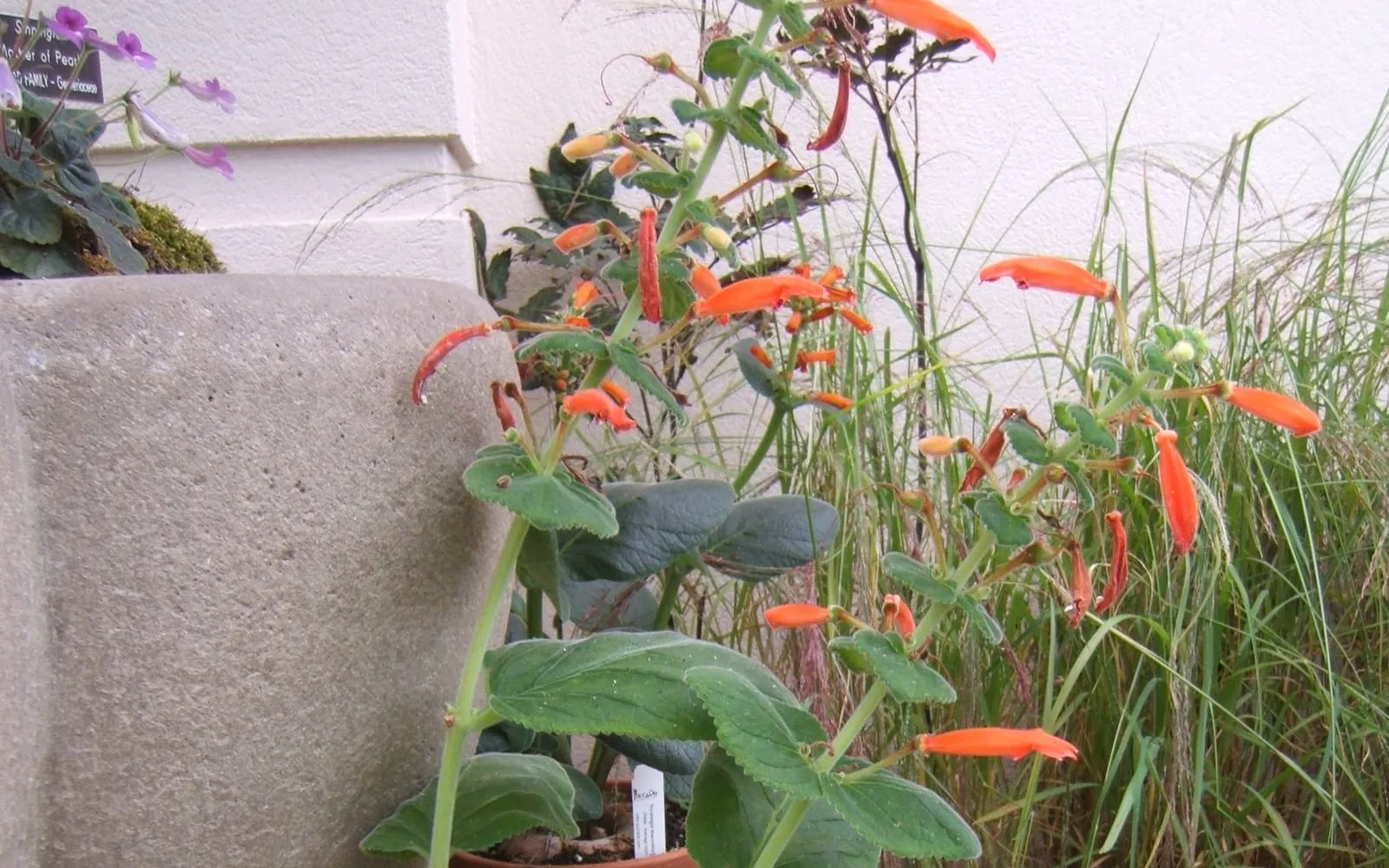
Sinningia magnifica is a compact, shrubby tuberous plant from Brazil, grown for its velvety foliage and warm-toned tubular flowers. A rounded underground tuber produces short, branching stems with soft leaves. Above them appear tubular, hooded flowers in scarlet to orange-red, which hummingbirds pollinate in the wild. The plant has a neat, mounded shape that suits a pot on a bright sill.
Its home is the warm forest of south-eastern Brazil, where it grows in humus among rocks and roots into fast-draining pockets instead of heavy ground. The tuber stores water and food and lets the plant get through the drier part of the year, when the top growth dies back below the surface. That seasonal dieback is part of its care as a dry winter rest.
It is not fussy if you respect that cycle. Give it warmth, bright light out of direct sun, an open compost that drains quickly, and a spell of near-dry dormancy in winter. The tuber should then return year after year, slowly enlarging.
Appearance and character
The stems are short and branching, brittle enough to snap if knocked, rising from a firm rounded tuber that sits at or just below the compost surface. Out of flower, the foliage is the main feature. The leaves are thick, softly velvety, rich matt green and often paler beneath.
The flowers are borne in clusters above the foliage, each a plump, hooded tube of scarlet to orange-red opening into short lobes. They come over a long summer season. As autumn closes in the stems die back to the tuber, which rests through the cool months before shooting again.
Where it is from
Sinningia magnifica is native to the warm coastal forests of south-eastern Brazil, growing in pockets of leaf mould and moss among rocks, in humid, dappled shade. Drainage there is fast, and the year has a drier spell that sends the plant into dormancy below ground.
Indoors that means steady warmth, bright but filtered light, and a humus-rich yet gritty compost that holds no standing water. The tuber needs a genuine dry rest in winter, so the shift between generous summer watering and near-dry dormancy matters as much as the daily routine.
How it grows
When warmth and moisture return in spring the tuber sends up velvety stems, which branch, leaf out and flower through summer. With the shorter days of autumn the stems yellow and collapse, and the tuber sits dormant and dry through winter before the cycle begins again.
New plants come from leaf cuttings, from short stem cuttings taken in warmth, or by cutting a large dormant tuber into pieces, each with a bud. Leaf and stem cuttings build a small tuber of their own over a season, so they take a little patience.
Through the seasons
Spring ends the tuber’s rest. As shoots push through, begin watering little by little and start a weak feed.
Summer is the growing and flowering peak. Water once the surface dries, keep the plant warm and brightly lit out of harsh sun, and feed to support flowering.
Autumn closes the season. As the stems yellow, reduce watering steadily to ease the tuber into dormancy.
Winter is the dry rest. Let the top die down, keep the tuber barely moist in a warm spot, and give no feed until growth resumes.
Care difficulty
Rated easy, with one main demand: a proper winter rest. Plants are usually lost when the dormant tuber is left wet and cold. Handle the stems gently, since they are brittle, water with restraint, and keep the plant warm. A waterlogged tuber in a chilly room is the main danger.
Watering
In the growing season water well once the top of the compost has dried, letting the pot drain fully so the tuber never stands in water. Aim the water at the compost instead of over the velvety leaves, whose nap holds droplets and can mark or rot if left wet.
As the stems fade in autumn, taper watering off, and through dormancy give only enough to keep the tuber from shrivelling, leaving the compost almost dry. Use tepid water, since cold water chills the roots and can spot the foliage.
Warning signs, diseases and pests
A soft, mushy tuber is the serious problem, caused by wet, cold compost, above all during the winter rest. Improve the drainage, warm the plant, and water far less. Pale, drawn stems with sparse flowers point to too little light.
Mealybugs may lodge in the leaf axils as white fluff and aphids gather on soft new growth and buds. Remove both by hand or with insecticidal soap. In hot, dry air spider mites can stipple the leaves; better humidity keeps them down. Water spots on the velvet are cosmetic but avoidable by keeping the foliage dry.
Growing environment
Bright, filtered light keeps the plant compact and flowering. In poor light the stems stretch and flowering drops. Screen it from strong midday sun through glass, which scorches the soft leaves, while gentle early or late sun is welcome.
It likes warmth and humid air, above about 13 deg C in growth. Cold draughts and a damp, chilly winter harm it, so rest the dormant tuber somewhere warm instead of on a cold windowsill.
Feeding
Feed through the growing season with a balanced feed at half strength, shifting to a higher-potash feed as buds form to support the flowers. Moderate feeding builds the tuber for stronger growth next year.
Give no feed once the plant slows towards dormancy, and none at all while the tuber rests. Begin again only when spring growth is clearly moving.
Troubleshooting
The plant has died right down in autumn. That is normal dormancy. Cut back watering, let the tuber rest warm and nearly dry, and wait for spring shoots.
The tuber feels soft. Rot from cold, wet compost, usually watering through the rest. Repot into gritty, free-draining mix, keep it warmer, and water sparingly in winter.
Why are the leaves marked with pale rings? Water spots on the velvet from droplets left to sit. Water the compost, not the foliage, and use tepid water.
How can I make more plants? From leaf or stem cuttings in warmth, or by cutting a dormant tuber into budded pieces.
Is it safe with cats and dogs? No toxin is recorded for it, so at worst a nibble might cause a mild, passing stomach upset.
Magnificent Sinningia Gesneriad problem guides
Not sure what is wrong? See the common houseplant pests guide.