
Houseplant
Creeping Charlie
Pilea nummulariifolia
Also known as Pilea nummulariifolia
How to grow Pilea nummulariifolia, the creeping charlie, a trailing Caribbean houseplant with little coin-like round leaves in pairs.
At a glance
- Difficulty
- Easy
- Water
- When the top few centimetres of mix have dried
- Light
- Bright indirect light to light shade
- Temperature
- Warm; keep above about 13 deg C
- Humidity
- Average to high
- Hardiness
- USDA 10-12, RHS H1b, hardy to 13 C
- Type
- Perennial
- Height
- 30-50 cm
- Native to
- the Caribbean, tropical South America
A tender tropical foliage plant from the Caribbean and tropical South America, growing in warm, humid, shaded to filtered light. It needs warmth, humidity and bright indirect light, and it cannot take frost or chill. It is safest above about 13 deg C, and cold, wet compost or dry air spoils it.
Hardiness zones describe winter cold alone. Summer heat, humidity, rainfall and the length of the growing season decide as much, so treat the range as the outer limit rather than as a recommendation.
Not known to be toxic
Pilea nummulariifolia, the creeping charlie, is not recorded among the seriously toxic plants, and related plants in its group are not listed as toxic by the ASPCA or the RHS. A pet or child that chewed a leaf would be unlikely to have more than a mild stomach upset.
Sources: ASPCA toxic and non-toxic plants, RHS potentially harmful garden plants
About
Pilea nummulariifolia, the creeping charlie, is a trailing houseplant grown for the little round leaves that sit in pairs down its slender stems. The name nummulariifolia means with leaves like small coins, which fits the rounded, dimpled blades. The common name needs a warning: this tender tropical Pilea is not the tough garden weed also nicknamed creeping charlie or ground ivy, which botanists file under Glechoma hederacea. In a basket it trails densely, and beyond warmth, shade and even moisture it needs very little.
It comes from the Caribbean and tropical South America, where it grows across shaded rainforest floor and over damp rocks and mossy banks. Those habitats have constant warmth, humid air and loose, spongy ground that drains fast after rain. Those facts set the rules for a windowsill. It needs screened daylight instead of a blazing sill, spongy compost held lightly damp, steady warmth and humid air. Chill the roots while they sit wet and they rot; let the air get too dry and the coin leaves brown at the rim.
Appearance and character
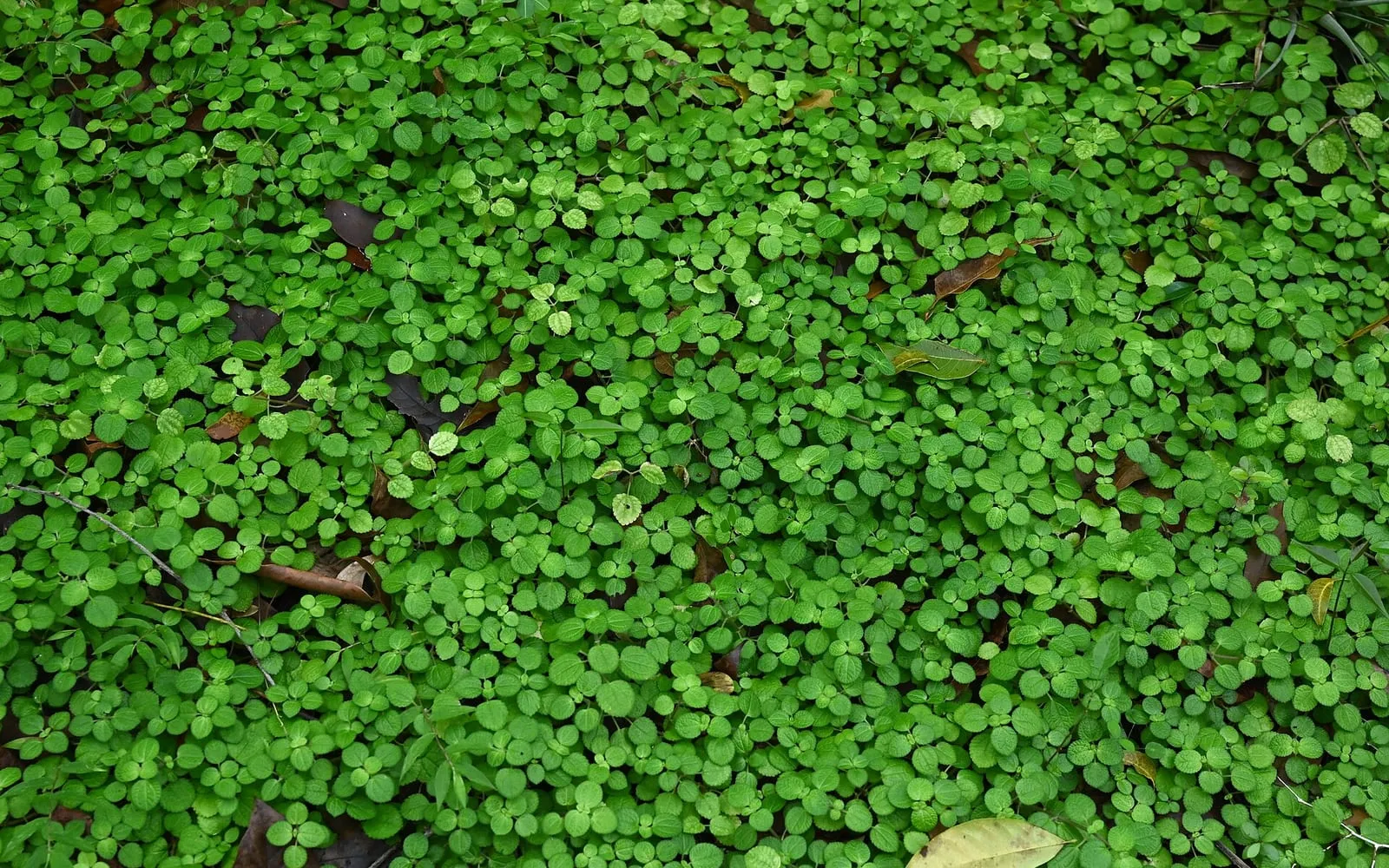
Each leaf is a small disc of bright fresh green, with a crimped surface and fine sunken veins, and the leaves sit in tidy opposite pairs along thin stems flushed with red. Given length the stems trail and root at their joints wherever they press against damp compost, which makes the plant useful for a hanging pot. Grown in a shallow pan instead, it spreads sideways and roots as it goes, making a loose green carpet. The flowers are small greenish specks tucked among the round leaves and are easy to miss.
Where it is from
This Pilea belongs to rainforest in the Caribbean and tropical South America, trailing along the shaded floor and scrambling over rock and moss in the damp understorey. Rain arrives often and drains through the loose ground at once, so the roots stay damp without standing in water, and the leaf canopy overhead filters the sunlight. Temperatures stay warm through the year and the air stays moist. Give it similar conditions at home: filtered light out of direct sun, spongy compost kept just damp, steady warmth, and enough humidity to keep the small round leaves from crisping.
How it grows
Warmth and lengthening days produce fast trailing growth, and a young plant can fill out in a single season. Left alone a stem tends to go bare behind its leafy tip, so routine pinching keeps the trailing growth thick. Pot it into a spongy, open medium, such as coco coir with orchid bark and a scatter of pumice, in a hanging or raised container that lets the stems fall. To make more, pin a trailing shoot onto moist compost and it will root at each joint within two or three weeks, or root a few cut tips in the same way.
Through the seasons
Spring starts a fresh burst of trailing growth; build the watering back up and begin a dilute monthly feed.
Summer is the strongest trailing season; keep the plant in filtered light, water each time the surface dries, and pinch the tips to keep the growth dense.
Autumn slows the trailing growth; feed less often and let the compost dry a little more between waterings.
Winter is a rest; hold it warm above 13 deg C, out of draughts, and water only enough to keep the foliage firm.
Care difficulty
Creeping charlie is easy for almost anyone, and steady moisture and light shade matter more than fussing. Set it in filtered light, keep the spongy compost lightly damp, hold it warm and give humid air, and it trails with little help. Age and gloom tend to strip the stems bare behind their tips, which you can fix by pinching and by burying a few cuttings back in the pot. Watering too freely in the cold decays the fine roots, and dry air browns the coin leaves, but both problems are easy to avoid.
Watering
Water once the compost surface dries, keeping the trailing mat lightly and evenly damp, since the fine roots dislike drying hard but rot when left cold and sodden. Soak the mix through and tip away the surplus, never letting the pot stand in a saucer of water. Ease right off in winter, when growth stalls and cold, wet compost becomes risky, giving only enough to stop the stems wilting. Because the long stems lose water fast, check the plant more often than a thick-leaved succulent, and use the feel of the compost to judge each watering.
Warning signs, diseases and pests
Soft, browning stem bases with yellowing leaves point to rot spreading through cold, wet compost; take healthy tip cuttings, root them afresh and remove the sodden growth. Long naked stems behind leafy ends show the plant is short of light or old, and can be fixed by pinching and tucking cuttings into the pot to refill it. Brown leaf rims usually mean dry air; raise the humidity. Look for mealybugs lodged among the stems and spider mites on the leaf backs, dabbing mealybugs with dilute alcohol and rinsing mites clear.
Growing environment
Hang or stand the plant where the light is bright but screened, near an east or north window or drawn back from a south-facing one, so no direct beam strikes the little leaves. Keep warmth steady, above 13 deg C and ideally in the high teens to low twenties Celsius, well clear of cold panes and heater draughts. As a trailing forest-floor plant, it needs spongy compost that drains fast while keeping a touch of moisture. Damp air keeps the coin leaves plump, so a well-filled pebble tray, a steamy bathroom or a cluster of plants can help when the room dries out.
Feeding
Give a balanced liquid feed at half the stated strength once a month across spring and summer, enough to keep the stems growing and the leaves a lively green. The roots are fine and scorch quickly, so keep the dilution weak and never feed a dry pot. Stop feeding through autumn and winter while growth slows. After potting into fresh mix, wait about a month before the first feed, letting the plant use what the new compost contains.
Troubleshooting
Why are the stems on my creeping charlie going bald behind the tips? Too little light or simple age. Shift it somewhere brighter, pinch the tips and bury cuttings in the pot to fill it out.
How much light does it need? Bright, screened light; direct sun scorches the little leaves, while deep gloom thins the trailing stems.
How often should I water it? Once the surface dries, keeping the mat lightly damp, since it dislikes drying out; water less in winter.
How do I propagate Pilea nummulariifolia? Pin a trailing shoot onto moist compost to root at the joints, or root cut tips the same way.
Is the creeping charlie safe around pets? No serious toxicity is recorded for this tropical Pilea, though a chewed leaf may cause mild stomach upset, so keep persistent chewers away from it.
Creeping Charlie problem guides
Not sure what is wrong? See the common houseplant pests guide.