
Edible
Spiny Jujube
Ziziphus spinosa
Also known as Sour Jujube, Suan Zao Ren, Wild Jujube, Ziziphus jujuba var. spinosa
How to grow spiny jujube, Ziziphus spinosa. The thorny wild jujube of China with small sour fruit and the sedative seed suan zao ren.
At a glance
- Difficulty
- Moderate
- Water
- While establishing, then rarely
- Light
- Full sun
- Temperature
- Very hardy and heat-tolerant; deciduous in winter
- Hardiness
- USDA 6-9, RHS H6, hardy to -20 C
- Type
- Thorny deciduous shrub or small tree
- Height
- 2 to 5 m
- Native to
- China
A tough shrub of dry Chinese hillsides, hardy to moderate winter cold and very tolerant of heat and drought. It drops its leaves in winter and regrows in spring, and it thrives on poor, dry, stony ground in strong sun. It copes with a wide range of conditions and only needs sun and sharp drainage, disliking cold, wet soil more than cold itself.
Hardiness zones describe winter cold alone. Summer heat, humidity, rainfall and the length of the growing season decide as much, so treat the range as the outer limit rather than as a recommendation.
Not known to be toxic
- Safe to eat
- The ripe fruit, eaten fresh or dried
Spiny jujube is not a poisonous plant. Its small sour fruit is edible, eaten fresh or dried in the way of the cultivated jujube, and the seed is the source of a well-known Chinese herb, suan zao ren, used as a sedative. That medicinal seed is prepared and used deliberately and is a matter for a qualified practitioner, particularly if you take sedatives or other medicines. The plant poses no toxic hazard to grow or handle, and the only caution in the garden is the sharp thorns. Botanically it is usually treated as a variety of the cultivated jujube, Ziziphus jujuba var. spinosa.
Sources: RHS potentially harmful garden plants, ASPCA toxic and non-toxic plants
About
Spiny jujube is the wild, thorny cousin of the cultivated jujube, a tough deciduous shrub or small tree of dry Chinese hillsides. It carries small, round, sour fruits instead of the larger sweet ones of the orchard jujube, and it is armed with sharp paired thorns that make it an effective stock-proof thicket.
It is often treated as the wild form of the same species as the cultivated jujube, and the two share a hardy, drought-hardy, sun-loving nature. This one is grown less for its fruit than for its seed, which is the source of a well-known Chinese herb.
The seed, suan zao ren, is a traditional calming herb in Chinese medicine, and gathering it is much of why the shrub is cultivated. For a grower it is a tough, thorny, drought-proof shrub with edible sour fruit, and this guide covers growing it instead of any medicinal use of the seed.
Appearance and character
Thorns are the first thing to notice, borne in pairs at the leaf joints, one usually straight and one hooked, sharp enough to make the shrub an effective barrier and awkward to handle.
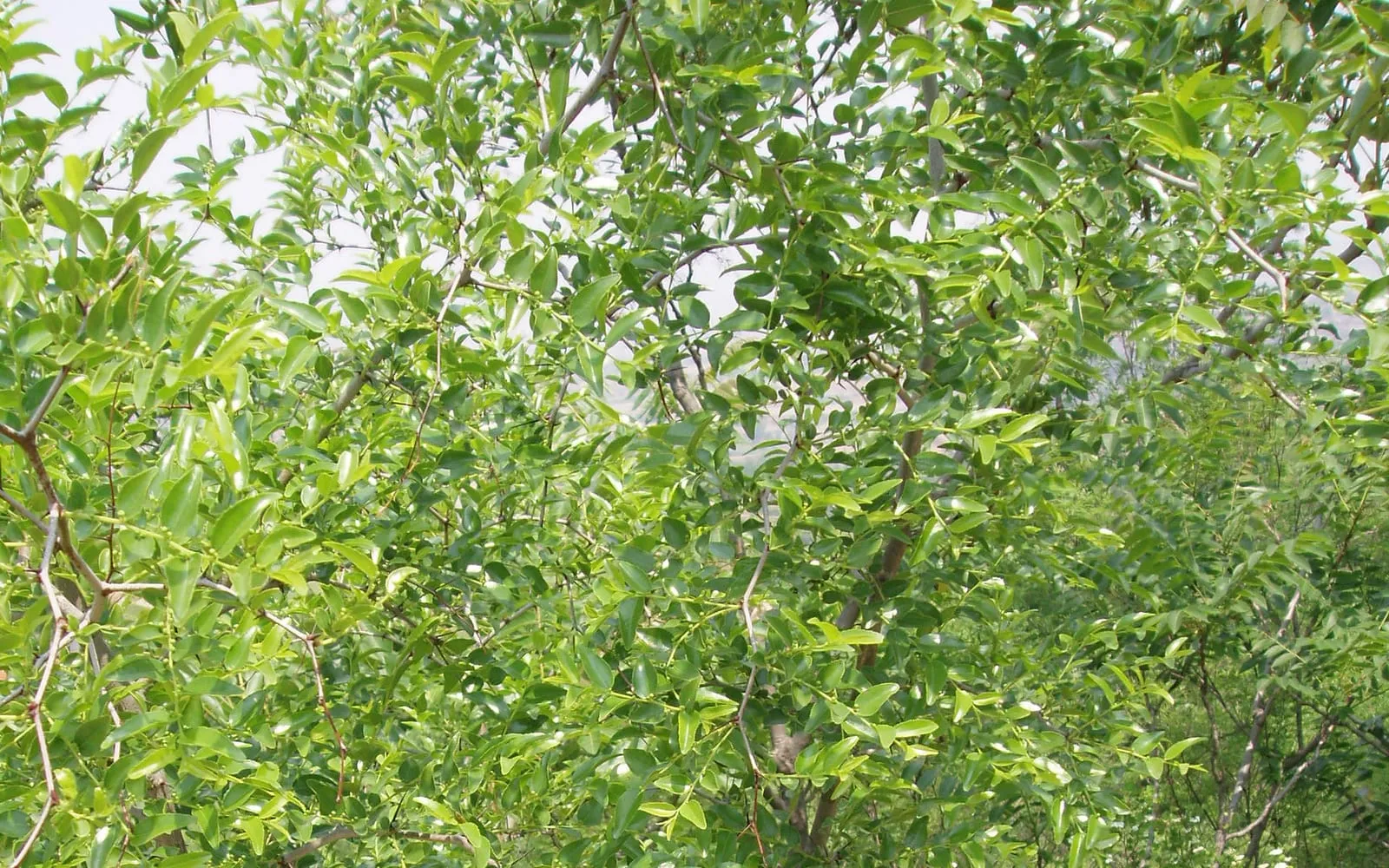
Leaves are small, oval, glossy and finely toothed, with three prominent veins running from the base, in the way of the jujubes, mid green and neat along the zigzag stems.
Flowers are small, greenish-yellow and inconspicuous, borne along the stems in early summer, modest but attractive to bees.
Fruit is small, round, reddish-brown when ripe and distinctly sour, with a thin flesh over a hard stone. It is smaller and sharper than the cultivated jujube’s fruit, edible fresh or dried.
The habit is dense, twiggy and thorny, building into a rounded shrub or small tree of two to five metres, often forming a thicket, and dropping its leaves in winter.
Where it is from
Ziziphus spinosa grows on dry hillsides, in scrub and on stony, open ground across northern China and neighbouring regions, in a climate of hot summers and cold winters. It is a plant of tough, dry, sunny country.
Those conditions give it its hardiness and its drought tolerance. It is used to poor, stony, free-draining soil, strong sun and both heat and winter cold, and it needs little, disliking only cold, wet ground. It is one of the tougher fruiting shrubs a dry, sunny site can carry.
How it grows
It grows into a dense, thorny shrub or small tree in full sun on free-draining ground, needing little once established. It leafs out in spring, flowers in early summer, fruits in late summer and autumn, and stands bare through winter.
Plant it in full sun in free-draining soil, including poor, dry or stony ground, and water it through its first year to settle it in. After that it is strongly drought-tolerant and largely self-reliant.
Site it with the thorns in mind, away from paths and where people brush past, and prune in gloves and long sleeves to shape it or thin the thicket, in winter while it is bare. Its density and thorns make it a good barrier or wildlife shrub.
Grow it for its sour fruit, its seed, or its value as a tough, thorny hedge, handling it with respect for the thorns. Once established, it tolerates drought, heat and cold.
Through the seasons
Spring brings fresh leaves on the bare, zigzag stems as the shrub wakes.
Early summer is the flowering, the small greenish-yellow flowers opening along the stems and drawing bees.
Late summer and autumn the small sour fruits ripen to reddish-brown, ready to pick fresh or to dry, and the seed within is the medicinal suan zao ren.
Winter the shrub drops its leaves and stands as a bare, thorny framework, hardy through moderate cold. This is the time for any pruning.
Care difficulty
Moderate, and easy once established. Given full sun and free-draining ground it is tough, hardy, drought-proof and little troubled, needing little water or feeding. The two things to manage are the sharp thorns, which call for care in siting and pruning, and cold, wet soil, which it dislikes. Otherwise it is among the more forgiving fruiting shrubs.
Watering
Water a young plant through its first year to establish the roots, then water only in prolonged drought. The shrub is strongly drought-tolerant and adapted to dry ground, so it needs little once settled and dislikes waterlogging more than dryness.
An established plant in the open needs no routine watering in most climates, and over-watering on heavy soil does more harm than a dry spell.
Warning signs, diseases and pests
The paired thorns are the main handling issue, sharp enough to catch skin and clothing, so handle the shrub in gloves and long sleeves and keep it clear of paths and seating.
Pests are few on so tough and thorny a shrub. Aphids may appear on soft new growth and can be washed off or left to natural predators, and the plant is otherwise little troubled.
The ripe fruit is edible, and the seed is used medicinally only after proper preparation, so beyond the thorns it needs no special safety measures in the garden.
Growing environment
Full sun is what it needs, matching the open, dry hillsides it comes from. It grows thin and unproductive in shade and is at its best in strong light.
The soil should be free-draining, and the shrub is unusually tolerant of poor, dry, stony ground. Rich, heavy or waterlogged soil suits it far less than lean, dry conditions, and cold, wet ground in winter is the main thing to avoid.
Use it where its toughness and thorns are assets, as a barrier or wildlife hedge, a fruiting shrub for a hot dry bank, or a hardy companion to the cultivated jujube, and keep it away from where people pass close by.
Feeding
Feed little. On the poor, dry soils it favours it needs almost nothing, and a light feed in spring is ample where the ground is very thin. Rich feeding pushes soft growth that adds nothing to a shrub grown for toughness and fruit.
Troubleshooting
How is it different from ordinary jujube? It is the wild, thornier form, with smaller, sourer fruit and fiercer paired thorns. The cultivated jujube has larger, sweeter fruit and is grown for eating, while spiny jujube is grown more for its seed and as a tough thorny shrub.
It is covered in sharp thorns. That is normal and is part of its value as a barrier shrub. Handle it in gloves and long sleeves and site it away from paths.
Can I eat the fruit? Yes. The small ripe fruit is edible fresh or dried, though it is sour and thin-fleshed compared with the cultivated jujube. Pick it when it has turned reddish-brown.
What is the seed used for? The seed is suan zao ren, a well-known calming herb in Chinese medicine. Preparing and using it is a matter for a qualified practitioner, though the plant itself is safe to grow and its fruit is edible.
Will it survive a cold winter? Yes, to moderate cold. It is a hardy, deciduous shrub from a climate of cold winters and hot summers, and it stands winter cold well as long as the soil is free-draining.