
Houseplant
Spineless Yucca
Yucca gigantea
Also known as Yucca elephantipes, Yucca gigantea
How to grow Yucca gigantea, the spineless yucca, the soft-leaved cane yucca sold as an indoor tree, with a swollen base and mild toxicity.
At a glance
- Difficulty
- Easy
- Water
- When the top few centimetres of mix have dried
- Light
- Bright indirect light to light shade
- Temperature
- Warm; keep above about 10 deg C
- Humidity
- Low to average
- Hardiness
- USDA 9-11, RHS H2, hardy to 0 C
- Type
- Perennial
- Height
- Up to 9 m
- Native to
- Mexico, Central America
A yucca from the seasonally dry woodland and scrub of Mexico and Central America. It survives a light, brief frost outdoors in a sheltered, dry spot but is damaged by a hard one, and cold, wet compost rots the base. Indoors it does best above about 10 deg C, in bright light, and it tolerates ordinary dry room air.
Hardiness zones describe winter cold alone. Summer heat, humidity, rainfall and the length of the growing season decide as much, so treat the range as the outer limit rather than as a recommendation.
Harmful if eaten
- Do not eat
- The leaves and roots, which contain saponins
- Harm from
- Eating it
- Affects
- People, cats and dogs
Yucca gigantea, the spineless yucca, contains saponins, and the ASPCA lists Yucca as toxic to cats, dogs and horses. A pet that chews it may drool, vomit or have diarrhoea, and a child that chews a leaf may have a mild stomach upset. The harm is mild and usually passes without treatment. Keep the plant from pets that chew, and note that the leaf tips, though softer than those of other yuccas, can still prick.
Sources: ASPCA toxic and non-toxic plants, RHS potentially harmful garden plants
About
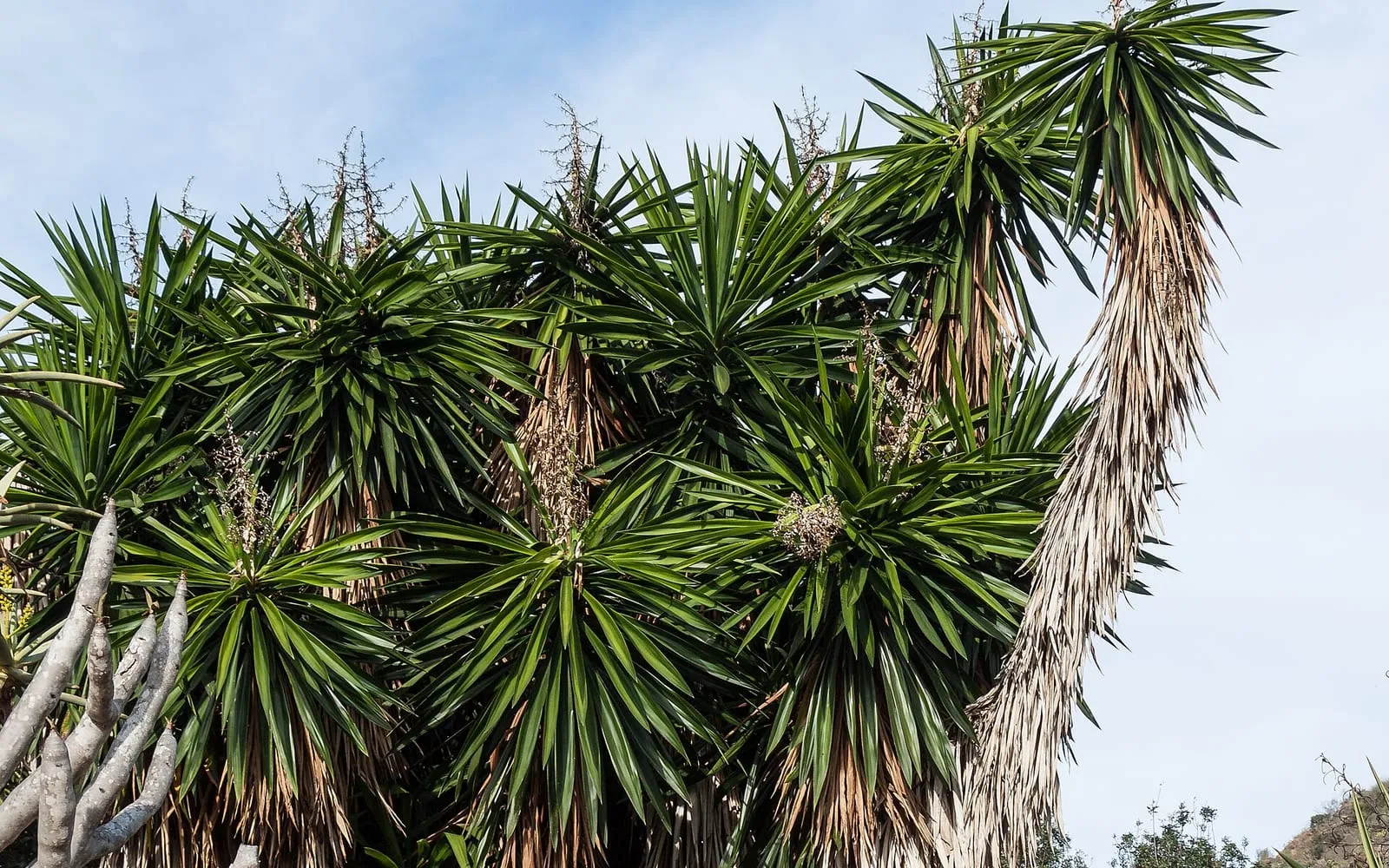
The plant most people meet as a “yucca cane” on a windowsill is this species. Yucca gigantea has softer, more pliable leaves than the sharp desert yuccas, so nurseries sell it as an indoor tree. It is the largest of the yuccas in the wild, and even a potted plant grows into a handsome upright specimen.
The Latin name points at the base. As it ages the plant swells into a broad, grey, corky foot that recalls an elephant’s leg, and rooted canes are often sold with that thickened stump already forming. Above it, one or more woody stems carry loose clusters of arching green leaves.
It is one of the easiest yuccas to keep indoors. Bright light, a free-draining pot and a warm room keep it thriving, and its leaf tips are softer than those of other yuccas, which suits a busy household. It comes from frost-free or nearly frost-free country, so keep it out of hard frost and cold, wet compost.
Appearance and character
The leaves are long, strap-like and softly leathery, a fresh mid-green, tapering to a point that yields instead of stabs. They radiate in a loose rosette at the top of each cane, and the oldest droop and brown as new ones push from the centre.
Below the foliage the stem turns woody and pale, ringed with the scars of shed leaves, and thickens most markedly at the base into the swollen foot that gives the plant its name. Cut canes root freely, so a shop-bought plant is often several stumps of different heights potted together for a tiered look.
Given warmth, age and space, a plant may produce a branched crown of creamy flowers. Under the average household ceiling, though, it rarely flowers and is valued instead for its clean, sculptural stems.
Where it is from
The species grows across Mexico and into Central America, in warm, seasonally dry woodland and scrub rather than open desert. Light there is strong but often filtered, frost is absent, and the ground drains freely after the rains.
Those origins explain the care. The plant needs steady warmth, plenty of light and a substrate that drains excess water, and it has no defence against a chill. A bright, warm room with a gritty, open compost is close enough to its native conditions.
How it grows
Through spring and summer the canes extend and new leaves open in flushes, then growth slackens over the darker months. Good light keeps the crown full and the stems sturdy; a dim corner draws the leaves out thin and pale and can leave a cane leggy.
Pot it in a light, quick-draining mix that holds a little moisture without turning claggy, and water once the top few centimetres have dried. The thick stem stores water, so the plant copes with an occasional missed watering.
Keep it warm and shielded from cold draughts, above the low teens Celsius, and it settles anywhere bright indoors. New plants come from stem cuttings or from lopping and rerooting the top of an overgrown cane, both of which strike readily in warmth.
Through the seasons
Spring brings the canes back into growth as light returns. Step up watering and start a regular light feed as new leaves appear.
Summer is the main growing spell. Keep it bright, water when the surface has dried, and enjoy the fresh flushes of foliage.
Autumn slows the plant as days shorten. Reduce feeding and let the mix dry a little more between drinks.
Winter is a warm rest. Water sparingly, hold it well clear of cold windows and draughts, and keep it above its minimum temperature.
Care difficulty
One of the easiest indoor plants to keep. It tolerates a missed watering, poor light for a while and general inattention, and its soft leaves make it easier to live with than a dagger yucca. The problems are a cold, waterlogged pot, which rots the base, and a spot too dark, which stretches the canes. Warmth, light and careful watering prevent most problems.
Watering
Water when the top few centimetres of compost have dried, soaking the pot and letting it drain fully. The swollen stem and fleshy roots store water, so the plant prefers a dry interval to a saturated one and rots if left standing wet.
Cut back over winter, when a cold, sodden root run is the main threat to an otherwise tough plant. Let the compost and the leaves tell you when a drink is needed.
Warning signs, diseases and pests
Soft, darkening tissue at the base or a stem that gives when pressed points to rot from cold, wet compost. Improve the drainage, water much less, and keep the plant warmer, since a soft cane is hard to save once it sets in.
Dry indoor air encourages spider mites and mealybugs, which lodge among the leaf bases. Raise the humidity a little, wipe the foliage, and treat any outbreak promptly before it takes hold.
Browning leaf tips usually mean parched air or uneven watering. More consistent moisture and a touch more humidity generally green the plant up again.
Growing environment
Bright light suits it best and keeps the crown dense and the canes upright. It endures a spell in lower light better than most yuccas, but a dim corner leaves it drawn and floppy over time.
Being frost-tender, it needs a warm room, above the low teens Celsius, and shelter from cold draughts and chilly glass. A steady, well-lit indoor position keeps it in good order year-round.
Grow it in a light, free-draining mix in a stable, well-weighted pot, since a tall cane in a light container tips easily. Turn it now and then so the crown fills out evenly towards the light.
Feeding
A dilute balanced feed through the growing season keeps the foliage a healthy green. Go easy, because heavy feeding forces soft, over-long leaves instead of a stronger plant.
Stop feeding for winter while growth is at rest. Fresh compost after repotting supplies enough for the first weeks, so a newly potted plant needs no immediate feed.
Troubleshooting
Why has the base of my spineless yucca gone soft? Rot from a cold, wet root run. Improve the drainage, water much less, and keep it warmer.
How much light does it need? It grows best in bright light. It copes with less for a while, but a dark corner draws the canes out thin.
How often should I water it? Once the top few centimetres have dried, sparingly in winter, judging by the compost instead of a schedule.
How do I propagate it? Take stem cuttings, or behead a tall cane and reroot the top, both in warm conditions.
Is it safe around pets and children? The saponins are mildly toxic and the ASPCA lists Yucca among plants harmful to cats and dogs, so keep chewing pets away. The soft, spineless leaves make it far safer to live with than a dagger yucca.
Spineless Yucca problem guides
Not sure what is wrong? See the common houseplant pests guide.