
Houseplant
Lilypad Begonia
Begonia nelumbiifolia
Also known as Begonia nelumbiifolia
How to grow Begonia nelumbiifolia, the lilypad begonia, a Mexican creeper whose round peltate leaves balance like lily pads and which flowers in winter.
At a glance
- Difficulty
- Easy
- Water
- When the top few centimetres of mix have dried
- Light
- Bright indirect light to light shade
- Temperature
- Warm; keep above about 13 deg C
- Humidity
- Average to high
- Hardiness
- USDA 10-12, RHS H1b, hardy to 13 C
- Type
- Perennial
- Height
- 40-60 cm
- Native to
- Mexico, Central America
A tender tropical foliage plant from Mexico and Central America, growing in warm, humid, shaded to filtered light. It needs warmth, humidity and bright indirect light, and it cannot take frost or chill. It is safest above about 13 deg C, and cold, wet compost or dry air spoils it.
Hardiness zones describe winter cold alone. Summer heat, humidity, rainfall and the length of the growing season decide as much, so treat the range as the outer limit rather than as a recommendation.
Harmful if eaten
- Harm from
- Eating it and handling it
- Affects
- People, cats, dogs and horses
Begonia nelumbiifolia, the lilypad begonia, is toxic to cats, dogs and horses. All parts hold soluble calcium oxalate crystals, most concentrated in the underground rhizomes. Chewing the plant can burn the mouth and cause drooling and vomiting, and the sap can irritate skin. Reactions are usually mild. Keep it out of reach of pets and small children, and wash your hands after cutting stems.
Sources: ASPCA toxic and non-toxic plants, RHS potentially harmful garden plants
About
The lotus gives this plant both its Latin epithet, nelumbiifolia, and its everyday name. Where a normal begonia hangs its leaf off one edge, Begonia nelumbiifolia fixes the stalk near the middle of the underside, so the rounded blade balances on top like a lily pad. This trait, called a peltate leaf, is rare in the genus and instantly recognisable. The plant belongs to the creeping-stemmed group and comes from the shaded forests of southern Mexico down through Central America. A settled specimen builds a low clump of overlapping green discs and, unusually, does most of its flowering in winter.
Leaves and flowers
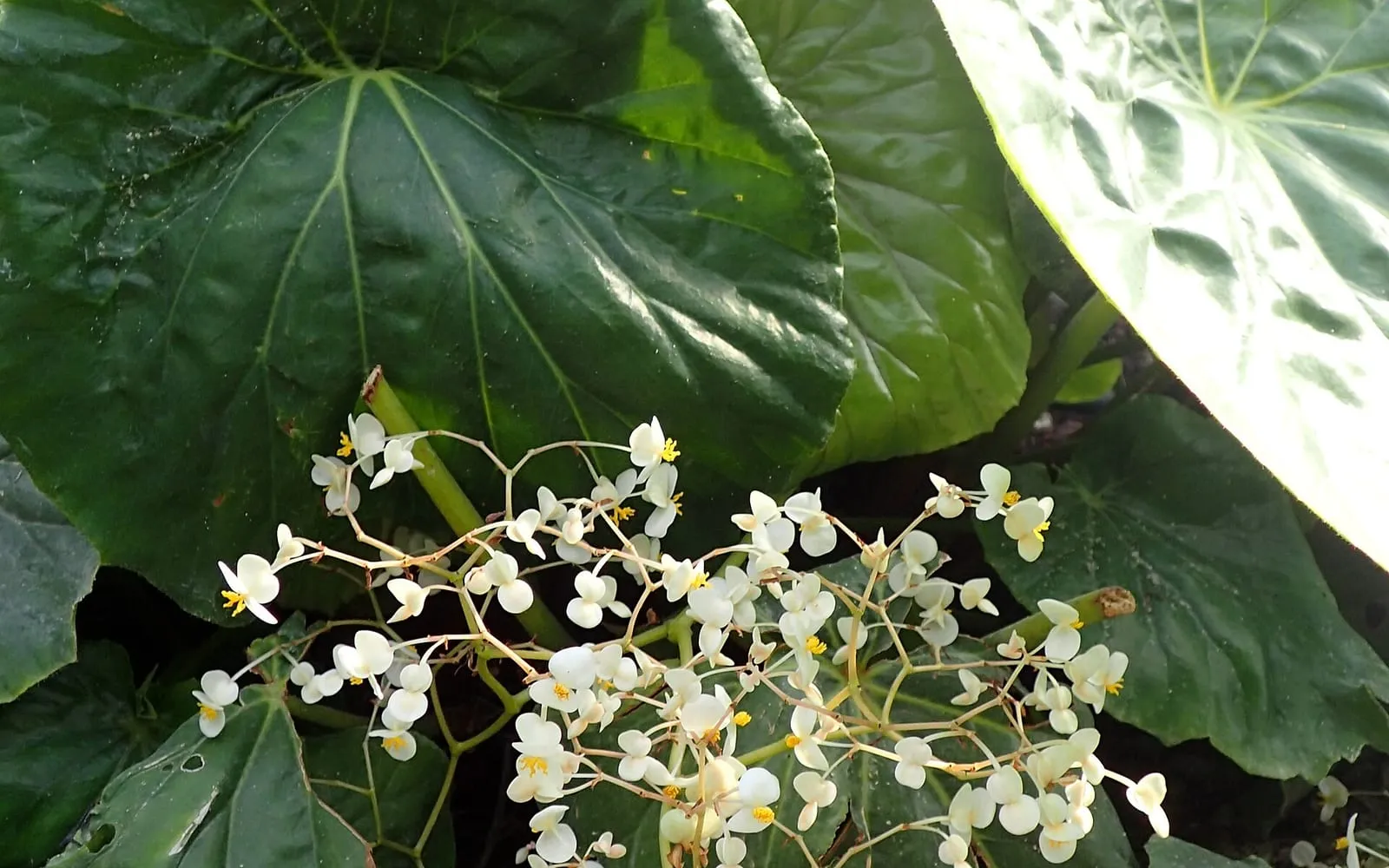
Each leaf is a shallow saucer of soft green, veined with pale lines that spread outward from the central point where stalk joins blade. Each disc sits on a long, juicy, hair-flecked stalk that arches up and out, tilting the blades so they overlap. Beneath the foliage runs the fat horizontal stem, which edges across the surface a little each year. In winter and into spring, wiry branched stalks rise above the leaves, tipped with dozens of tiny blooms in white washed with pink. Male and female flowers grow on the same stalk but stay separate, with the female flowers above a small three-cornered winged pod.
Where it is from
This begonia grows on the damp floor of Mexican and Central American forest, and on the shaded faces of moist limestone, where its ground-hugging stem grows through moss and fallen leaves. The air is warm and humid, and the sunlight is broken by the trees. In a pot, give it steady warmth, no cold shocks, moist air around the wide leaves, and softened light.
Getting the light right
Bright light without direct sun produces the broadest, best-coloured leaves. An east-facing window, or a table a little inside a sunnier room, works well. Direct afternoon sun through glass burns brown blotches into the thin blades, while deep shade stretches the stalks until they can no longer hold the leaves upright. Since the flowers come in the short days of winter, move the plant into the brightest sunless position you have for that season.
Watering
Let the surface layer of compost lose its damp look before you water again, then soak the pot and let it drain until the run-off stops, keeping the surface stem above the wet mix. That exposed stem, and the fine roots below it, rot if left chilled and sodden, so let the top become almost dry between waterings. A broad, low container suits this surface-rooting habit far better than a tall pot whose lower half stays cold and wet. Winter water use drops even when the plant is flowering, so check the mix with a finger instead of following a fixed routine.
Warmth and a moist atmosphere
This is a plant for gentle heat, kept above roughly 13 deg C and away from cold windows or doors. Its wide, papery leaves lose water fast, and dry radiator air scorches their rims within days. Sit the pot above a wide saucer of wet grit, group it with leafy neighbours, or keep it in a room that stays naturally damp. Gentle air movement over the low foliage stops wetness stagnating around the packed stalks.
Feeding
While it is in leaf, give it a weak balanced liquid feed roughly every fortnight to support the large blades and tall flowering stalks. Creeping-stemmed begonias have a small, near-surface root system that a concentrated feed will burn, so keep the feed dilute. Taper the food off as growth slows, and give barely any across the coldest, darkest stretch even while the flower stalks are present.
Propagation
The creeping stem is the easiest propagation material. Cut a segment carrying a leaf or a growing bud, set it onto moist compost with its underside touching, weight it lightly, and fresh roots and shoots should appear within a few weeks. A single sound leaf works too: score across its larger veins, lay it face-up and snug against damp compost inside a covered tray, and baby plants form at the cuts. When repotting a congested clump in spring, break the stem into rooted lengths and give each its own broad, shallow dish of fresh, airy mix.
Staying healthy
Warm, shady, moist air keeps this begonia healthy. A dusty grey bloom over the leaves means mildew is starting in air that is too still and too damp; open the plant up and get some movement around it. Mealybugs tuck into the shelter of the leaf-stalk bases as small white pellets and lift off on a cotton bud wetted with dilute alcohol. Botrytis will rot any leaf that sits cold and wet. Crisped brown margins mean the air is too dry, while a stem gone soft and dark has been kept too wet and cold.
The growing year
Spring produces new leaves as the winter flowers finish; split the clump, set stem cuttings and start feeding again.
Summer is quiet leafy growth; hold the mix lightly damp, the air humid and the plant out of direct sun.
Autumn slows growth and prepares the flower stalks; keep it bright and start trimming back the water.
Winter is the main flowering season; give the best sunless light you can, water with a light hand and keep the warmth and humidity steady.
Questions and answers
Why do the leaves sit flat like little plates? The stalk attaches near the centre of the blade, a peltate leaf, so each one balances on top like a lily pad. That is its natural build.
When can I expect flowers? Through winter and into spring, when it produces tall pale sprays over the foliage.
How bright a spot does it want? Bright yet indirect; a direct beam scorches the wide blades and shade leaves the stalks too weak to stand.
What is the simplest way to propagate it? Anchor a leaf-bearing length of the creeping stem onto damp compost, or root a whole leaf with its veins scored.
Could it harm a pet? Mildly. The ASPCA lists begonias as toxic to cats, dogs and horses, because the insoluble oxalate crystals burn the mouth and cause drooling and vomiting. Keep it beyond the reach of animals that nibble leaves.
Lilypad Begonia problem guides
Not sure what is wrong? See the common houseplant pests guide.