
Houseplant
Spanish Bayonet
Yucca aloifolia
Also known as Yucca aloifolia
How to grow Yucca aloifolia, the spanish bayonet, a trunk-forming yucca with stiff, needle-tipped leaves and mild toxicity that loves strong light.
At a glance
- Difficulty
- Easy
- Water
- When the top few centimetres of mix have dried
- Light
- Full sun to bright light
- Temperature
- Tolerates light frost, to about -5 deg C; best kept dry in winter
- Humidity
- Low to average
- Hardiness
- USDA 8-11, RHS H4, hardy to -10 C
- Type
- Perennial
- Height
- Up to 5 m
- Native to
- the southeastern United States, Mexico
A coastal yucca from the dunes and sandy scrub of the southeastern United States, Mexico and the Caribbean. It survives brief dips to about -10 deg C in dry, well-drained ground, but it is less frost-hardy than Yucca gloriosa and wet winters rot it. It thrives in heat, strong sun, salt wind and drought.
Hardiness zones describe winter cold alone. Summer heat, humidity, rainfall and the length of the growing season decide as much, so treat the range as the outer limit rather than as a recommendation.
Harmful if eaten
- Do not eat
- The leaves and roots, which contain saponins
- Harm from
- Eating it
- Affects
- People, cats and dogs
Yucca aloifolia, the spanish bayonet, contains saponins, and the ASPCA lists Yucca as toxic to cats, dogs and horses. A pet that chews it may drool, vomit or have diarrhoea, and a child that chews a leaf may have a mild stomach upset. The harm is mild and usually passes without treatment. The rigid, needle-tipped leaves are the greater hazard and can pierce skin or reach an eye, so keep the plant away from pets and children and wear gloves and eye protection when handling it.
Sources: ASPCA toxic and non-toxic plants, RHS potentially harmful garden plants
About
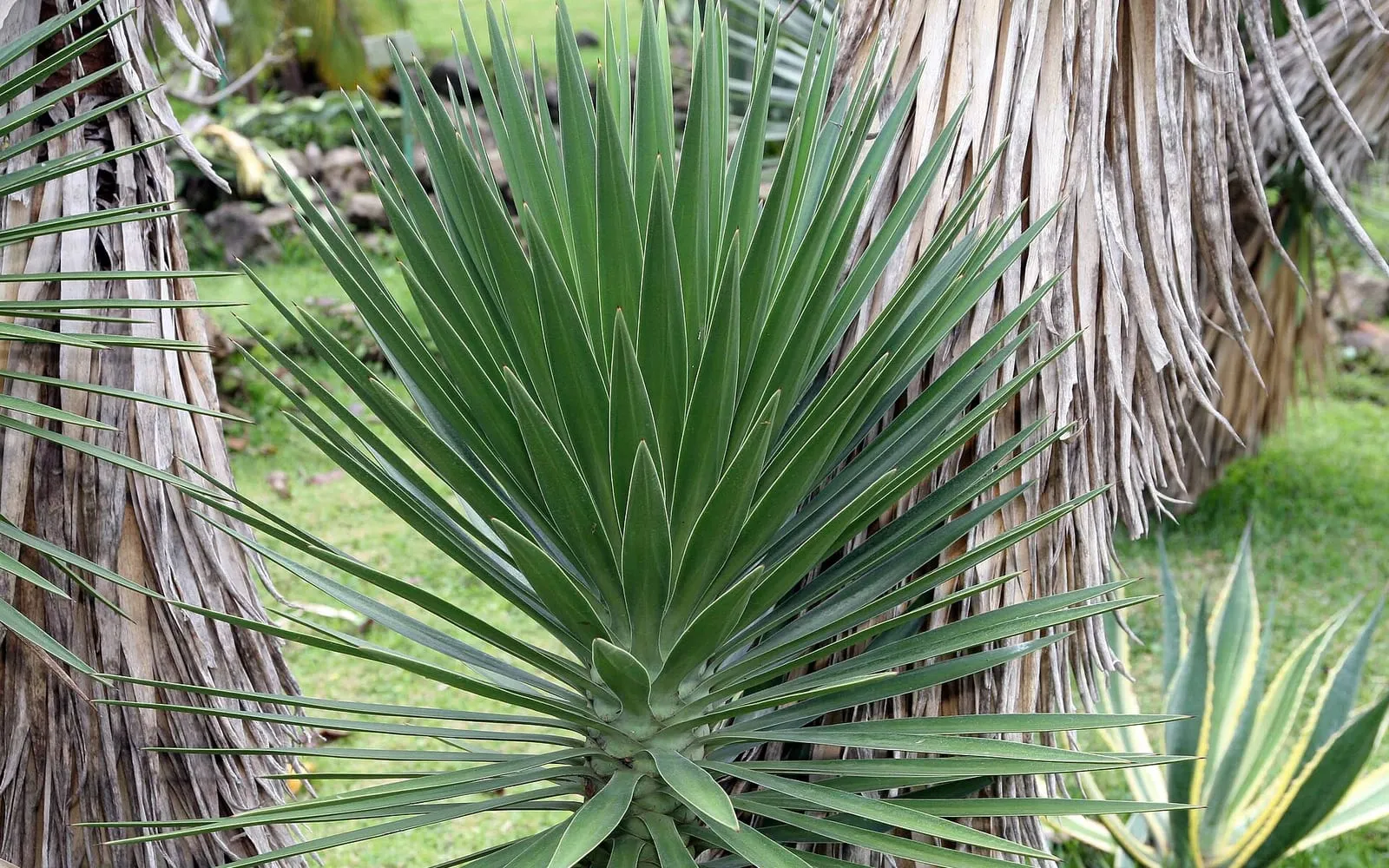
The common name is a warning as much as a description. Yucca aloifolia stacks its rigid, sword-shaped leaves into a dense column, and each blade tapers to a spine hard enough to draw blood. The species name borrows from the resemblance to an aloe, though the two plants are unrelated, and the effect is a tough, upright rosette that eventually rises on a woody stem.
It comes from sandy coasts and dunes of the southeastern United States, Mexico and the Caribbean, where it grows in sea wind, poor ground and strong light. Kept as a container plant it needs that same generous light, a gritty footing and warmth. It takes light frost and is grown outdoors in mild, dry-winter climates, but a hard or wet winter rots it, so in colder regions it lives in a pot under cover.
The plant is grown mostly for its strong shape. Little troubles it once light and drainage are right, and it will stand years of neglect. The main issue is the sharp leaf tips, so position it carefully before thinking about water or feed.
Appearance and character
Leaves are long, straight and stiffened, deep green to grey-green, arranged in a spiral so tight the rosette looks solid from a distance. The margin bears minute teeth, and the terminal spine is the feature everyone remembers.
As the lower leaves die they fold back against the stem and build a rough thatch, and beneath it a true woody trunk develops. An old plant may carry several heads and can lean or topple under its own weight, sometimes rooting again where a fallen stem touches soil.
Mature specimens throw a stout panicle of pendent white bells, often flushed purple outside, held clear above the foliage in the warm months. Indoors that display is uncommon, and the plant is grown for its bold outline instead of its flowers.
Where it is from
The natural range runs along the warm coasts of the southeastern United States and down into Mexico, on dunes, shell mounds and dry sandy flats within reach of the sea. Salt spray, sharp drainage and strong sun are the everyday conditions, with little in the way of frost.
Those conditions explain what it needs in cultivation. It thrives on all the light it can get and a substrate that never stays sodden, and it has no tolerance for a cold, wet root run. A container kept warm and bright, with quick-draining compost, is the closest match.
How it grows
Growth quickens in the warm half of the year, when the rosette adds leaves and the stem gains height, then falls quiet as light fades. Bright conditions keep the blades stiff and richly coloured, while gloom leaves them slack and drawn.
Set it in an open, free-draining mix that lets water pass without clogging, and water once the upper few centimetres have dried. The plant stores reserves in its fleshy leaves and stem, so it copes with a dry interval far better than a soaking it cannot shed.
Warmth suits it, and prolonged cold and wet damage it, so keep a potted plant above about 0 deg C and dry through winter. New plants come readily from stem sections, which root with ease, or from the offsets that crowd around an established base.
Through the seasons
Spring rouses the rosette as the days lengthen. Start watering more freely and resume a light feed as fresh leaves unfurl.
Summer carries the strongest growth. Keep the plant bright, water once the surface has dried, and give it the warmth it relishes.
Autumn slows growth. Cut back on both feed and water as the light weakens.
Winter is a quiet holding period. Keep it warm, water only enough to stop the mix drying to dust, and protect it from the cold, wet conditions that rot the base.
Care difficulty
Undemanding for anyone who can offer light and sharp drainage. It tolerates dry spells, poor soil and coastal exposure, and needs little fuss. The pitfalls are a cold, saturated root run, which brings rot, and the spine-tipped leaves, which make placement a safety matter instead of a matter of taste. Keep it clear of seating and walkways.
Watering
Water once the top few centimetres of the mix have dried, then wet it thoroughly and let the surplus escape. Its leaves and stem hold a reserve, so it tolerates a lapse in watering much more readily than a stretch of standing wet.
Ease right off through the cold months, when a chilled, sodden pot encourages rot at the base. Judge each watering by the state of the compost and the plant, not by a fixed interval.
Warning signs, diseases and pests
A cold, waterlogged root run is the chief danger, showing as softening and browning low on the stem. Sharpen the drainage, water far less, above all in winter, and keep the plant warm and bright to head it off.
In dry indoor air, spider mites and mealybugs may gather in the leaf axils and along the blades. Catch them early, wipe them off, and treat with an appropriate control before they spread.
Browning leaf tips and edges often trace to parched air or erratic watering. Steadier moisture and a little more humidity usually settle the plant.
Growing environment
Give it the brightest position available. Strong light keeps the rosette compact and the leaves stiff and green, while shade slackens the whole plant and dulls its colour.
It takes light frost, to about -5 deg C, but not cold, damp air, so in a wet or hard-winter climate keep it in a pot under glass or indoors and dry. A warm, bright spot with good air movement suits it best.
Grow it in a light, free-draining mix in a pot with ample drainage holes, and stand it well away from doorways, paths and anywhere a passer-by might meet the leaf tips.
Feeding
A weak balanced feed through the growing season is plenty. Overfeeding pushes soft, over-long leaves that flop and mar the plant’s clean architecture, so keep the strength low.
Withhold feed entirely in winter. A newly potted plant draws enough from fresh compost that it needs no extra for its first weeks in the pot.
Troubleshooting
Why is my spanish bayonet rotting at the base? Almost always a cold, wet root run. Improve the drainage, water much less, and keep it warm through winter.
How much light does it need? As much as you can give. It holds its form and colour only in strong, bright conditions.
How often should I water it? When the top few centimetres have dried, easing off sharply in winter and letting the compost guide the timing.
How do I propagate it? Root a stem section, or pot up one of the offsets that cluster at the base.
Is it dangerous to handle? The saponins are mildly toxic and the ASPCA lists Yucca among plants harmful to cats and dogs, so keep chewing pets away. The sharp leaf tips are the everyday hazard, so wear gloves and site it thoughtfully.
Spanish Bayonet problem guides
Not sure what is wrong? See the common houseplant pests guide.