
Houseplant
Aleutian Maidenhair
Adiantum aleuticum
Also known as Adiantum aleuticum, Western Maidenhair, Five-finger Fern
How to grow Adiantum aleuticum, the Aleutian or western maidenhair fern, a cool woodland fern with fan-spread fronds on black stems.
At a glance
- Difficulty
- Moderate
- Water
- Keep evenly moist in growth; drier when dormant
- Light
- Part shade to dappled shade
- Temperature
- Hardy; tolerates hard frost
- Humidity
- Average to high
- Hardiness
- USDA 3-8, RHS H7, hardy to -30 C
- Type
- Hardy deciduous fern
- Height
- 30 to 60 cm
- Native to
- Western North America
A hardy maidenhair fern from the cool, moist woods and shaded rock faces of western North America, dying back in winter and returning in spring. It needs cool, dappled shade, humus-rich, moist but free-draining soil, and it is fully hardy to hard frost. It cannot take hot, dry conditions or a baking root run, but is far tougher than the tender tropical maidenhairs.
Hardiness zones describe winter cold alone. Summer heat, humidity, rainfall and the length of the growing season decide as much, so treat the range as the outer limit rather than as a recommendation.
Not known to be toxic
A safe plant to grow around pets and children. Maidenhair ferns are not listed as toxic by the ASPCA or the RHS, and no harmful compound is recorded in Adiantum. A pet or child that chewed a frond would be unlikely to come to harm, so this hardy fern is a low-risk choice in a garden or home with animals.
Sources: ASPCA toxic and non-toxic plants, RHS potentially harmful garden plants
About
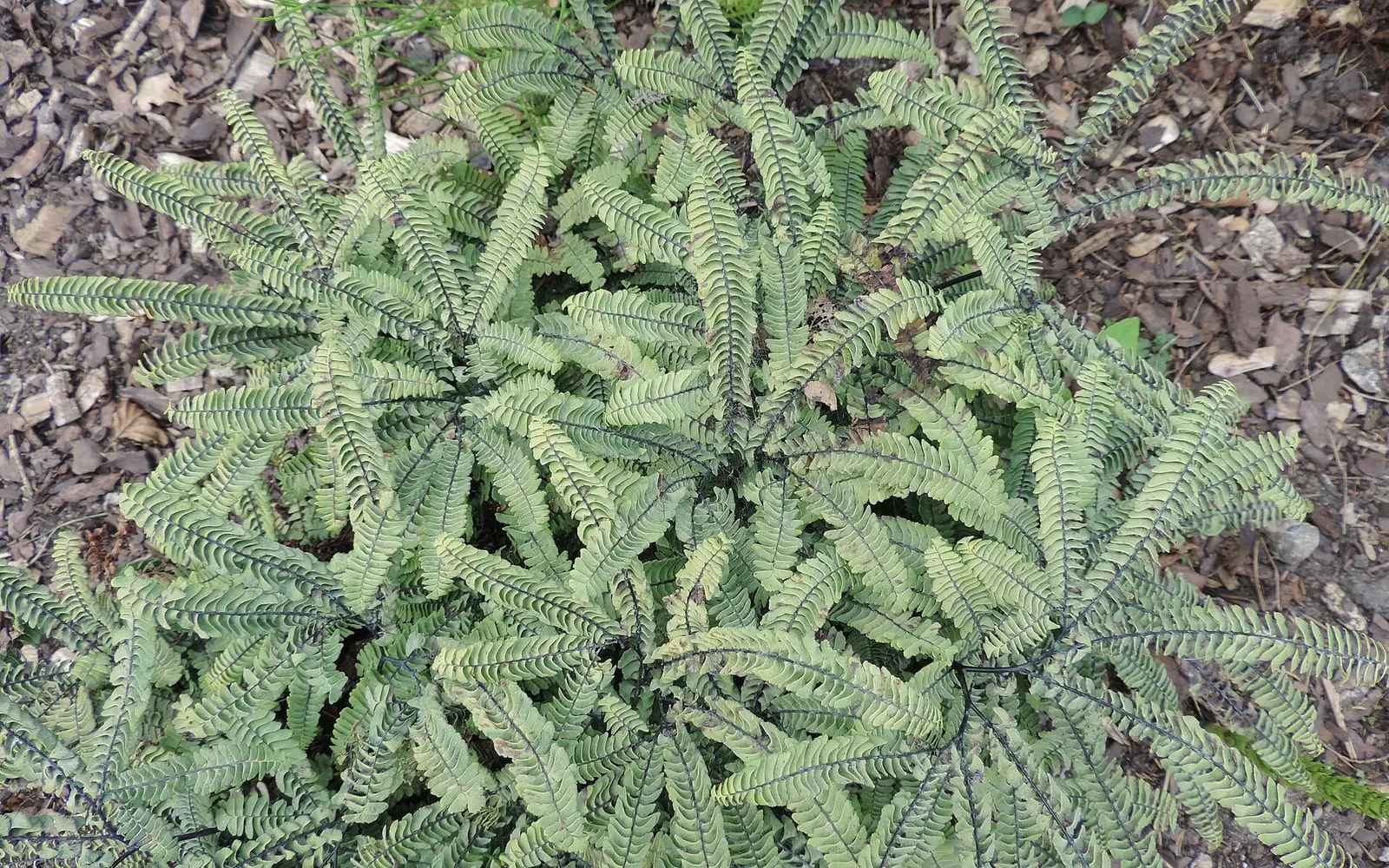
Aleutian maidenhair is the hardy, cool-climate maidenhair fern, unlike the tender tropical maidenhairs sold as houseplants. Its fronds are held on thin, wiry, glossy black stalks that fork at the top and spread the fan-shaped leaflets out in a flat, almost circular whorl, like the fingers of a hand. That shape explains the name five-finger fern. The plant makes a light green layer held horizontally above the ground.
It grows in the cool, moist woods, shaded banks and rock faces of western North America, and it is fully hardy, dying back in winter and returning in spring. That makes it a fern for a cool, shaded garden spot instead of a warm room. Give it dappled shade, humus-rich, moist but free-draining soil, and shelter from hot sun and drying wind.
Grown in a cool, shaded border, a woodland garden or a shaded rockery, it is a tough hardy fern with a light texture. It needs even moisture and dislikes a baking root run, but it is far more cold-hardy and forgiving than the tender maidenhairs grown indoors. Given cool shade and moisture, it settles into a slow spreading clump.
Appearance and character
The fronds are held on thin, wiry, glossy black stalks that fork at the top and spread the fan-shaped, fresh green leaflets in a flat, almost circular whorl, like a hand’s fingers.
The whole frond is light and horizontal, giving a layered look, and the plant forms a slowly spreading clump from a creeping rootstock.
It is deciduous, dying back to the ground in winter and returning with fresh, coppery-flushed fronds in spring, and it is fully hardy to hard frost.
It is far tougher and more cold-hardy than the tender tropical maidenhairs because it comes from cool northern woods and mountains.
Where it is from
Adiantum aleuticum grows in western North America, in cool, moist woods, on shaded banks and damp rock faces, often near water, in dappled shade. It prefers cool, humid, shaded, humus-rich ground.
Give it dappled shade, cool conditions, and humus-rich, moist but free-draining soil, and it is fully hardy. It cannot take hot, dry conditions, a baking root run or drying wind, all of which scorch its delicate fronds.
How it grows
It grows in spring and summer, unfurling its fan-shaped fronds and spreading slowly by a creeping rootstock, then dies back in autumn and rests, cold and dormant, through winter. Cool, moist, shaded conditions keep the fronds fresh; heat, sun and dry wind scorch them.
Grow it in cool, humus-rich, moist but free-draining soil in part or dappled shade, in a woodland garden, shaded border or rockery, and keep it evenly moist through the growing season with rainwater. Mulch with leaf mould to keep the roots cool and moist.
Cut down the tired, dead fronds in late autumn or winter, and divide an established clump in spring to propagate. It needs shelter from hot sun and drying wind, which quickly brown the fronds.
Propagation is by division of the creeping rootstock in spring, or from spores, which is slower.
Through the seasons
Spring brings fresh, coppery-flushed fronds from the crown. Keep the soil evenly moist and mulch with leaf mould.
Summer is the main growing season. Keep it cool, shaded and evenly moist, out of hot sun and drying wind.
Autumn is when the fronds fade and die back. Cut them down as they go over.
Winter is when the plant is dormant below ground. It is fully hardy and needs no protection.
Care difficulty
Moderate, and far easier than a tender maidenhair, because it is fully hardy and suited to cool shade. Give it dappled shade, cool, humus-rich, moist but free-draining soil, and shelter from hot sun and wind. It struggles in hot, dry, sunny or windy spots, which scorch the delicate fronds, and in warm, stagnant, waterlogged soil, which rots it.
Watering
Keep the soil evenly moist through the growing season, using rainwater, since maidenhairs dislike drying out and the delicate fronds brown if the root ball dries. Cool, humus-rich, moist but free-draining ground suits it.
It should not sit in warm, stagnant, waterlogged soil, which rots the rootstock. The aim is even moisture with free drainage. Let it dry a little as it dies back, and keep the dormant crown just moist through winter.
Warning signs, diseases and pests
Scorched, browned fronds usually mean hot sun, drying wind or a dry root ball. Move it into cooler, shaded shelter, keep the soil evenly moist, and cut off badly scorched fronds.
Warm, stagnant, waterlogged soil rots the rootstock; keep the ground cool, moist and free-draining. Slugs and snails graze the young fronds in spring; protect the emerging growth.
Tired, browned fronds through the season can be trimmed off, and fresh fronds will grow from the crown.
Growing environment
Part shade to dappled shade suits it, matching its cool woodland habitat. It cannot take hot sun, which scorches the delicate fronds, nor deep, dark shade, which thins it.
It is fully hardy, dying back in winter and returning in spring, needing no protection. Cool, humid air and moist ground suit it, and it dislikes hot, dry, windy spots.
Grow it in cool, humus-rich, moist but free-draining soil in part or dappled shade, in a woodland garden, shaded border or rockery, mulched with leaf mould.
Feeding
Feed sparingly in the growing season with a dilute balanced feed, since it grows naturally in lean, leafy woodland soil. A leaf-mould mulch feeds it more naturally.
Give nothing in dormancy. Cool, humus-rich soil and a mulch matter more than feeding.
Troubleshooting
The fronds are scorched and brown. Hot sun, drying wind or a dry root ball. Move it into cooler, shaded shelter, keep the soil evenly moist, and cut off badly scorched fronds.
It died back completely. In autumn this is normal, since it is deciduous and rests dormant through winter, returning in spring. Out of season, a dry or baked root run may be the cause.
Can it grow indoors? It is happiest outdoors as a hardy woodland fern, since it needs cool conditions and a cold winter, and it responds poorly to the warmth and dry air of a heated room.
How is it different from a tropical maidenhair? It is fully hardy and grows in cool northern woods, while the tender maidenhairs need warmth and humidity indoors. Both share the delicate fan-shaped fronds on black stalks.
Is it safe around pets? Yes. Maidenhair ferns are not listed as toxic, so it is safe with cats, dogs and children.
Aleutian Maidenhair problem guides
Not sure what is wrong? See the common houseplant pests guide.