
Houseplant
Small-Leaf Spiderwort
Tradescantia fluminensis
Also known as Tradescantia fluminensis
How to grow Tradescantia fluminensis, the trailing small-leaf spiderwort or wandering trad, an easy tender creeper with glossy leaves and tiny white flowers.
At a glance
- Difficulty
- Easy
- Water
- When the top few centimetres of mix have dried
- Light
- Bright indirect light to light shade
- Temperature
- Warm; keep above about 10 deg C
- Humidity
- Average to high
- Hardiness
- USDA 9-11, RHS H2, hardy to 0 C
- Type
- Perennial
- Height
- 60-90 cm
- Native to
- South America
A trailing plant from the humid forests of south-eastern Brazil and neighbouring Argentina, Paraguay and Uruguay. It is killed back by hard frost but regrows from surviving stems, which is part of why it is an invasive weed in mild, wet climates such as New Zealand and the south-eastern United States. Indoors it does best above about 10 deg C, with bright indirect light, and cold, wet compost or dry air spoils it.
Hardiness zones describe winter cold alone. Summer heat, humidity, rainfall and the length of the growing season decide as much, so treat the range as the outer limit rather than as a recommendation.
Harmful if eaten
- Do not eat
- The sap in the stems and leaves
- Harm from
- Handling it and eating it
- Affects
- People, cats, dogs and horses
Tradescantia fluminensis, the small-leaf spiderwort, is listed by the ASPCA as toxic to cats, dogs and horses. Contact with the sap can cause an itchy, red rash (contact dermatitis) in pets and in sensitive people, most often on the belly and paws of a pet that walks through the plant. Eating it can cause mild stomach upset and drooling. Wear gloves when pruning if your skin is sensitive, and keep the plant away from pets that chew or rest against it.
Sources: ASPCA toxic and non-toxic plants, RHS potentially harmful garden plants
About
Tradescantia fluminensis is the small-leaf spiderwort, a trailing tender relative of the hardy garden spiderworts and one of the easiest foliage plants to keep alive. The species name points to Rio de Janeiro, on whose river-cut hills it grows wild, and its habit is that of a ground cover. Fleshy, jointed stems run along the surface, root at every node they touch, and turn a patch of damp shade into a dense green mat. Indoors that same growth habit makes it a good plant for a hanging pot or a high shelf, where the stems spill and lengthen through the year.
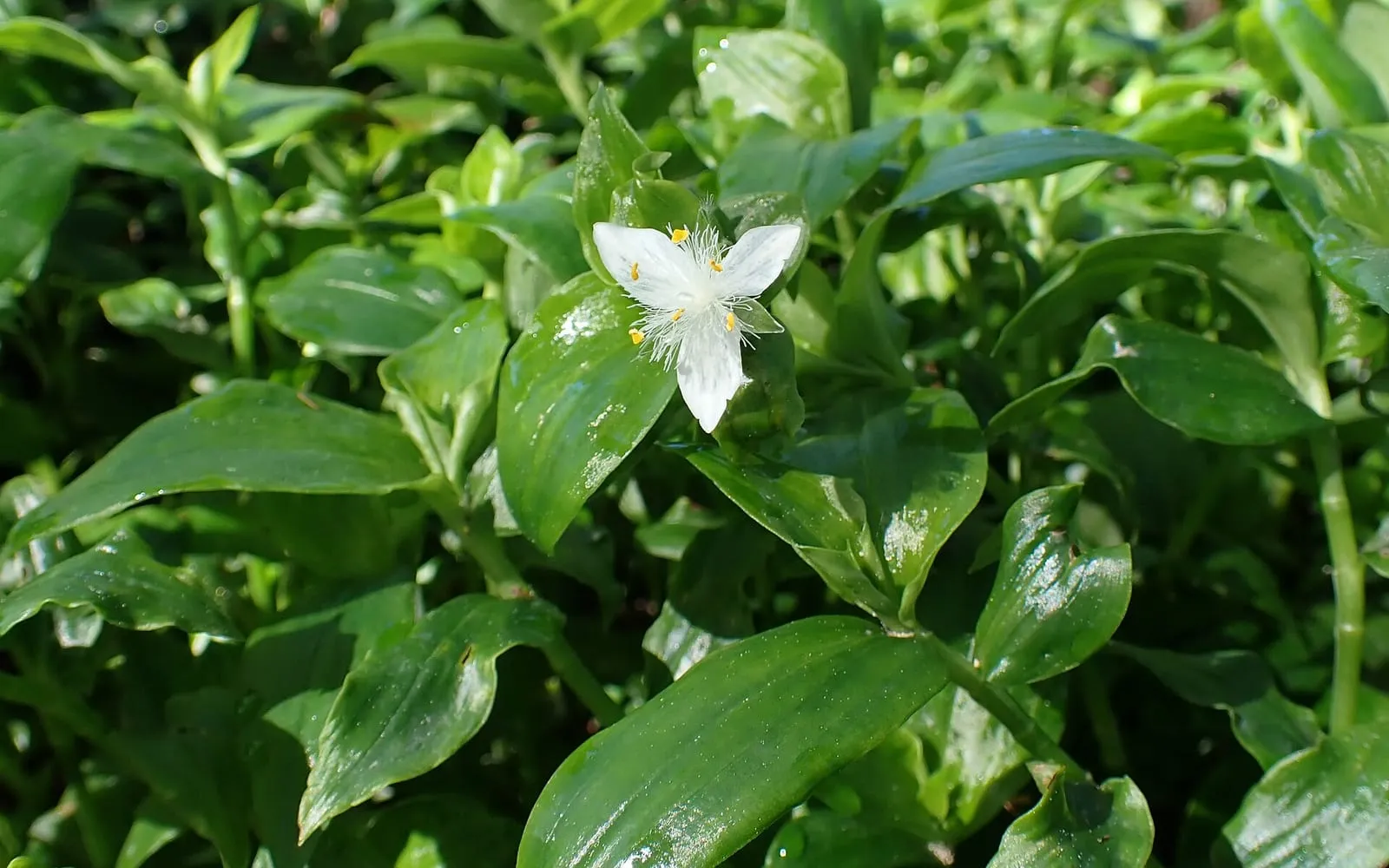
The leaves are small, oval and pointed, glossy and slightly succulent, plain green in the wild plant and striped cream, white or pink in the variegated forms people usually grow. Now and then the tips carry tiny three-petalled white flowers, each open for a day. The same vigour that makes it thrive has turned it into a serious weed in warm, wet countries such as New Zealand, so no piece of stem should ever be tossed into the wild or the compost outdoors.
Appearance and character
This is a spreading plant by nature. The stems are soft, green or purple-tinged, ringed with a joint at each node, and they trail instead of climb. They break and re-root easily. A pot soon becomes a curtain of overlapping shoots.
The leaves clasp the stem at the base and stand out in two ranks, each a smooth, shining oval a few centimetres long. Variegated selections carry crisp longitudinal stripes, though a plant kept too dark tends to revert to plain green. The flowers are small white triangles with a central tuft of stamens, pretty but fleeting and secondary to the foliage.
Where it is from
Tradescantia fluminensis is native to the shaded, humid forests and stream banks of south-eastern Brazil and neighbouring South America, where it carpets the moist, leaf-littered ground under trees. It is a plant of dappled shade and steady warmth, not open sun or drought.
That habitat explains its care. The plant needs a frost-free, warm room, air that is not very dry, and a light spot screened from direct sun. A loose, moisture-holding potting mix that still drains matches the damp forest floor it sprawls across in the wild.
How it grows
Given warmth and reasonable light, it grows almost continuously, each stem lengthening and branching and sending down roots at the nodes. Growth slows only in lower winter light and cooler rooms.
Pot it in an open, moisture-retentive compost and let the surface dry slightly between waterings. Pinch the growing tips regularly to force branching, or the stems grow long and bare at the base. To propagate it, snap off a few stem pieces, each with a node or two, and push them into damp compost or stand them in water, where they root within days.
Through the seasons
Spring starts fast growth. Cut back leggy stems, repot if the mat has filled the container, and start feeding.
Summer brings the longest trails. Water freely, feed lightly and often, and keep the plant out of harsh midday sun that bleaches the leaves.
Autumn eases the pace as light fades. Reduce feeding and let the compost dry a little more between waterings.
Winter is a slow spell. Water sparingly, keep the plant warm and off cold glass, and expect little new growth until spring.
Care difficulty
This is a good beginner’s plant, forgiving of missed waterings and quick to regrow after a hard cutting. It needs warmth, screened light, a compost that drains, and a pinch now and then to stay bushy. The usual troubles are a cold, sodden pot that rots the trailing stems and dry, heated air that browns the leaf tips. A plant that grows pale and thin has been kept too dark.
Watering
Let the top couple of centimetres of compost dry before watering again, then water thoroughly and tip away what drains through. The fleshy stems hold a little water of their own, so the plant tolerates a missed drink better than a constant soaking.
Through winter, when growth all but stops, water less and keep the compost on the dry side of moist. Cold roots sitting in wet compost rot fast, and a limp, blackening stem base is the warning sign to cut back and dry out.
Warning signs, diseases and pests
Soft, mushy stems and a sour-smelling pot mean the roots have been kept too cold and too wet. Take healthy tip cuttings, root them fresh, and start the plant again in drier compost instead of trying to nurse a rotted mat.
Brown, papery leaf edges follow dry air near a radiator, so lift the humidity around the plant. Spider mites can bronze and web the foliage in hot, arid rooms, and mealybugs hide as white specks in the leaf joints; catch either early and wipe or treat before they run through the tangle of stems.
Growing environment
Stand small-leaf spiderwort in good light out of direct sun, which keeps the variegated forms brightly striped and the plain green ones lush. Too little light dulls the markings and stretches the stems; too much scorches them.
Keep the room warm and the air from becoming very dry, and give the plant room to trail from a shelf or hanging pot. A light, moisture-holding compost in a pot that drains freely keeps the roots healthy.
Feeding
Feed a weak, balanced liquid fertiliser every couple of weeks through spring and summer while the stems are running. It grows fast and takes light, regular feeding well, but strong doses only produce lank, sappy growth.
Stop feeding over winter while the plant slows. A cutting freshly potted into new compost needs nothing extra for the first few weeks, drawing on what the fresh mix holds.
Troubleshooting
Why has it gone bare and straggly at the base? Long, unpinched stems shed their lower leaves. Cut them back hard and pinch the regrowth, and use the trimmings as cuttings.
Why has the variegation faded to green? Too little light. Move it somewhere brighter, and remove any all-green shoots that appear.
Why are the stems collapsing? Cold, waterlogged compost rots them. Ease off the water, keep the plant warmer, and restart from healthy cuttings if the base has gone.
How do I make more? Root stem pieces with a node in water or damp compost; they strike within days.
Is it safe around pets? No. The ASPCA lists it as toxic to cats and dogs, and the sap can cause a skin rash as well as a mild stomach upset. Keep pets from chewing it or lying against it, and never let discarded stems escape into the garden, where the plant becomes an invasive weed in warm climates.
Small-Leaf Spiderwort problem guides
Not sure what is wrong? See the common houseplant pests guide.