
Houseplant
Slender-Stemmed Marantochloa Prayer Plant
Marantochloa filipes
Also known as Marantochloa filipes
How to grow Marantochloa filipes, a fine, wiry-stemmed prayer-plant relative of the tropical African understorey, and how to site, water and feed it.
At a glance
- Difficulty
- Easy
- Water
- When the top few centimetres of mix have dried
- Light
- Bright indirect light to light shade
- Temperature
- Warm; keep above about 13 deg C
- Humidity
- Average to high
- Hardiness
- USDA 10-12, RHS H1b, hardy to 13 C
- Type
- Perennial
- Height
- 1-2 m
- Native to
- tropical Africa
A tender tropical foliage plant from tropical Africa, growing in warm, humid, shaded to filtered light. It needs warmth, humidity and bright indirect light, and it cannot take frost or chill. It is safest above about 13 deg C, and cold, wet compost or dry air spoils it.
Hardiness zones describe winter cold alone. Summer heat, humidity, rainfall and the length of the growing season decide as much, so treat the range as the outer limit rather than as a recommendation.
Not known to be toxic
Marantochloa filipes, the slender-stemmed marantochloa prayer plant, is not recorded among the seriously toxic plants, and related plants in its group are not listed as toxic by the ASPCA or the RHS. A pet or child that chewed a leaf would be unlikely to come to serious harm beyond a possible mild stomach upset.
Sources: ASPCA toxic and non-toxic plants, RHS potentially harmful garden plants
The slender one of the genus
Marantochloa filipes is the slender member of the group, a wiry-stemmed herb where its relatives grow as stout canes. Thin stalks carry the leaves on a light, open frame that bends instead of standing rigid. It has the usual prayer-plant family habits at a smaller, finer scale, so beside the bulk of M. purpurea or M. congensis it looks much lighter.
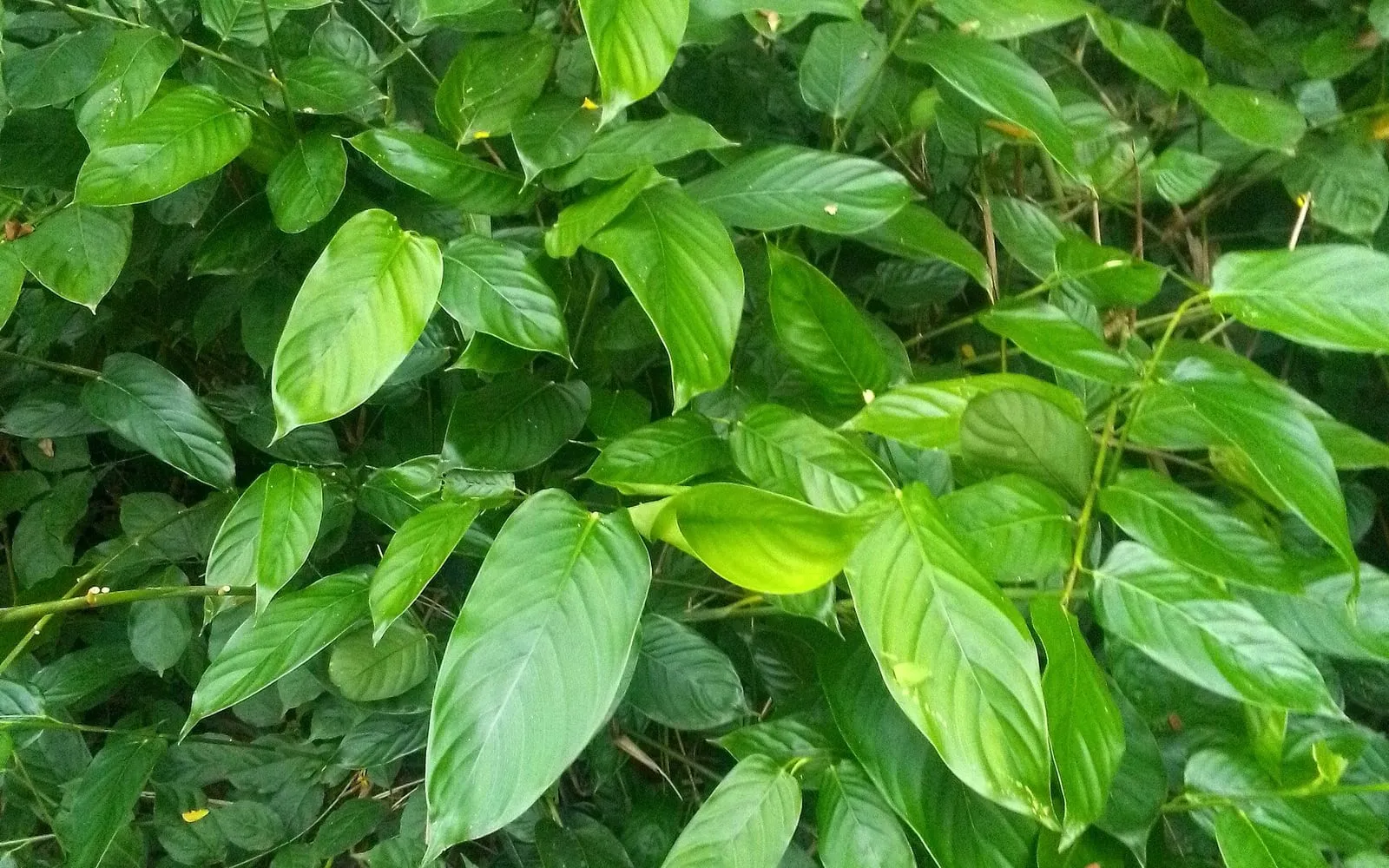
The photograph at the top of this page is one of those stouter relatives, Marantochloa congensis, because no picture of M. filipes exists under an open licence. It shows the heavier end of the genus, while M. filipes is finer and lighter, but the leafy, cane-stemmed habit and the folding leaves are shared.
The meaning of filipes
Filipes comes from the Latin filum, a thread, and pes, a foot or stalk, so the epithet means thread-footed or slender-stalked. It points straight at the plant’s fine petioles and wiry stems, which are its clearest field mark. The name describes the trait a grower notices first.
Form and the folding leaf
From a creeping rhizome the plant sends up thin, flexible stems that bear modest green leaves, each on a slim stalk finished with the pulvinus. That small swollen joint controls the family’s familiar movement, shifting water to lift and fold the blade towards evening and lower it again by day. Because the whole plant is so lightly built, the nightly rise is easy to watch on a healthy specimen. It widens slowly into a loose, open clump instead of a dense thicket.
Its place in the forest
M. filipes grows in the understorey and along shaded forest margins across tropical Africa, among leaf litter and low vegetation in warm, humid, dimly lit conditions. It never meets frost or a cold dry season, and it lives out of direct sun beneath a closed or broken canopy. The slender build suits the low light and still air of the forest floor, where a heavier stem would add little.
How it is used
People across its range put the leaves and stems to everyday work, cutting foliage to wrap and cover and taking the pliable stems for tying and light plaiting. The species is less useful for building or roofing than its broader-leaved cousins, but its finer stems are better for binding. Where a job needs a supple thread rather than a stiff cane, the thin stems are useful.
Shaping, repotting and support
The wiry stems make this a plant for a place where its loose, leaning shape can be seen. Repot only once the roots have filled the pot, moving up a single size in spring into fresh airy mix, since an oversized pot holds wet compost around the fine roots. A few thin canes will always arch outward, and cutting the oldest at the base each spring keeps the clump tidy. If a stem sprawls too far, a slim cane or a discreet ring support can lift it without hiding the plant. Handle the stems gently when moving or dividing the plant, as they snap more readily than the thicker canes of its cousins.
Bringing it indoors
Grow M. filipes as a tender warm-climate foliage plant with no frost hardiness, at home in tropical zones near USDA 10 to 12. Hold it above about 13 deg C and away from cold draughts. Give it gentle, filtered light or light shade in keeping with its forest-floor origin, since direct sun is too harsh for the thin leaves and scorches them. Keep it away from strong air movement, which can batter and snap the slim stems.
Soil, water and air
Use an open, peat-free potting mix that holds a little moisture while draining fast, lightened with bark and perlite. Keep the compost lightly moist through the growing months, letting the top layer dry a touch between waterings, and water more sparingly once cool weather slows the plant, because a chilled wet rootball rots easily. Soft water, whether rain or filtered, avoids the leaf spotting that hard supplies can cause. A humid atmosphere keeps the fine foliage fresh, so a pebble tray or a group of nearby plants works well.
Showing off a fine-stemmed plant
A plant this airy shows best raised off the floor, on a stand or a shelf where the arching stems can spill over an edge and catch the light. Its open habit shows clearly against a plain wall, and a single specimen suits a narrow spot that a broad clump would fill. Denser foliage behind it helps the fine stems stand out. Because the leaves are thin, they let a little light through, so low morning or evening light can show the plant well. Keep it clear of a busy doorway or a fan, where constant moving air can damage the slender stems and dry the leaf edges.
Feeding and making more
Feed lightly in spring and summer with a balanced liquid fertiliser diluted well below full strength, since a heavy dose can damage the fine roots; give nothing over winter. Propagate by dividing the rhizome in spring, teasing the clump into rooted portions, or by rooting soft stem cuttings in a warm, close, humid spot. New divisions establish faster when kept shaded and evenly moist while they settle.
What can go wrong
The slim stems flop and the base blackens when the compost stays cold and wet, a sign of rot at the rhizome. Ease off the water and warm the roots. Crisp brown leaf tips tend to follow dry air or a build-up of minerals from hard water. Spider mites favour the thin dry leaves in warm rooms and speckle them finely, while mealybugs settle into the leaf joints; both can be cleared with wiping, rinsing and steadier humidity.
Quick answers
How is it different from the other marantochloas? It is far more slender and delicate, with thread-like stalks and a light, open habit instead of tall stout canes.
Will it stand upright without support? The wiry stems bend and lean by nature, so a loose, arching shape is normal and no cause for worry.
Why do the leaves move at night? The pulvinus at each leaf base shifts water to fold the blade upward, the same mechanism seen right across the prayer-plant family.
Does it need bright light? No. Filtered light or light shade suits it, matching the shaded floor it grows on in the wild.
Slender-Stemmed Marantochloa Prayer Plant problem guides
Not sure what is wrong? See the common houseplant pests guide.