
Houseplant
Nyasa Aneilema Spiderwort
Aneilema nyasense
Also known as Aneilema nyasense
How to grow Aneilema nyasense, a seasonal spiderwort from the Lake Malawi region that grows in the rains and rests in the dry, and how to care for it indoors.
At a glance
- Difficulty
- Easy
- Water
- When the top few centimetres of mix have dried
- Light
- Bright indirect light to light shade
- Temperature
- Warm; keep above about 13 deg C
- Humidity
- Average to high
- Hardiness
- USDA 10-12, RHS H1b, hardy to 13 C
- Type
- Perennial
- Height
- 20-40 cm
- Native to
- tropical Africa
A tender tropical foliage plant from tropical Africa, growing in warm, humid, shaded to filtered light. It needs warmth, humidity and bright indirect light, and it cannot take frost or chill. It is safest above about 13 deg C, and cold, wet compost or dry air spoils it.
Hardiness zones describe winter cold alone. Summer heat, humidity, rainfall and the length of the growing season decide as much, so treat the range as the outer limit rather than as a recommendation.
Not known to be toxic
The nyasa aneilema spiderwort is not recorded among the seriously toxic plants, and related plants in its group are not listed as toxic by the ASPCA or the RHS. A pet or child that chewed a leaf would be unlikely to come to real harm beyond a possible mild stomach upset.
Sources: ASPCA toxic and non-toxic plants, RHS potentially harmful garden plants
About
Aneilema nyasense is named for the country around Lake Nyasa, the old name for Lake Malawi, in south-central Africa. It is one of the many small spiderwort-family herbs of the African tropics, growing in margins and clearings rather than deep forest. It is more a collector’s plant than a flower-shop plant. Its main interest is its seasonal rhythm: it grows during the heavy summer rains and rests through the long dry season.
Its flowers are the small three-petalled, one-morning blooms typical of the family, carried in a loose branching head above the foliage. The foliage clump is the main attraction, along with the interest of a plant that behaves like a seasonal wildflower rather than an evergreen houseplant. It is tender and frost-shy, and it needs warmth, moist air and soft, filtered light while in growth, followed by a drier, quieter rest.
Appearance and character
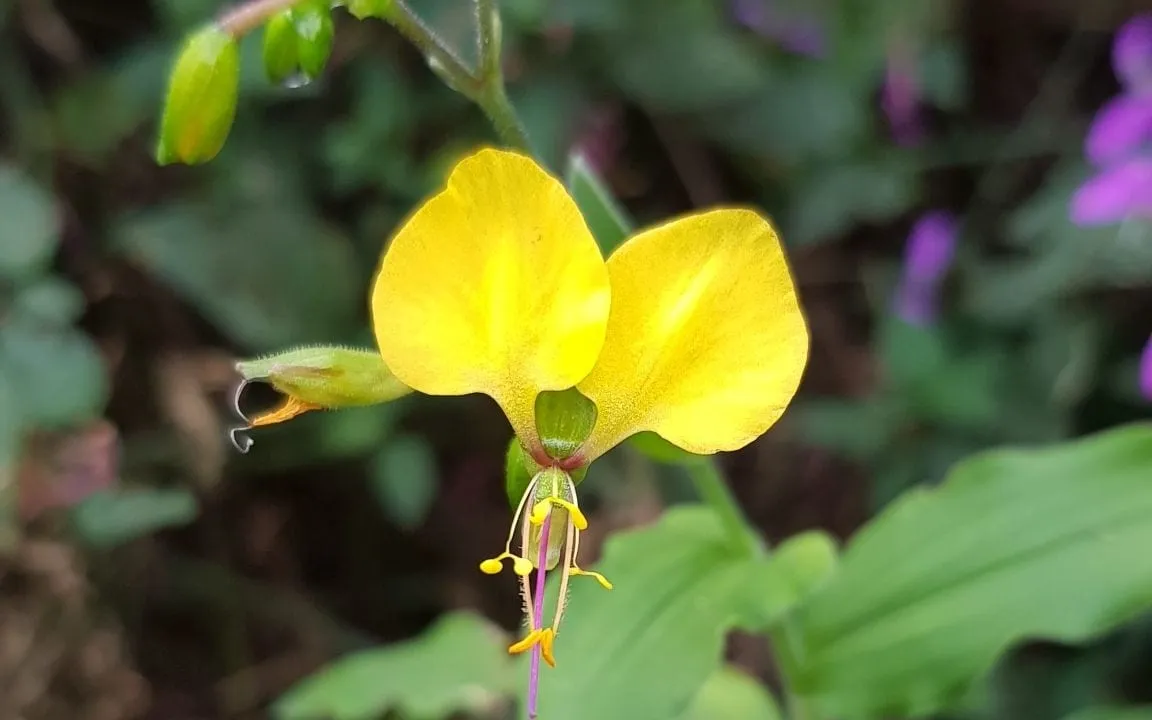
The photograph at the top of this page is Aneilema aequinoctiale, a widespread African relative, because no picture of A. nyasense exists under an open licence. It shows the genus well. The two share the leafy, jointed habit and the lance-shaped leaves, though this relative carries yellow flowers rather than the paler blooms of A. nyasense.
The plant makes a leafy clump of jointed, fleshy stems that rise from a rootstock and lean outward as they age. It is neither a tight rosette nor a long trailer, but a loose, spreading tuft that fills its pot through the growing months.
The leaves are lance-shaped and soft, clasping the stem at their bases and tapering to a point. They are fresh green while the plant is active. When it flowers, it lifts an open spray of small pale blooms clear of the leaves, brief and modest like many seasonal wild herbs.
Where it is from
Aneilema nyasense grows around Lake Malawi and the wider miombo country of south-central Africa, in damp grassland, seasonal marshes and the moist margins of woodland. The climate there swings between a wet growing season and a long dry one. The plant responds by growing with the rains and dying back as the ground dries.
That seasonal home shapes how it is grown. Give it soft, filtered light instead of direct sun, warmth well clear of frost, and generous moisture while it is in growth. A moisture-holding compost that still lets water through matches the damp, seasonally flooded ground it grows in wild.
How it grows
Growth is strongly seasonal. Through the warm, bright months the clump builds fast, throwing up leafy stems and flowering, then it slows sharply and may die back as light and warmth fade, resting until conditions turn again. This natural pause is normal and not a sign of ill health.
Grow it in a pot of moisture-retentive but open compost, watering freely while it is active and shading it from strong sun. As it slows, cut the watering right back and let it rest almost dry. Increase it by lifting and separating the crowns of a dormant or newly stirring plant, or by rooting a young shoot in warmth.
Through the seasons
Spring brings the rested crown back into growth. Repot or divide now, increase watering, and start feeding as the leaves come.
Summer is the plant’s rainy season and its strongest growth. Keep it warm, shaded and humid, and water generously to keep the compost damp.
Autumn slows it as light fades. Reduce feeding and watering steadily, letting the plant move towards rest.
Winter is its dry season. Keep it warm and barely watered, allowing it to rest, and do not mistake the die-back for a problem.
Care difficulty
It is easy if you respect its seasonal habit. It needs filtered light, warmth, humid air and plenty of water in growth, then a drier, quieter rest. The main mistake is watering heavily through the resting spell, which rots the crown in cold, wet compost. Dry, heated air can also scorch the leaves while it is active. If allowed to follow its own rhythm, it needs little intervention.
Watering
Water generously through the growing season, keeping the compost evenly damp while the clump is building and flowering. The plant uses plenty of water in its rainy-season phase and dislikes drying out hard while in full growth.
As it slows towards rest, cut the watering right back and let the compost dry out between sparing drinks, keeping it barely moist through the quiet spell. Cold, wet compost round a resting crown is the surest way to rot it, so err firmly towards dry once growth stops.
Warning signs, diseases and pests
A soft, blackened crown in the resting months usually means it has been kept too wet and too cold. Ease off the water entirely, rescue any firm divisions, and repot into drier, more open compost.
Browning leaf edges while the plant is in growth point to dry air. Raise humidity and move it away from heat sources. Spider mites can dull and web the foliage in dry rooms, and mealybugs lodge in the leaf joints. Check regularly during the growing season and treat either pest early before it spreads.
Growing environment
Site it in soft, filtered light out of direct sun, such as a position screened from a bright window or a lightly shaded room. Strong sun scorches the leaves, while too little light draws the growing clump thin and weak.
Keep the room warm and the air moist while the plant is active, grouping it with other foliage plants or using a humidity tray. Pot it in a moisture-holding but free-draining compost, and be ready to move it somewhere warm and drier as it heads into its resting phase.
Feeding
Feed a dilute, balanced fertiliser every few weeks through the growing season, matching the feed to the plant’s fast rainy-season growth. Regular light feeding keeps the clump lush while it is building.
Stop feeding entirely as the plant slows towards rest, and give nothing through the dry, quiet spell. A freshly potted or divided crown lives on its new compost for the first weeks and needs no early feed.
Troubleshooting
Why has it died back? In its resting season this is normal, echoing the dry season of its homeland. Keep it warm and nearly dry, and it should reshoot when growth resumes.
Why has the crown gone soft? Watering through the rest has left it cold and waterlogged. Stop watering, take firm divisions, and repot drier.
Why are the leaves browning in summer? Dry air while in growth. Raise the humidity and keep the plant off radiators.
How do I propagate it? Separate the crowns as the plant stirs in spring, or root a young shoot in warmth.
Is it safe around pets? No serious hazard is recorded for this plant or its close relatives, but spiderworts in the wider family can irritate skin, so discourage a pet from chewing it.
Nyasa Aneilema Spiderwort problem guides
Not sure what is wrong? See the common houseplant pests guide.