
Houseplant
Shade Aneilema Spiderwort
Aneilema umbrosum
Also known as Aneilema umbrosum
How to grow Aneilema umbrosum, a common African shade-loving spiderwort that grows in the lowest light of any in its group, and how to keep it indoors.
At a glance
- Difficulty
- Easy
- Water
- When the top few centimetres of mix have dried
- Light
- Bright indirect light to light shade
- Temperature
- Warm; keep above about 13 deg C
- Humidity
- Average to high
- Hardiness
- USDA 10-12, RHS H1b, hardy to 13 C
- Type
- Perennial
- Height
- 15-30 cm
- Native to
- tropical Africa
A tender tropical foliage plant from tropical Africa, growing in warm, humid, shaded to filtered light. It needs warmth, humidity and bright indirect light, and it cannot take frost or chill. It is safest above about 13 deg C, and cold, wet compost or dry air spoils it.
Hardiness zones describe winter cold alone. Summer heat, humidity, rainfall and the length of the growing season decide as much, so treat the range as the outer limit rather than as a recommendation.
Skin irritant
- Do not eat
- The sap
- Harm from
- Handling it
- Affects
- People, cats and dogs
No poisoning is recorded for Aneilema umbrosum. It belongs to the spiderwort family, and the ASPCA lists the related Tradescantia as a cause of contact dermatitis in cats and dogs, where the sap reddens and itches the skin. Treat this plant the same way. Wash any sap off skin, and keep it away from a pet that rubs against or chews foliage. Eating a leaf is unlikely to cause more than a mild stomach upset.
Sources: ASPCA toxic and non-toxic plants, RHS potentially harmful garden plants
About
Aneilema umbrosum is named for shade: umbrosum means “of shade”. It is one of the shade-loving members of a large African group of small spiderwort-family herbs. It is common and widespread across the tropics, turning up on the dim forest floor, in damp thickets and along shaded field edges. Farmers know it more often as a weed than gardeners know it as an ornamental. For a dark corner indoors, that tolerance is the reason to grow it.
It is grown for its foliage and deep-shade tolerance rather than for its flowers, which are the small, three-petalled, single-morning blooms common to the family. Because it comes from the darkest part of the forest floor, it accepts lower light than almost any other plant in its genus. It still needs warmth and moist air. Cold, sodden roots and dry, heated air are the two conditions most likely to spoil it.
Appearance and character
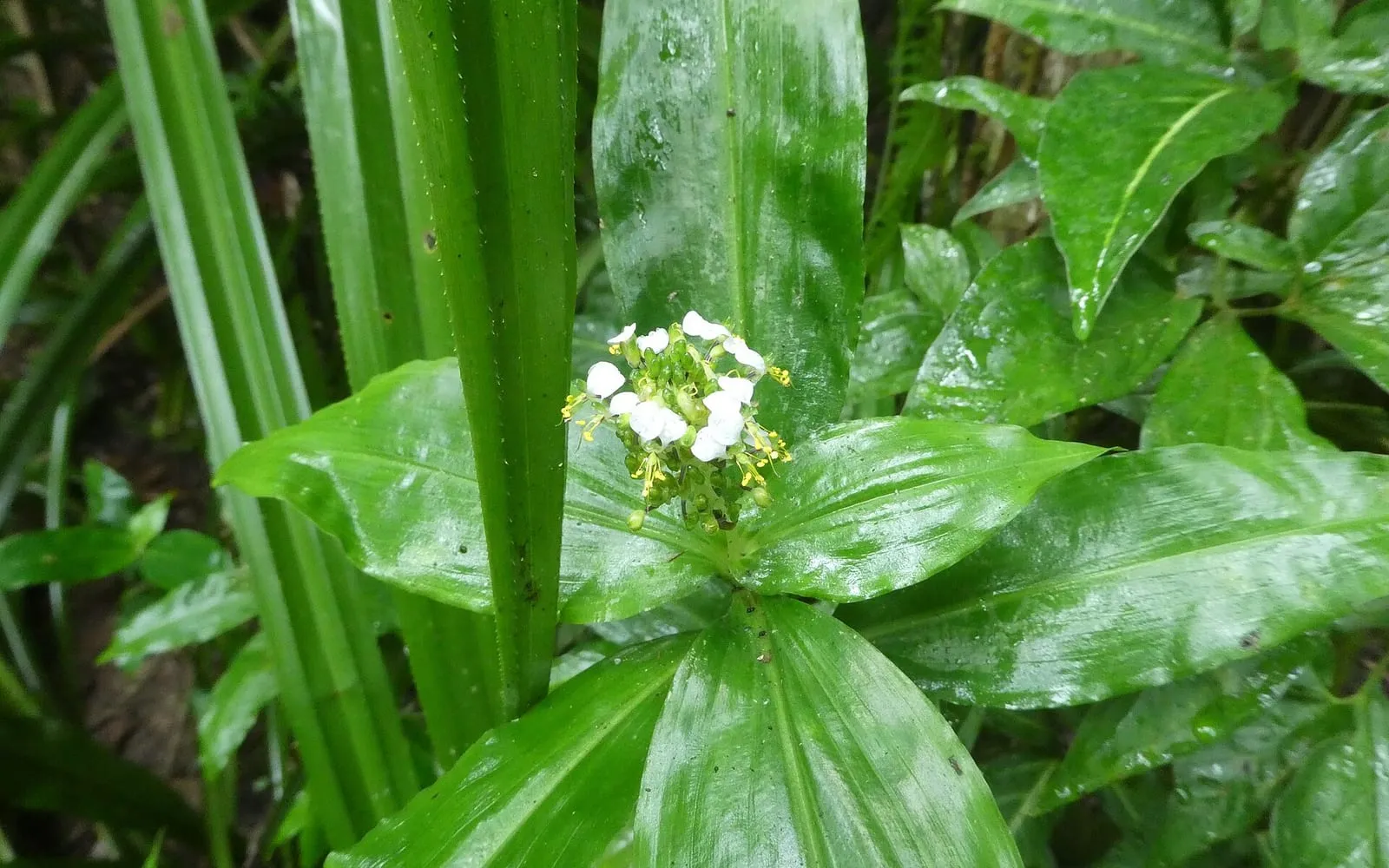
The plant makes a low, spreading tangle of soft, jointed stems that creep and root along the surface, filling a pot with a loose mat of overlapping shoots.
The leaves are lance-shaped and thin, clasping the stem at their bases. They are a fresh soft green and are adapted to low light. When it flowers, the plant lifts a fine, branching spray of tiny pale blooms above the mat. The flowers are brief and easy to miss because the plant puts most of its energy into leaf and spread.
Where it is from
Aneilema umbrosum grows in the deep shade of tropical African forests and thickets, on damp, humus-rich ground where very little direct sun reaches. It has also spread as a weed of shaded, cultivated ground across the wider tropics. It is a plant of dim, damp ground.
That deep-shade habitat explains its use in cultivation. It grows in real shade, among the lowest light its family will tolerate, and needs warmth clear of frost and moist air. A soft, water-retentive but open compost is the closest match for the damp forest floor it covers in the wild.
How it grows
Warmth and moisture keep it creeping and rooting more or less year round. Each soft stem runs across the compost and roots at its nodes. It slows in the coolest, darkest weeks, though it keeps growing in lower light than most of its relatives would accept.
Grow it in a wide, shallow pot where the stems can run, in an open, moisture-holding compost kept just damp. Trim back any shoot that overreaches, and the mat thickens behind the cut. To propagate it, snap off a rooting node and pot it up, or split the mat into rooted pieces.
Through the seasons
Spring brings faster spread. Repot a crowded plant, cut back straggly stems, and begin watering and feeding again.
Summer brings the strongest creep. Keep the plant warm, shaded and humid, watering to hold the compost just damp.
Autumn slows the spread as light fades. Ease off feeding and let the surface dry a little more between waterings.
Winter is a rest. Water lightly, keep the plant frost-free and off cold glass, and expect only slow growth until spring.
Care difficulty
Its deep-shade tolerance makes it one of the easiest plants in the genus for a dark spot, though it is not a plant for a bright sill. It needs low to moderate light, warmth clear of frost, humid air and compost kept just damp. Two faults cause most problems. Cold, waterlogged roots rot the soft stems, and dry, heated air browns the thin leaves. Strong sun, which it does not meet in the wild, scorches it quickly.
Watering
Keep the rootball just moist while the plant is in growth, watering once the top of the compost begins to dry and letting the surplus drain away. The soft stems dislike sitting in a saturated pot, so water thoroughly then let it drain instead of keeping it sodden.
Water less through winter, when growth slows and cold, wet compost becomes risky. Let more of the pot dry between drinks, keeping the roots barely moist to avoid rotting a creeping stem at its base.
Warning signs, diseases and pests
Blackening, mushy stems and a sour pot point to roots kept cold and waterlogged. Take healthy rooted pieces as a backup, cut away the rot, and repot into fresher, more open compost with less water.
Brown, dry leaf edges follow very dry air. Raise the humidity and move the plant away from any radiator. Spider mites can stipple the thin foliage in dry rooms and mealybugs tuck into the leaf joints; check the mat regularly and treat either pest early before it spreads through the stems.
Growing environment
This is a plant for a shaded spot, a dim corner, a north-facing room or a position where most flowering plants would fail. It accepts lower light than its relatives, and it burns in the direct sun it never encounters on the forest floor.
Keep the room warm and the air moist, grouping the plant with others or standing it over a humidity tray. Pot it in a soft, water-retentive but open compost, in a wide container that lets the creeping stems spread out.
Feeding
Feed a weak, balanced liquid fertiliser every few weeks through spring and summer to keep the mat lush. Light, regular feeding suits it because a heavy dose forces soft growth that flops and rots in low light.
Hold off feeding over winter while it rests. A rooted piece freshly potted into new compost lives on that for its first weeks and needs no early feed.
Troubleshooting
Why are the stems rotting? Cold, waterlogged compost. Ease off the water, keep the plant warmer, and restart from healthy rooted pieces if a stem collapses.
Why are the leaf edges browning? Dry indoor air. Raise the humidity and keep the plant off heat sources.
Why are the leaves scorched and bleached? Too much direct sun for a deep-shade plant. Move it into a shadier spot.
How do I make more? Pot up a rooting node, or split the mat into rooted pieces.
Is it safe around pets? Aneilema has no poisoning record, but spiderwort sap can irritate skin, so keep it away from a pet that chews or brushes against it.
Shade Aneilema Spiderwort problem guides
Not sure what is wrong? See the common houseplant pests guide.