
Houseplant
Hyacinth Bluebell
Scilla hyacinthoides
Also known as Scilla hyacinthoides
How to grow hyacinth bluebell, Scilla hyacinthoides, a tall Mediterranean squill whose late-spring spike can carry a hundred violet-blue stars.
At a glance
- Difficulty
- Easy
- Water
- While in leaf and flower; dry when dormant
- Light
- Full sun to bright light
- Temperature
- Hardy to about -15 deg C in free-draining soil
- Humidity
- Average
- Hardiness
- USDA 7-10, RHS H6, hardy to -15 C
- Type
- Perennial
- Height
- 30-60 cm
- Native to
- the Mediterranean
A bulbous plant from the Mediterranean, growing in the cool, wet months and resting as a dormant bulb through a hot, dry summer. The RHS rates it hardy to about -15 deg C, but it does best where the summer is warm and dry enough to ripen the bulb. Cold, wet ground in winter and a damp summer rest both rot it.
Hardiness zones describe winter cold alone. Summer heat, humidity, rainfall and the length of the growing season decide as much, so treat the range as the outer limit rather than as a recommendation.
Toxic if eaten
- Do not eat
- Every part, and the bulb most of all
- Harm from
- Eating it and handling it
- Affects
- People, cats and dogs
Scilla hyacinthoides, the hyacinth bluebell, is toxic if eaten. Like other squills its bulb and leaves contain cardiac glycosides (bufadienolides), and swallowing them can cause drooling, vomiting, diarrhoea and, in larger amounts, an irregular heartbeat. The bulb holds the most. The RHS lists it as an ornamental bulb not to be eaten and advises gloves when handling, because the sap can irritate skin. Keep bulbs and plants away from pets and children, and wash your hands after handling them.
Sources: ASPCA toxic and non-toxic plants, RHS potentially harmful garden plants
About
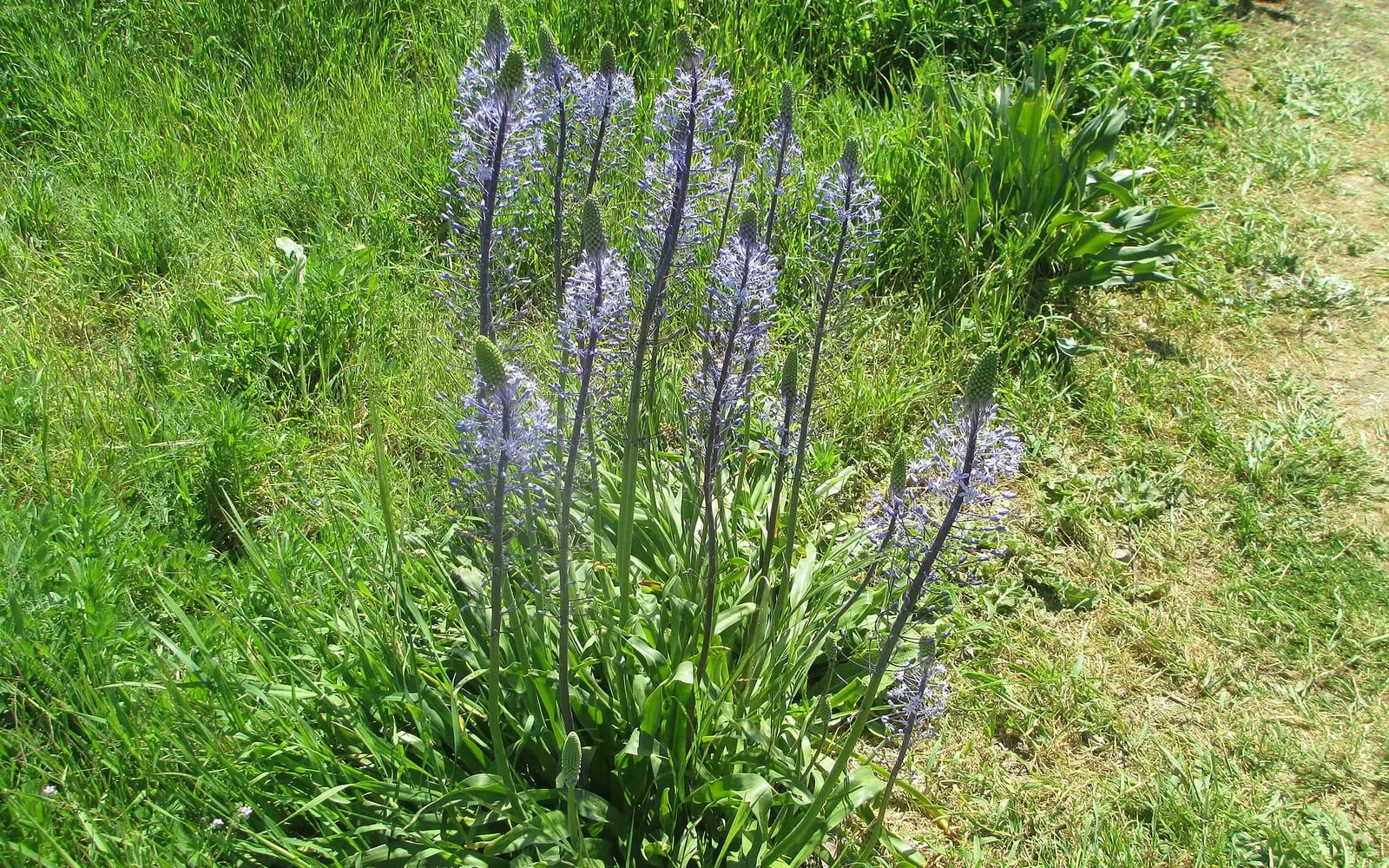
Most squills are low, spring plants a few inches high. Scilla hyacinthoides is taller, sending up a slender flower spike that can top knee height and carry as many as a hundred small violet-blue starry flowers. The common name hyacinth bluebell refers to that mix of bluebell-like colour and hyacinth-like height.
Under the ground, a fat bulb multiplies freely, budding off offsets year on year until one planting becomes a spreading colony. Above ground the plant keeps an unusual timetable for a border plant. Long strap leaves appear in autumn and stand through winter, the tall spike arrives in late spring, and the whole plant then dies back for a dry summer rest. Grown in a pot or a warm bed that suits that cycle, it is one of the easier Mediterranean bulbs.
Appearance
The bulb is large for a squill, sometimes the size of a small onion, wrapped in papery tunics and ringed with developing offsets. From it rises a rosette of several long, glossy, strap-shaped leaves, deep green and slightly channelled, which sit low before the flower stem grows through them.
That stem is the plant’s main feature. A single stout scape carries a long, tapering raceme crowded with small six-pointed flowers, each a soft violet-blue with a darker central line, opening from the base upward over a couple of weeks. A well-fed bulb can carry fifty to a hundred blooms on one spike, and a clump in full flower stands well above the fading leaves.
Where it is from
The species is native across the central and eastern Mediterranean, from Italy and Sicily through the Balkans and Greece to Turkey and the eastern shore around the Levant. It grows on rough hillsides, in olive groves, along field margins and in open scrub, on ground that is green through the mild wet winter and parched through the long summer.
Its behaviour follows that climate. Autumn rain and cool air start the leaves, winter growth feeds the bulb, late spring brings the flower spike as the ground begins to dry, and the hot Mediterranean summer gives it a bone-dry dormancy. A bulb that gets a warm, dry rest through the hottest months flowers far better than one kept damp and green out of season.
How it grows
Leaf growth starts in autumn as the weather cools and any drought breaks, and it continues quietly through winter. The flower spike develops within the rosette and elongates rapidly in late spring, after which the leaves yellow and the bulb enters summer dormancy.
Plant the bulbs in early autumn, setting them deep in gritty, well-drained ground or a spacious pot of free-draining compost, and water them in as growth resumes. The bulb increases fast by offsets, so lift and split a congested clump during dormancy if it stops flowering well or outgrows its space. Seed is possible but slow, and division is the quicker route to more plants.
Through the seasons
Autumn starts the leaves and the growing season; begin watering as the rosette expands.
Winter is steady leaf growth in cool, damp conditions, with the bulb building the reserves for the spring spike.
Spring is the display, the tall raceme opening flower by flower from late in the season above the maturing foliage.
Summer is dormancy, with the leaves gone and the bulb resting warm and dry underground until autumn growth starts again.
Care difficulty
Easy where it gets a dry summer rest. The bulb is tough, frost-tolerant to about -15 deg C and forgiving of poor soil, and the usual disappointment is a colony that grows plenty of leaf but flowers thinly. That points to a rest that was too cool or too wet, or to a clump so congested that the bulbs compete. A hot dry summer and occasional division usually fix both problems.
Watering
Water through the growing season from autumn to late spring, keeping the soil or compost moist while leaves and flower spike are active, and letting the surface dry a little between waterings. The plant is drought-adapted and dislikes permanently soggy soil.
Ease off sharply as the leaves begin to yellow after flowering, then withhold water entirely through the summer dormancy. Dryness in summer ripens the bulb for the following year, and a bulb kept wet in the heat is the one most likely to rot or flower poorly.
Warning signs, diseases and pests
A soft, failed bulb almost always traces to summer wet. Move the planting drier. Once a bulb has rotted at the base it will not recover.
Slugs and snails rasp at the young leaves in mild damp spells; clear hiding places and protect emerging rosettes with a barrier of grit or wool. Narcissus bulb fly can occasionally attack the bulb of this family, its grub hollowing the centre and leaving weak, sparse foliage as the sign. Overcrowding is the last common fault, showing as abundant leaves and few flowers until the clump is lifted and thinned.
Growing environment
Choose a warm, sunny position where the ground bakes dry in summer, such as the foot of a sunny wall or a raised bed, or grow the bulb in a deep pot that can be stood somewhere hot and dry once the leaves die down. Full sun gives the best flowering; deep shade gives leaves and little else.
The soil should be free-draining and need not be rich. Heavy, wet ground is the plant’s main problem, so work in grit before planting on clay, or lift the planting into a raised bed or container where drainage can be controlled.
Feeding
Feed while the leaves are active, from late winter into spring, with a balanced or slightly high-potash liquid feed every few weeks, since that is when the bulb forms next year’s flower. Well-rotted compost worked lightly over the surface in autumn supports an established colony without much other input.
Hold off feeding once flowering ends and the leaves start to fade, and give nothing during the summer rest. Heavy nitrogen is counterproductive because it produces lush leaf at the cost of the spike.
Troubleshooting
Why does it grow lots of leaves but few flowers? Usually a summer rest that stayed too cool or too damp, or a clump grown so crowded that the bulbs compete. Give it a hot dry dormancy, and lift and divide a congested planting.
How tall does the flower spike get? On a well-grown bulb the raceme can reach knee height or a little more, carrying up to about a hundred small flowers.
Why are the leaves out in winter? That is the plant’s normal Mediterranean rhythm, leaves through the mild wet season and dormancy through the dry summer.
How do I get more plants? Lift a clump during dormancy and separate the offsets clustered around each parent bulb, replanting them at once.
Is it safe around pets? No. Every part is toxic and the bulb most of all, so keep the bulbs and foliage away from pets and children.
Hyacinth Bluebell problem guides
Not sure what is wrong? See the common houseplant pests guide.