
Houseplant
Short-Leaved Aloe
Aloe brevifolia
Also known as Aloe brevifolia
How to grow Aloe brevifolia, the short-leaved aloe, a small clumping blue-green rosette from the Western Cape.
At a glance
- Difficulty
- Easy
- Water
- When the mix has dried right through
- Light
- Full sun to bright light
- Temperature
- Warm; keep frost-free
- Humidity
- Low
- Hardiness
- USDA 9-11, RHS H2, hardy to 5 C
- Type
- Perennial
- Height
- 15-30 cm
- Native to
- South Africa
A succulent from South Africa, storing water in fleshy tissues against drought. It needs full sun, very sharp drainage and long dry spells, and rots in cold, wet compost. Its frost tolerance depends on its origin, and it is safest kept frost-free unless known to be hardy.
Hardiness zones describe winter cold alone. Summer heat, humidity, rainfall and the length of the growing season decide as much, so treat the range as the outer limit rather than as a recommendation.
Harmful if eaten
- Do not eat
- The yellow latex just under the leaf skin
- Harm from
- Eating it
- Affects
- People, cats and dogs
Aloe leaves carry a yellow latex rich in anthraquinones such as aloin, which works as a strong laxative. A pet that eats leaf can have vomiting, diarrhoea, lethargy and tremors. A child or adult who eats it can get cramping and diarrhoea. The ASPCA lists Aloe as toxic to cats and dogs, and it names Aloe vera instead of this species, so the same caution applies. The clear inner gel is far less harmful than the latex.
Sources: ASPCA toxic and non-toxic plants, RHS potentially harmful garden plants
About
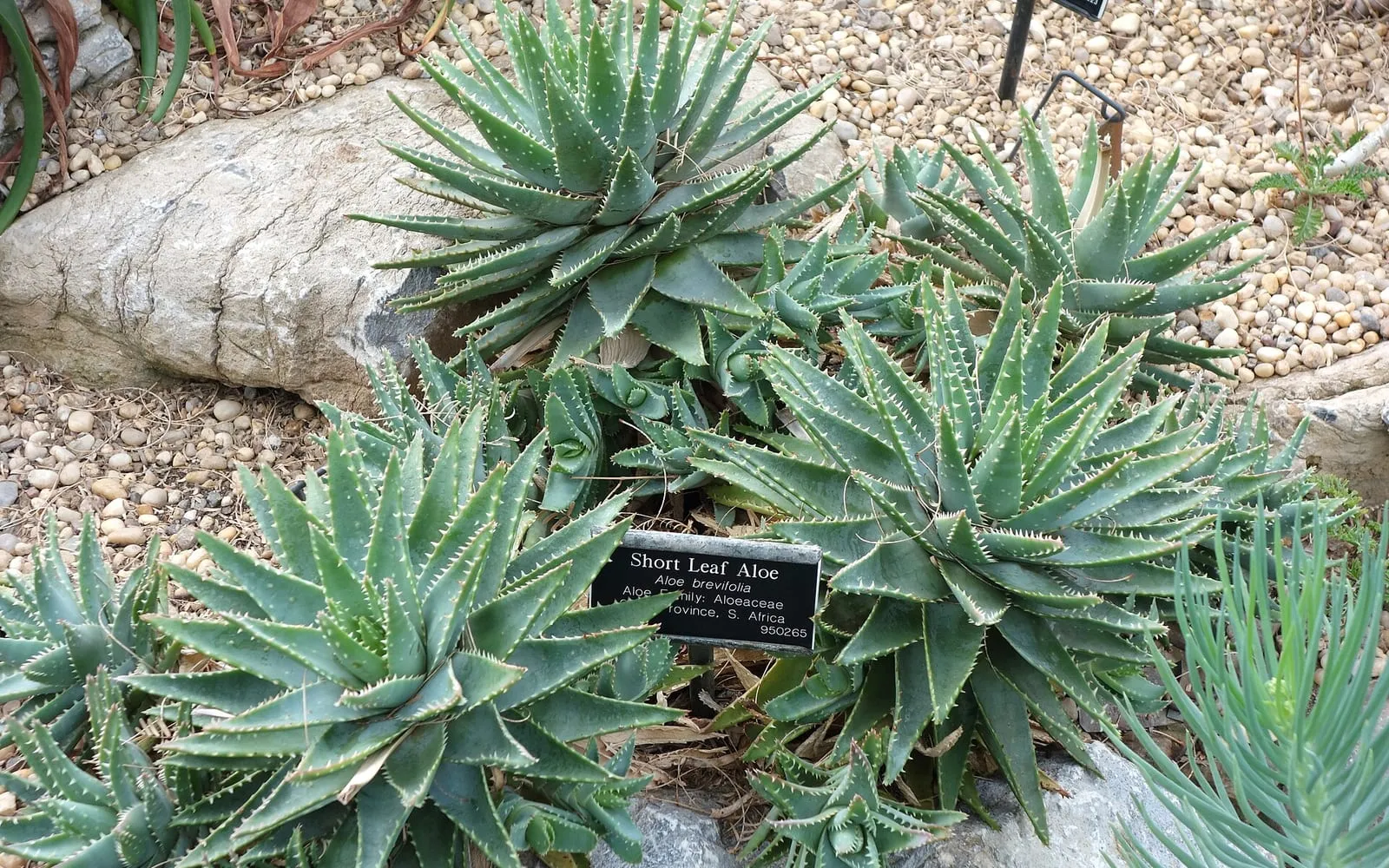
Aloe brevifolia is a small, blue-green aloe that stays low and multiplies into a dense colony instead of growing tall on a trunk. Where the cape aloe becomes a tree, this one keeps to a tidy rosette about the size of a fist. It soon produces pups until a single plant becomes a cushion of small rosettes. The name brevifolia means short-leaved, and the stubby triangular leaves are exactly that, packed tightly into a neat spiral.
It is an undemanding houseplant for a bright sill and a reliable filler for a shallow succulent bowl, because those offsets can be pulled off and potted on all year round. Give it strong light, a compost that dries fast and a proper winter rest, and it needs little attention. Its wild home is a tiny patch of the Western Cape, where it is rare and protected, so cultivated plants are worth growing carefully.
Appearance and character
Each rosette is a compact spiral of short, fat, triangular leaves, a soft grey-blue in shade and flushing pinkish-bronze when strong sun and dryness stress them. Pale, soft teeth edge the leaf margins, and scattered white bumps sit on the leaf surfaces, giving the plant a slightly frosted, textured look up close.
Left to grow, one rosette becomes a clump. Offsets form around the base until the pot is a low mound of small heads, which is the plant at its best and the easiest source of new plants. In late spring and summer a mature clump can send up slender stalks of tubular coral-red flowers well above the leaves.
The stress colours are part of the appeal. A plant kept lean and bright takes on rosy edges and tips, while one grown soft in shade stays flat grey-green and loose. The colour tells you about the light, water and feed it is getting.
Where it is from
Aloe brevifolia comes from a small area of the Overberg in the Western Cape of South Africa, on flat clay and stony ground in a climate of dry summers and cool, damp winters. Its natural range is so limited that it is considered threatened in the wild, and most plants in cultivation come from nursery stock instead of collection.
That background points to its needs. It takes full sun and copes with short spells of cold better than tropical succulents, but it hates sitting wet, especially when cold. Plant it in a very open, gritty compost, stand it in the brightest position you can, and keep it on the dry side.
How it grows
Growth comes in the warmer, brighter months, when the central rosette fattens and fresh pups appear around it. It pauses over the darkest weeks. Bright light keeps every rosette tight and well coloured; in too little light, the leaves stretch apart, pale and lose their neat spiral.
Grow it in a shallow, wide pot in sharp mineral compost, since the roots are fine and the clump spreads sideways. Water it well when the compost has dried out, then wait for it to dry again. To propagate it, twist or cut away a rooted offset, let the wound callus for a day or two, and pot it into the same gritty mix.
Through the seasons
Spring starts the plant back into growth. Start watering again as new leaves and pups appear, and split overcrowded clumps now if you want more plants.
Summer brings the strongest growth. Keep it in full sun, water when the compost has dried right out, and expect flower stalks from established clumps.
Autumn slows growth. Reduce watering and let the rosettes firm up and take on their stress colours as nights cool.
Winter is a dry, cool rest. Keep it bright and frost-free, and water very little, because cold combined with a wet root ball is what causes rot now.
Care difficulty
This is one of the more forgiving small aloes and is well suited to a beginner. It needs bright light, a fast-draining gritty compost and a dry spell between waterings, with enough warmth to stay safe over winter. The usual mistake is overwatering in cold, dense compost, which rots the base of the rosettes and collapses the clump.
Watering
Drench the compost, let it drain freely, and then leave it until it is dry all the way down before watering again. The clump copes with drought far better than constant moisture, so it is safer to wait longer than to water early. Rosettes that pucker and soften are thirsty, while a base that goes translucent and mushy is rotting from too much water.
Cut watering right back in winter, giving just the occasional splash to keep the leaves from crisping. Avoid cold and standing moisture together.
Warning signs, diseases and pests
Rot at the base of a rosette, showing as soft, browning or see-through tissue, comes from a compost kept too wet and cold. Remove the affected rosette, dry the clump off and hold it drier, and salvage healthy offsets if the centre is lost.
Mealybugs lodge deep between the crowded leaf bases and around the roots, where they are easy to miss in a dense clump. Dab them with dilute alcohol on a cotton bud and repeat until they are gone. Loose, pale, elongated rosettes signal too little light not pests.
Growing environment
Stand the short-leaved aloe in the sunniest window in the house, turning the pot occasionally so the clump develops evenly. Warm, dry, well-aired rooms suit it; damp, dim corners do not.
Use a shallow pan or bowl filled with a very gritty succulent compost, which matches the plant’s spreading, shallow-rooted habit and dries out quickly after watering. In the right position, it needs little attention.
Feeding
Feed lightly during active growth, using a dilute balanced feed no more than once a month. This plant gets by on very little, and overfeeding makes soft, pale growth that spoils the compact spirals.
Give no feed once growth stalls in autumn, and none through winter. A freshly potted rosette or divided clump can go a couple of months on the nutrients in the new compost before it needs anything.
Troubleshooting
Why are my rosettes collapsing at the base? Rot from a cold, wet compost. Take out the soft rosettes, dry the clump, replant healthy offsets in sharp mix, and water much less.
How much light does it need? Full sun for the best colour and the tightest rosettes. In too little light it flattens out and pales.
How often should I water it? Only when the compost has dried out completely, which means often in summer heat and very rarely in winter.
Why has my plant lost its rosy colour? The pink and bronze tones come from bright light and lean, dry growing. Move it into stronger sun and ease off the water and feed.
How do I propagate it? Detach a rooted offset from the clump, let the cut dry for a day or two, and pot it up in gritty compost. It roots readily.
Short-Leaved Aloe problem guides
Not sure what is wrong? See the common houseplant pests guide.