
Houseplant
Cape Aloe
Aloe ferox
Also known as Aloe ferox
How to grow Aloe ferox, the cape aloe and source of bitter aloe, from where it grows wild to how to water, feed and site it through the year.
At a glance
- Difficulty
- Easy
- Water
- When the mix has dried right through
- Light
- Full sun to bright light
- Temperature
- Warm; keep frost-free
- Humidity
- Low
- Hardiness
- USDA 9-11, RHS H2, hardy to 5 C
- Type
- Perennial
- Height
- Up to 5 m
- Native to
- South Africa, Lesotho
A succulent from the dry hillsides of South Africa and Lesotho, storing water in fleshy leaves against drought. The RHS rates it H2. Established plants in dry, well-drained ground take brief light frost to about minus 4 deg C, but a wet freeze at minus 3 deg C can kill it, so it is safest kept frost-free in a pot. It needs full sun, very sharp drainage and long dry spells, and rots in cold, wet compost.
Hardiness zones describe winter cold alone. Summer heat, humidity, rainfall and the length of the growing season decide as much, so treat the range as the outer limit rather than as a recommendation.
Harmful if eaten
- Do not eat
- The yellow latex just under the leaf skin, which holds the anthraquinone aloin
- Harm from
- Eating it
- Affects
- People, cats and dogs
The yellow latex of Aloe ferox is rich in anthraquinones, chiefly aloin, which act as a strong purgative. The ASPCA lists aloe (Aloe vera) instead of this species by name as toxic to cats, dogs and horses, for its saponins and anthraquinones, and the same compounds occur in cape aloe. A pet that eats the leaf may vomit, have diarrhoea and become lethargic, and a person who swallows the latex can have cramping and diarrhoea. The inner gel is not the hazard. It is a mild instead of a serious poison, but keep the plant from pets and children that chew, and wash the sap off skin.
Sources: ASPCA toxic and non-toxic plants, RHS potentially harmful garden plants
About
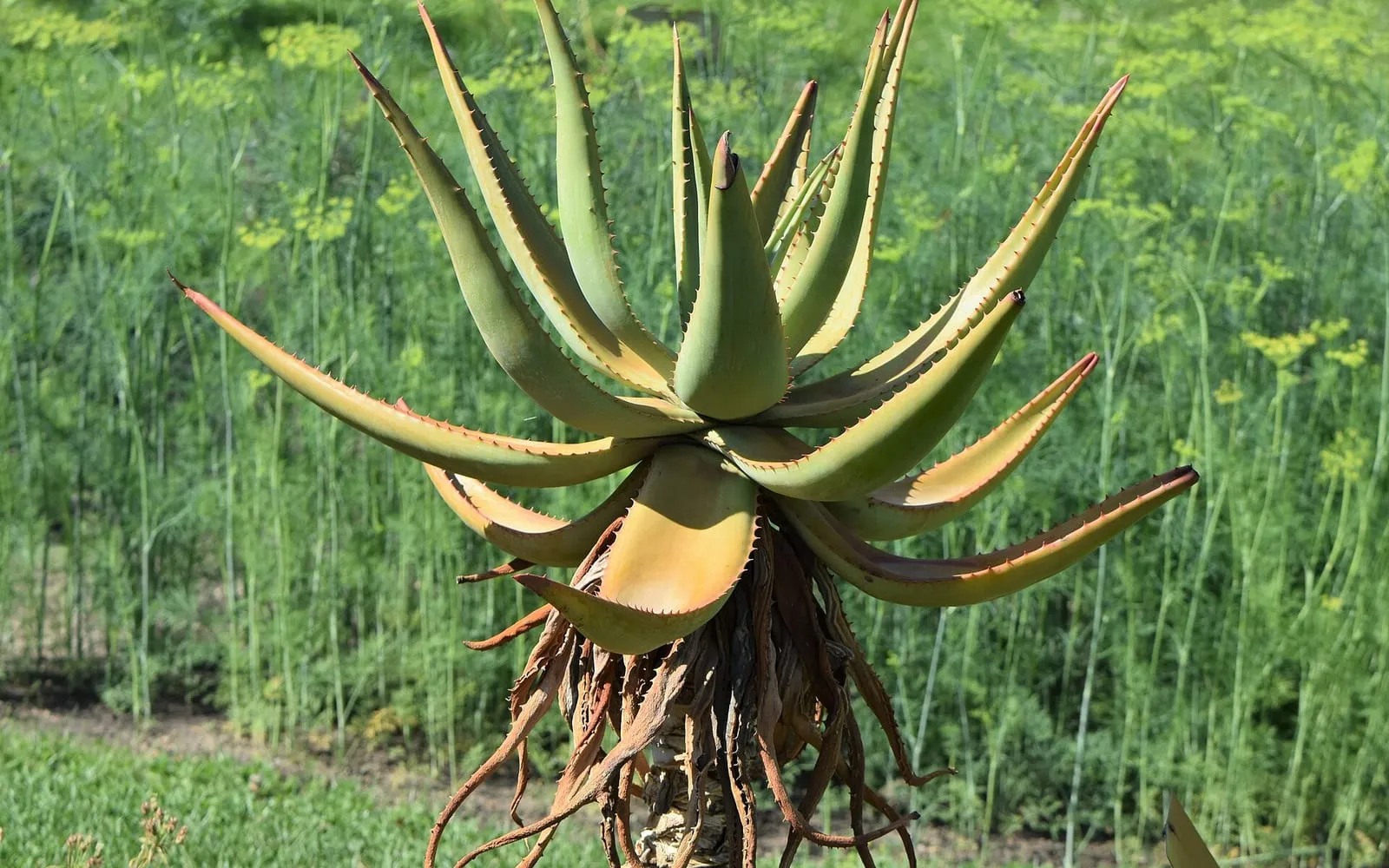
Aloe ferox is one of the largest South African aloes and the plant behind bitter aloe, the dark medicinal resin that has been tapped from its leaves for generations. In the wild it grows a single unbranched trunk two or three metres tall, topped by a dense crown of thick, curving leaves, and the dead leaves stay as a dry brown petticoat around the stem instead of falling away. In a pot indoors it stays much smaller and grows slowly, yet it keeps that same shape from the start: a stout rosette of fleshy, toothed leaves that store water against months without rain.
Kept as a houseplant, give the cape aloe the brightest windowsill you have and compost that drains quickly. The surest way to lose one is a root ball that stays cool and damp, which softens and browns the base. Give it heat, strong light and a long dry rest and it needs little attention. Its yellow sap is a strong purgative, so keep it away from pets and children that might chew it.
Appearance and character
The leaves are broad where they join the stem and taper to a firm point, a dull grey-green that turns bronze or reddish under strong sun and drought. Reddish-brown teeth run down both margins, and on older plants short spines can stud the upper and lower faces as well. This rougher leaf surface separates ferox from the smooth-leaved aloes people know better.
An old specimen holds its skirt of spent leaves against the trunk, which in habitat shades the stem and shelters it from fire. Indoors you can leave that skirt or peel it away for a cleaner column. New leaves unfurl from the tight centre of the rosette and stiffen as they lengthen, each one adding to the fan.
In its winter flowering season a mature plant produces a branched candelabra of flower spikes, packed with tubular orange to fiery red blooms that draw sunbirds in the wild. Pot-grown plants rarely reach flowering size for years, so most owners keep it for the strong rosette rather than the display.
Where it is from
Aloe ferox ranges across the Western and Eastern Cape of South Africa, on dry hillsides, rocky slopes and open scrub that bake in summer and get rain in bursts. It survives heat, wind and drought by using the water stored in those swollen leaves, and it copes with brief light frost in the ground where its origins are cold enough, though a potted plant is safest kept above freezing.
That habitat gives the care pattern. Offer it as much overhead sun as a south-facing sill can give, pot it in a coarse mineral compost cut with plenty of grit or pumice, and let the whole root ball go bone dry between drinks. Standing cold and wet is the one thing its dry-country roots cannot tolerate.
How it grows
The cape aloe grows slowly and steadily through the warm half of the year and all but stops when light and warmth fade. In strong sun it keeps a tight, upright rosette with well-coloured leaves; in poor light it stretches, pales and loses the reddish tint that hard conditions bring out.
Grow it in a deep, gritty succulent compost in a heavy pot that will not topple as the crown grows top-heavy. Water it thoroughly when the compost has dried out completely, then leave it alone until it dries again. Being largely single-stemmed, ferox is not a plant to cut back hard.
Through the seasons
Spring starts growth as the days lengthen. Begin watering again as new growth appears, and repot a crowded plant now while it has the whole season to settle.
Summer is the main growing spell. Keep it in the strongest light you can manage, water deeply once the compost has dried through, and give an occasional weak feed.
Autumn slows growth. Cut back the watering and let the leaves firm up and colour as the nights cool.
Winter is a near-dry rest. Hold it bright and frost-free, and water barely at all, since a cold, sodden pot is what rots the base at this time of year.
Care difficulty
An easy, long-lived plant for anyone who can resist watering it. Its needs are strong light, a fast-draining mineral compost and a full dry-out between soakings, plus enough warmth to see it through winter without chill. The main mistake is watering while the compost is still cold and damp, which causes basal rot.
Watering
Soak the compost right through, let the surplus run out of the drainage holes, then hold off entirely until it has dried to the bottom of the pot. The fat leaves store enough water to carry the plant between drinks, so err towards drought instead of damp. A plant that is short of water draws its lower leaves in and thins them; one that is drowning goes soft and discoloured at the base.
Through winter, water only enough to stop the leaves shrivelling badly, perhaps once every few weeks in a warm room and less in a cool one. Cold and wet together at the roots is the danger to watch for.
Warning signs, diseases and pests
A softening, browning stem base is the classic sign of rot from a compost that has stayed too wet and cool. Lift the plant, cut away any mushy tissue, dry it off and restart it in fresh gritty mix, keeping it drier from then on.
Mealybugs are the pest to expect, hiding as white woolly specks between the leaf bases and around the roots. Wipe them off with a cotton bud dipped in dilute alcohol, or treat with a suitable spray, and check the crevices again a week later. Weak, stretched, pale growth signals too little light instead of any disease.
Growing environment
Give the cape aloe the sunniest spot in the house and turn the pot now and then so the rosette grows evenly instead of leaning to the glass. It thrives in warm, dry, airy rooms and dislikes stagnant, humid corners.
Pot it into a deep mineral compost with grit or pumice worked through, in a container heavy and wide enough to balance the weight of the crown. In those conditions, it needs very little week to week.
Feeding
While it is in active growth, a dilute balanced feed once a month is plenty. The plant grows slowly and stores its own reserves, so heavy feeding only produces soft, weak leaves that spoil the tight look.
Stop feeding altogether once growth slows in autumn and give none over winter. A recently repotted plant can go without feed for the first month or two, using the nutrients in the fresh compost.
Troubleshooting
Why has the base of my cape aloe gone soft? Rot, from compost that stayed cold and wet. Cut back to firm tissue, dry the plant off and replant it in sharp mix, then water far less.
How much light does it need? As much direct sun as you can give it. A south-facing window or a sunny conservatory suits it best.
How often should I water it? Only once the compost has dried out completely, which may be weekly in high summer and monthly or less in winter. Judge it by the pot, not the calendar.
What is bitter aloe? The yellow sap that seeps from a cut leaf of ferox is dried into a dark, bitter resin used as a traditional purgative, so the plant is best kept from pets and children that might chew it.
How do I propagate it? Usually from seed, as the plant rarely offsets. A tall old specimen can be topped and the cut stem dried and rooted to make a new plant.
Cape Aloe problem guides
Not sure what is wrong? See the common houseplant pests guide.