
Houseplant
Shaw's Agave
Agave shawii
Also known as Agave shawii
How to grow Agave shawii, shaw's agave, a compact glossy-green rosette of the Baja and San Diego coast with reddish teeth and colony-forming offsets.
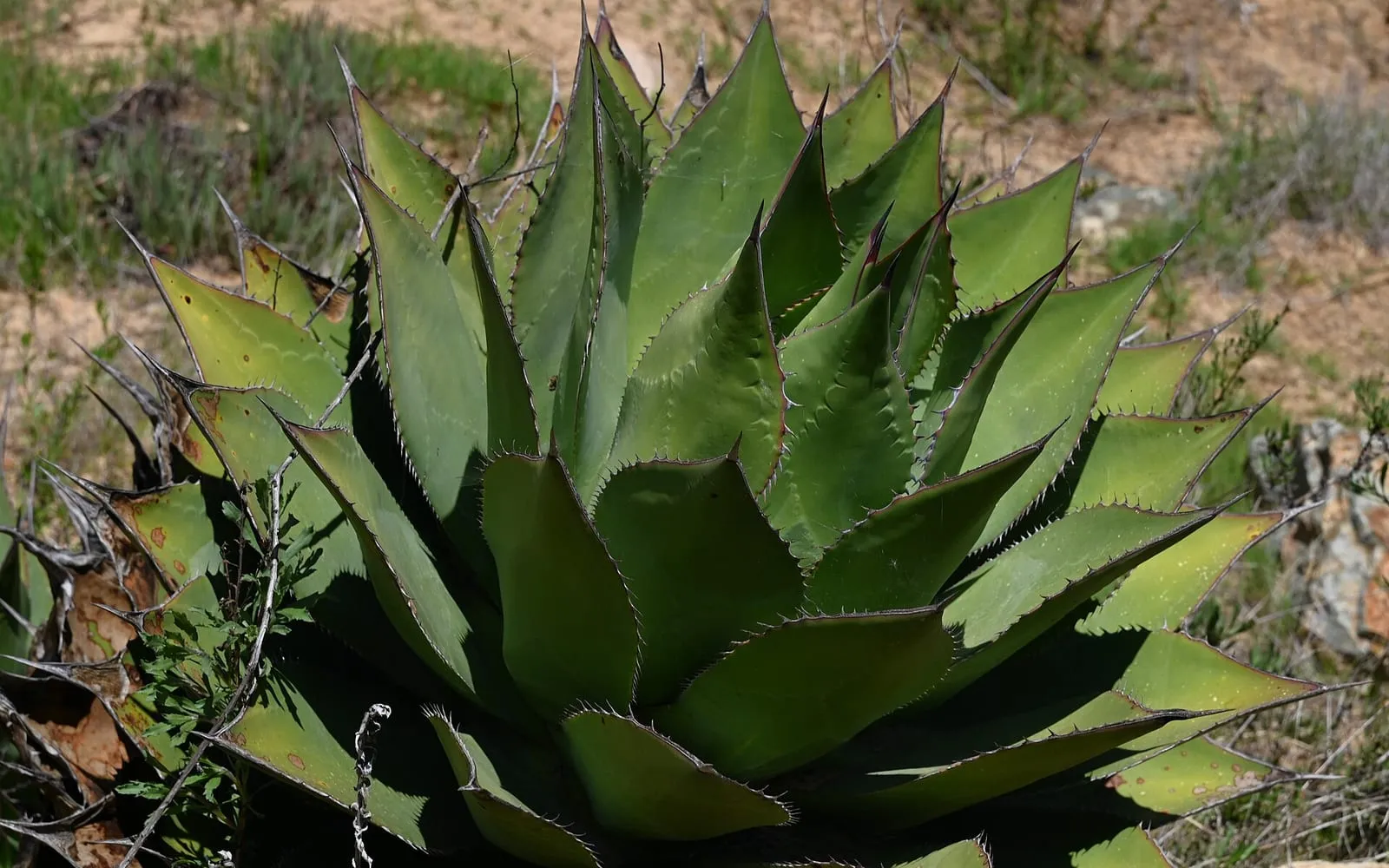
At a glance
- Difficulty
- Easy
- Water
- When the mix has dried right through
- Light
- Full sun to bright light
- Temperature
- Tolerates brief cold to about -4 C; keep dry in winter
- Humidity
- Low
- Hardiness
- USDA 9-11, RHS H3, hardy to -4 C
- Type
- Perennial
- Height
- 30-60 cm
- Native to
- Baja California, southern California
A coastal agave from Baja California and the southernmost California shore, where frost is rare and light. It takes brief cold to about -4 C, and it rots in cold, wet compost. It needs full sun and sharp drainage, and it copes with salt spray and cool sea air but not with a wet winter.
Hardiness zones describe winter cold alone. Summer heat, humidity, rainfall and the length of the growing season decide as much, so treat the range as the outer limit rather than as a recommendation.
Harmful if eaten
- Do not eat
- The leaves and sap
- Harm from
- Eating it and handling it
- Affects
- People, cats and dogs
Agave sap holds calcium oxalate crystals and saponins. On skin it can cause an itchy, sometimes blistering rash, and the sharp leaf tips add puncture wounds. Eaten, it can cause drooling, vomiting and diarrhoea in a pet or child. The ASPCA lists Agave as toxic to cats and dogs, and it names other species of the genus instead of A. shawii, so the same caution applies. Wear gloves and sleeves when handling or dividing it, and wash off any sap.
Sources: ASPCA toxic and non-toxic plants, RHS potentially harmful garden plants
About
Agave shawii is a coastal agave. It grows on sea bluffs and marine terraces from the northern coast of Baja California to the bluffs near San Diego, and it forms a squat rosette of broad, glossy green leaves rimmed with rust-red teeth. Compared with many inland desert agaves, it looks greener and glossier.
On its home cliffs it forms long ribbons of growth as offsets creep along the ground. In California, the wild population has thinned to a handful of protected stands, so cultivated plants help keep the species in gardens and collections. Even without that conservation angle, it is a sturdy, good-looking plant.
For a grower, it is tough and colourful. It stores water in its thick leaves, spreads outward into a colony, and needs good light, quick drainage and warmth. Cold, waterlogged roots are the main danger, so careful watering matters more than frequent attention.
Appearance and character
The leaves are broad, short and fleshy, a deep glossy green with a firm, slightly domed outline. The margins bristle with prominent reddish-brown teeth, and each blade ends in a stout terminal spine of the same warm colour that stands out sharply against the green.
Offsets spread on runners and root where they settle, so a single rosette can become a colony over the years, just as it does along its native bluffs. That habit means a potted plant can be divided once it has settled in.
Flowering finishes a rosette. In time a tall, branched stalk rises above the leaves, sets seed and dies back, while the ring of offsets continues. A container plant seldom reaches that stage, so the glossy, red-toothed rosette is the main attraction.
Where it is from
Agave shawii grows on sea bluffs, marine terraces and rocky headlands within reach of the surf along the Pacific coast of Baja California and the southernmost California shore. The climate is mild and dry, tempered by cool sea air, and the sandy, rocky ground lets water pass straight through.
Its coastal habitat explains its care. It grows best in bright exposure and quick-draining ground, tolerates salt spray and thin, sandy soil, and does badly with cold, standing wet at the roots. Give it light, warmth and fast drainage and it settles well.
How it grows
Thick leaves build up and runners creep sideways across the warm months. Growth slows as the light weakens. In bright exposure, the foliage keeps its breadth, gloss and bold red teeth. In shade, it becomes soft and the colour fades.
Plant it in a coarse, quick-draining mix. Water once the surface has dried, then let the fleshy leaves carry the plant through a dry stretch. Roots kept wet will rot.
Its coastal habitat is frost-free or nearly so, and it takes brief cold to about -4 C, but wet cold rots it. Since the runners root as they spread, detaching a rooted offset is the simplest way to raise a new plant.
Through the seasons
Spring starts the colony back into growth as daylight returns. Increase the watering and lift surplus offsets into their own pots.
Summer brings the strongest growth. Water when the surface has dried, and stand the rosette in full brightness.
Autumn slows growth. Ease off the feed and stretch the intervals between drinks as the light fades.
Winter is a cool, dry lull. Water at long intervals and shield the colony from cold and damp.
Care difficulty
This is an easy agave where light and drainage are right. It spreads on runners, stores water and needs little feeding. The main risk is a cold, saturated pot rotting the crown, so keep it lean and dry over winter. The rust-red teeth and heavy spine also need a spot clear of passing legs.
Watering
When the upper layer of the mix has dried, drench it until the excess spills from the base, then leave the pot to empty. The fleshy leaves store water, so a dry spell does no harm. A crown left wet can start to rot.
Scale watering back hard over winter, when chilled roots suffer most. Let the state of the mix decide each drink, since standing moisture is a bigger threat to this coastal agave than drought.
Warning signs, diseases and pests
Rot from a cold, wet root run first appears as a soft, discoloured patch on the base or a crown that has loosened in the mix. Open up the drainage, cut the watering right down, especially through winter, and keep the plant warm and well lit.
Mealybugs hide in the leaf bases and creeping runners, and spider mites appear when the air dries. Check through the folds of the rosette and clear any early outbreak with a wipe and a suitable spray.
Scorched, brown tips usually come from irregular watering or salt build-up. Steadier watering and an occasional flush of the pot help restore the colour.
Growing environment
Give it the fullest, most direct light. In strong light, the leaves stay broad, glossy and deeply coloured. In shade they soften and the red edges lose colour.
A coastal plant that tolerates brief cold to about -4 C, it needs shelter from cold, wet weather. A bright sill or an airy, sunlit room suits it, and a sheltered summer outdoors does it good.
Pot it in a light, sharp, grit-rich mix in a container that drains at once, and leave room for offsets to spread. Move it by the pot so the rust-red teeth and spine stay off your fingers.
Feeding
One or two weak, balanced feeds through the warm season are all the colony needs. An excess produces soft, overstretched leaves, so keep every dose slight.
Do not feed over winter. A fresh potting into gritty mix supports a young plant for a long spell, so wait until warmth returns before feeding again.
Troubleshooting
Why is my shaw’s agave soft at the base? A cold, wet root run is the usual reason. Improve the drainage, cut the watering back, and hold it warm.
How much light does it need? As much direct sun as you can give. In shade the leaves flag and the red teeth lose their colour.
How often should I water it? Once the surface has dried, and only occasionally through winter, judged by the mix.
How do I propagate it? Detach a rooted offset from the edge of the colony and grow it on.
Is it safe around pets? The sap is a mild irritant and the ASPCA lists Agave as harmful to cats and dogs, so keep chewing pets off it and mind the teeth and heavy spine.
Shaw's Agave problem guides
Not sure what is wrong? See the common houseplant pests guide.