
Houseplant
Blue Agave Houseplant
Agave cerulata
Also known as Agave cerulata
How to grow Agave cerulata, the blue agave houseplant, a powder-blue rosette from the Baja peninsula that flowers once and is mildly toxic.
At a glance
- Difficulty
- Easy
- Water
- When the mix has dried right through
- Light
- Full sun to bright light
- Temperature
- Warm; tolerates a light frost when dry, keep above about 5 deg C in a pot
- Humidity
- Low
- Hardiness
- USDA 10-11, RHS H2, hardy to 2 C
- Type
- Perennial
- Height
- 40-80 cm
- Native to
- Baja California
A desert agave from the dry, sun-struck peninsula of Baja California, storing water in thick leaves. It needs full sun, sharp drainage and long dry spells, and it rots in cold, wet compost. Keep a potted plant above about 5 deg C, and dry if it must face a light frost.
Hardiness zones describe winter cold alone. Summer heat, humidity, rainfall and the length of the growing season decide as much, so treat the range as the outer limit rather than as a recommendation.
Toxic if eaten
- Do not eat
- The leaves and sap
- Harm from
- Handling it, eating it and sap in the eyes
- Affects
- People, cats and dogs
Agave cerulata, the blue agave houseplant, has not been assessed by the ASPCA under its own name. Agave americana is listed as toxic to cats, dogs and horses, and the same irritant chemistry occurs across the genus. The sap contains calcium oxalate crystals and saponins, which can blister or inflame skin and burn the mouth, and sap in the eye is painful and needs rinsing. A pet or child that chews a leaf may drool, vomit or have diarrhoea. Wear gloves and eye protection when cutting it, and wash any sap off skin.
Sources: ASPCA toxic and non-toxic plants, RHS potentially harmful garden plants
About
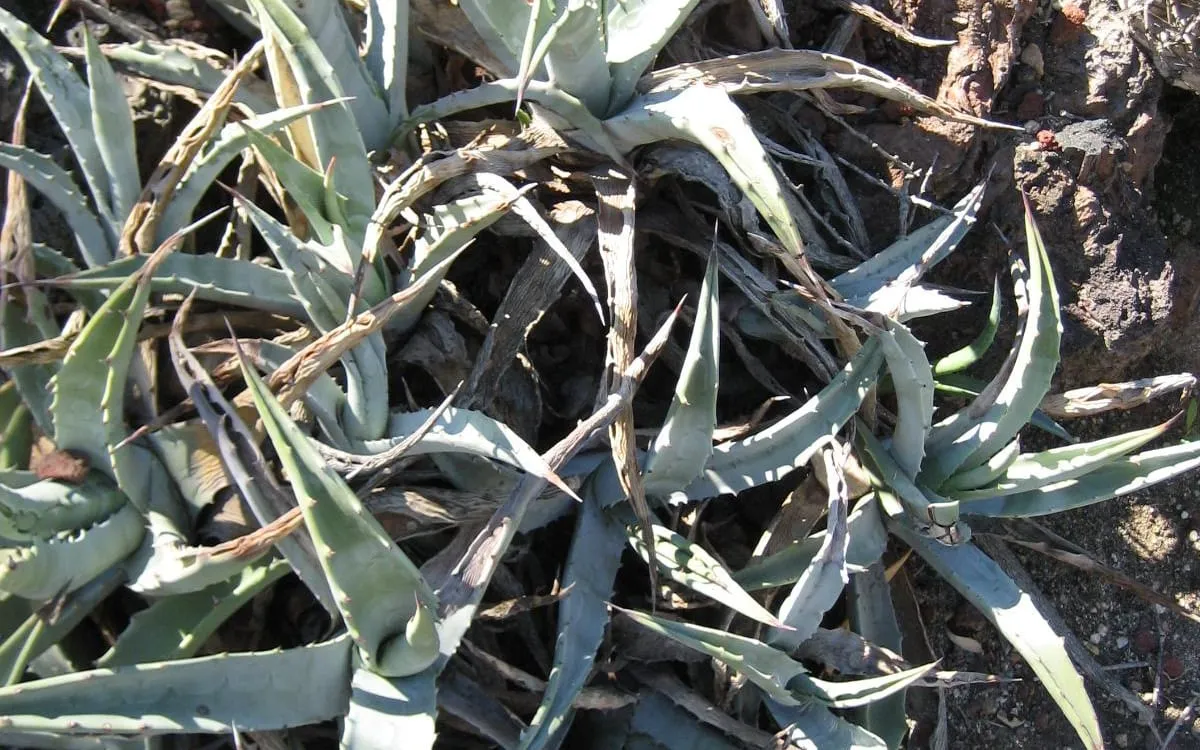
Agave cerulata takes its name from the dusty blue coating on its leaves. The waxy surface helps reflect strong desert light. The rosette is broad and open, with chalky grey-blue blades that suit a bright windowsill or a gravelly bed under glass.
It grows wild only on the Baja California peninsula, one of the most abundant agaves of that dry, sun-struck strip of Mexico. The plant varies so much from one hillside to the next that botanists recognise several forms, ranging from tight compact rosettes to looser, larger clumps, all sharing the same glaucous cast.
For a keeper the appeal is its ease alongside its colour. Give it strong light, a fast-draining pot and warmth, and it stores enough water in its leaves to cope with missed watering. The one thing it will not survive is a cold, sodden root run, so overwatering is more dangerous than neglect.
Appearance and character
The leaves are thick and rigid, tapering from a wide base to a narrow tip, their surface dulled by that pale blue bloom. Small dark teeth run along each margin, and the blade finishes in a firm, dark terminal spine that can scratch skin when you reach past it.
Offsets appear around the base as the plant matures, so a solitary rosette slowly becomes a small colony that can be split and grown on. The waxy coating rubs off where a leaf is touched, leaving a green fingerprint that grows back with the next flush.
Like its kin the plant is monocarpic. After many years it may produce a tall branched flower stalk, set seed, and then that rosette dies away, leaving its offsets behind. Under a household ceiling it seldom reaches that stage and is grown for the rosette alone.
Where it is from
The species is a Baja endemic, spread across rocky slopes, desert flats and coastal hills from the middle of the peninsula southward. Rain is scant and falls mostly in winter, sun is strong, and the ground drains the moment a shower ends.
Its care follows from that dry, bright home. It needs strong light and a mineral soil that never holds water. A chilly, waterlogged pot is outside the conditions it is adapted to. Keep it warm, bright and gritty.
How it grows
Growth comes in the warm months, when the rosette widens by a leaf or two and offsets push up around it, then it rests as light drops away. Bright conditions keep the blue vivid and the leaves stout; too little light greens the plant and stretches its centre.
Pot it into a coarse, grit-laden mix in a container with generous drainage, and drench it only once the blend has dried right down. The fleshy leaves act as a reservoir, so long dry gaps between waterings suit it far better than frequent small drinks.
Warmth keeps it growing, and it behaves as frost-tender in cultivation, so hold it above about 5 deg C and away from cold windows. Increase is simplest by prising off a rooted offset and potting it separately.
Through the seasons
Spring starts the rosette into growth as the light strengthens. Resume watering gently and lift any crowded offsets to grow on.
Summer brings the year’s growth. Water once the grit has dried through, and give the plant the strongest light you can offer.
Autumn slows it down. Space the waterings out and cut back on feed as the days shorten.
Winter is a dry, warm rest. Water rarely, keep it clear of the cold, and let the leaves stay plump on their own reserves.
Care difficulty
Easy, and forgiving of missed watering once light and drainage are right. It stores its own water, needs little feeding, and only needs to be kept warm and bright. The main risk is a cold, wet pot that rots the roots, so lean towards dryness in winter. The dark spine and marginal teeth mean it needs a spot where nobody brushes against it.
Watering
Wait until the gritty mix has dried down through the pot, then wet it fully and let every excess drop escape. The plant stores moisture in its leaves, so it copes with a long dry spell and suffers from a soaking it cannot drain.
Through winter give barely any water, since chilled, saturated compost is what rots an established rosette. When a watering feels uncertain, hold off, because thirst troubles this agave far less than standing wet.
Warning signs, diseases and pests
A cold, waterlogged root run is the usual cause of serious decline, showing as a soft, browning centre or a rosette that loosens at the base. Sharpen the drainage, water far less, above all in the cold months, and keep it in strong light.
Dry indoor air can bring mealybugs to the leaf axils and spider mites to the undersides. Check the crevices between the leaves, and clear any colony early with a wipe and a suitable treatment.
Browning tips or edges often follow parched air or scorch behind glass. Give it steadier moisture and a little ventilation.
Growing environment
Give it all the direct light available. Strong sun keeps the rosette compact and the blue bloom at its richest, while shade flattens the colour and draws the centre out.
It behaves as frost-tender indoors, so keep it above about 5 deg C and shelter it from cold draughts. A hot, bright sill or a sunny spot under glass suits it best.
Grow it in a light, sharply draining, gritty mix in a pot that drains freely, and turn it now and then so the rosette stays even. Handle it by the pot instead of the leaves to spare both the bloom and your fingers.
Feeding
A weak balanced feed once or twice through the growing season is ample. Rich feeding pushes soft, floppy growth that spoils the tight rosette, so keep the dose light.
Give nothing over winter while the plant rests. Fresh gritty compost after repotting supplies enough nutrient for a good while, so repotting matters more than regular feeding.
Troubleshooting
Why is my blue agave rotting? A cold, wet root run. Improve the drainage, water much less, and keep it warm and bright.
How much light does it need? As much direct light as you can give. Light shade dulls the blue and stretches the plant.
How often should I water it? When the mix has dried through, sparingly in winter, judging by the compost and the plumpness of the leaves.
How do I propagate it? Detach a rooted offset from the base and pot it up on its own.
Is it safe around pets? The sap is an irritant and the ASPCA lists Agave among plants harmful to cats and dogs, so keep chewing animals away, and mind the spine when you handle it.
Blue Agave Houseplant problem guides
Not sure what is wrong? See the common houseplant pests guide.