
Houseplant
Benin Aneilema Spiderwort
Aneilema beniniense
Also known as Aneilema beniniense
How to grow Aneilema beniniense, a creeping West African forest-floor spiderwort grown for foliage, and how to water, feed and site this tender curiosity.
At a glance
- Difficulty
- Easy
- Water
- When the top few centimetres of mix have dried
- Light
- Bright indirect light to light shade
- Temperature
- Warm; keep above about 13 deg C
- Humidity
- Average to high
- Hardiness
- USDA 10-12, RHS H1b, hardy to 13 C
- Type
- Perennial
- Height
- 30-60 cm
- Native to
- tropical Africa
A tender tropical foliage plant from tropical Africa, growing in warm, humid, shaded to filtered light. It needs warmth, humidity and bright indirect light, and it cannot take frost or chill. It is safest above about 13 deg C, and cold, wet compost or dry air spoils it.
Hardiness zones describe winter cold alone. Summer heat, humidity, rainfall and the length of the growing season decide as much, so treat the range as the outer limit rather than as a recommendation.
Not known to be toxic
The benin aneilema spiderwort is not recorded among the seriously toxic plants, and related plants in its group are not listed as toxic by the ASPCA or the RHS. A pet or child that chewed a leaf would be unlikely to come to serious harm beyond a possible mild stomach upset.
Sources: ASPCA toxic and non-toxic plants, RHS potentially harmful garden plants
About
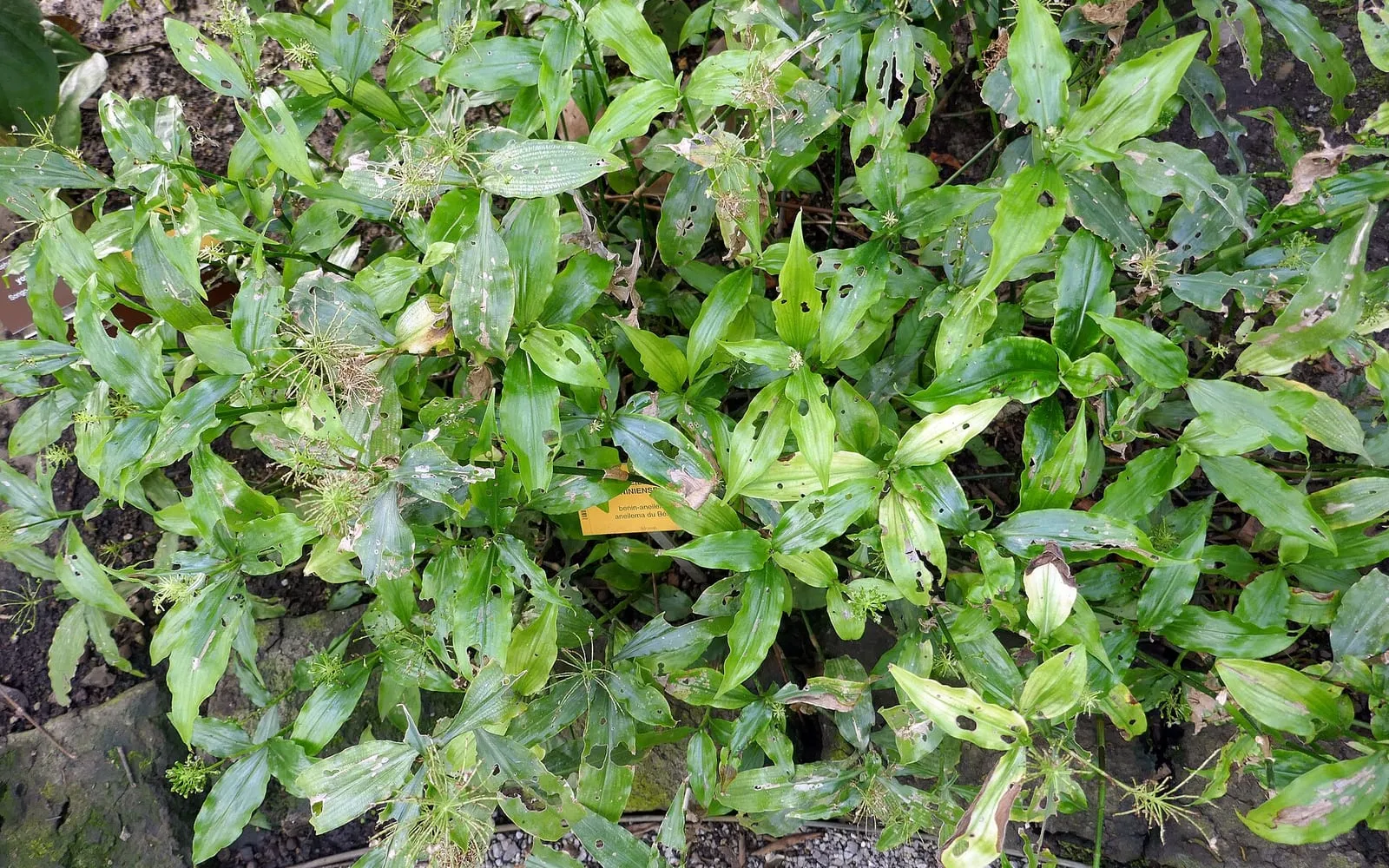
Aneilema beniniense is a creeping spiderwort of the West and Central African rainforest, one of a large genus of small tropical herbs that mostly grow on the forest floor. It is part of a group that few gardeners grow. Where the well-known spiderworts sold as houseplants trail in bright stems, this one sprawls. Soft, jointed stems lie along the ground, put down roots at their nodes and form a loose green mat in the shade.
Its flowers are modest, small three-petalled blooms carried in an open, branching head, each lasting only a morning in the way of the whole family. Most of the interest is in the creeping foliage and forest-floor habit. Coming from the deep shade and constant damp of equatorial Africa, it needs warmth, moist air and dim, screened light, and it declines if left cold and wet at the root or parched in dry indoor air.
Appearance and character
This is a low, spreading plant instead of an upright or a trailing one. The stems are fleshy and fragile, ringed at each joint, and they creep outward across the surface, rooting where they touch damp compost so a pot slowly fills with a tangle of shoots.
The leaves are soft and lance-shaped with a clasping base, mid-green and thin-textured, suited to weak light under a canopy instead of direct sun. When the plant flowers, it lifts a loose spray of tiny pale blooms clear of the leaves. The flowers are delicate and short-lived, so the plant is grown mainly for foliage.
Where it is from
Aneilema beniniense grows across the lowland forests of tropical West and Central Africa, from the Bight of Benin eastward, where it roots in leaf mould on the shaded floor and along damp stream sides. The forest air there stays warm and humid all year, and the sun reaches the ground only in broken flecks.
Those conditions explain its care. Keep it warm and well clear of frost, hold the air around it moist, and give it the broken, shadowy light of a forest floor instead of a sunny sill. A humus-rich compost that drains after a soaking suits the leaf litter it grows in wild.
How it grows
Warmth and moisture keep it creeping and rooting through the year, each stem lengthening across the compost and branching as it goes. It slows in the cooler, darker months, when it rests instead of spreads.
Grow it in a wide, shallow pot where the stems have room to run, in an open compost kept lightly damp. Trim back any shoot that outgrows its space, and the plant thickens up behind the cut. Making more is easy: peg a trailing stem down onto damp compost until it roots at a node, or detach a rooted piece and pot it up on its own.
Through the seasons
Spring brings it back into spreading growth. Repot a crowded plant, tidy straggly stems, and begin watering and feeding again.
Summer brings the fastest growth. Keep it warm, shaded and humid, and water enough to hold the compost evenly damp.
Autumn slows the spread as light fades. Cut back on feed and let the surface dry a shade more between waterings.
Winter is a rest. Water lightly, keep the plant frost-free and off cold glass, and expect little growth until the days lengthen.
Care difficulty
For all its obscurity, this is an easy plant once warmth and shade are settled. It needs a dim, screened spot, damp but airy compost, and moist surrounding air. The two ways to lose it are a cold, waterlogged root run that rots the fragile stems, and dry, heated air that browns and shrivels the thin leaves. A hot, bright windowsill is exactly what it does not want.
Watering
Keep the compost lightly damp through the growing season, letting the top centimetre or two dry before you water again. The soft stems dislike sitting wet, so water thoroughly then let the pot drain, instead of keeping it constantly saturated.
Through winter, when the plant idles, water less and allow more of the pot to dry between drinks. Cold, sodden compost round the roots in the resting months is the easiest way to rot a creeping stem at its base.
Warning signs, diseases and pests
Blackening, mushy stems and a sour pot mean the roots have been left cold and wet. Take healthy rooted pieces before cutting away the rot, and repot into fresher, more open compost with a drier regime.
Crisp, brown leaf edges follow dry air, so lift the humidity and shift the plant off any radiator. In warm, dry rooms spider mites can stipple the thin leaves and mealybugs settle in the leaf joints; look the plant over regularly and treat either early, before it spreads through the mat of stems.
Growing environment
Site it somewhere shaded and screened, such as a north-facing spot or a position set well back from a bright window, where no direct sun reaches the leaves. It prefers low light to strong light, unlike most flowering houseplants.
Keep the room warm and the air from drying out, grouping it with other foliage plants or standing it over a humidity tray. Pot it in a moisture-holding but free-draining compost, in a wide container that gives the creeping stems room to spread.
Feeding
Feed a weak, balanced liquid fertiliser every few weeks through spring and summer while the stems are growing. Light and regular suits it, since a heavy dose only forces soft, sappy growth on an already delicate plant.
Hold off feeding over winter while it rests. A piece freshly potted into new compost uses that for its first few weeks and needs nothing extra to start.
Troubleshooting
Why are the stems rotting at the base? Cold, waterlogged compost. Ease off the water, keep the plant warmer, and restart from healthy rooted pieces if a stem collapses.
Why are the leaves browning at the tips? Dry indoor air. Raise the humidity around the plant and keep it clear of heat sources.
Why has it stopped spreading? Low winter light and cooler rooms naturally pause it. If it stalls in summer, check it is warm enough and not sitting in stale, wet compost.
How do I make more? Peg a stem down until a node roots, or pot up a rooted piece from the creeping mat.
Is it safe around pets? The toxicity note above records no serious hazard for its group, so the risk is a mild stomach upset if a pet chews it. Discourage chewing all the same.
Benin Aneilema Spiderwort problem guides
Not sure what is wrong? See the common houseplant pests guide.