
Houseplant
Johnston's Aneilema Spiderwort
Aneilema johnstonii
Also known as Aneilema johnstonii
How to grow Aneilema johnstonii, a tufted upland African spiderwort named for the explorer Harry Johnston, and how to water, feed and place it indoors.
At a glance
- Difficulty
- Easy
- Water
- When the top few centimetres of mix have dried
- Light
- Bright indirect light to light shade
- Temperature
- Warm; keep above about 13 deg C
- Humidity
- Average to high
- Hardiness
- USDA 10-12, RHS H1b, hardy to 13 C
- Type
- Perennial
- Height
- 30-60 cm
- Native to
- tropical Africa
A tender tropical foliage plant from tropical Africa, growing in warm, humid, shaded to filtered light. It needs warmth, humidity and bright indirect light, and it cannot take frost or chill. It is safest above about 13 deg C, and cold, wet compost or dry air spoils it.
Hardiness zones describe winter cold alone. Summer heat, humidity, rainfall and the length of the growing season decide as much, so treat the range as the outer limit rather than as a recommendation.
Not known to be toxic
Aneilema johnstonii, the johnston's aneilema spiderwort, is not recorded among the seriously toxic plants, and related plants in its group are not listed as toxic by the ASPCA or the RHS. A pet or child that chewed a leaf would be unlikely to have more than a possible mild stomach upset.
Sources: ASPCA toxic and non-toxic plants, RHS potentially harmful garden plants
About
Aneilema johnstonii is named for Harry Johnston, the explorer and naturalist who travelled widely in East and Central Africa in the late nineteenth century and whose name was given to many African plants. It is one of the many small spiderworts of the genus Aneilema, a group of tropical herbs seen more often in specialist collections than in garden centres. This particular species comes from cooler uplands instead of hot lowlands, forming a leafy tuft rather than a long-running mat.
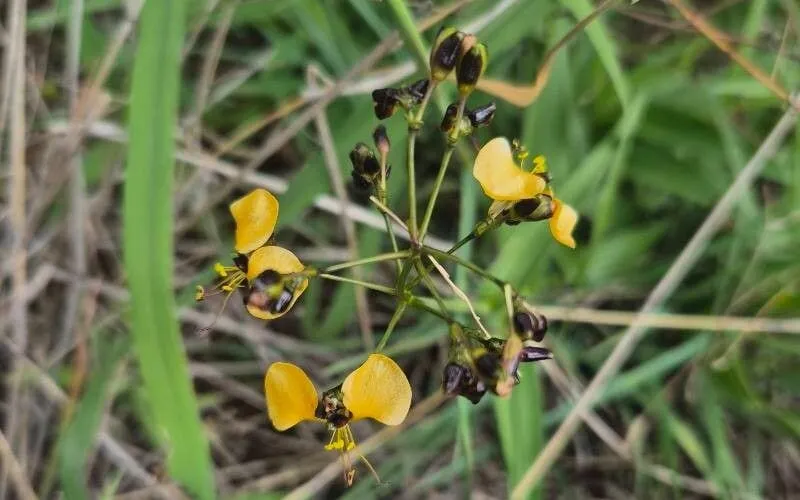
Grow it for interest instead of showiness. Its flowers are the small, three-petalled, morning-only blooms typical of the family, held in an airy branched head, and the foliage clump is the steadier attraction. Its highland origin gives it a useful tolerance of moderate temperatures, though it is still tender and hates frost. Warm, moist, gently shaded conditions suit it; cold wet roots and arid air cause most problems.
Appearance
It grows as an upright to sprawling tuft, the stems rising from a central rootstock and leaning out as they lengthen, jointed and fleshy in the way of its relatives. It is neither a tight rosette nor a pure trailer, but something in between, a loose leafy clump.
The leaves are lance-shaped and softly textured, clasping the stem at their bases and tapering along their length, a plain fresh green suited to weak forest light. The flowering heads branch above the foliage into loose sprays of pale, short-lived flowers, adding a light display rather than a bold one.
Where it is from
Aneilema johnstonii ranges from southern Ethiopia to northern Botswana, Mozambique, Zambia and Zimbabwe. It grows in woodland and grassland, often among rocks, rooting in ground where trees, rocks or tall grass break the strongest sun.
Those woodland conditions mean the plant needs gentle, screened light instead of direct sun, air kept reasonably moist, and warmth that never dips to frost. An open, gritty compost that still holds a little moisture matches the well-drained forest soil of its native slopes and keeps the roots healthy.
How it grows
The tuft builds up steadily through the warmer months, adding stems and leaves from the crown, then slows as light and temperature fall. That seasonal slowdown is normal.
Pot it in a container that suits a clump, using a free-draining compost that stays lightly moist, and site it in shade out of direct sun. Water once the top has dried a finger deep. To increase it, split the tuft in spring or root stem pieces in warmth; both methods work reliably given close, humid air.
Through the seasons
Spring starts new growth from the crown. Divide an overgrown tuft, refresh its compost, and restart watering and feeding.
Summer is the strongest growth period. Keep the plant warm, shaded and moist, watering to hold the compost evenly damp in the heat.
Autumn slows it as the light drops. Reduce feeding and let the compost surface dry a little further between waterings.
Winter is a rest. Water sparingly, keep the plant off cold glass and clear of frost, and wait for spring before expecting fresh leaves.
Care difficulty
Its upland origin makes it one of the more accommodating plants in a fussy genus. It needs shade, warmth well above freezing, humid air and a compost that drains freely while holding some moisture. The main problems are roots kept cold and waterlogged until they rot, and dry, heated air that scorches the leaf margins. Because it comes from cooler ground, it also copes with a somewhat cooler room than the lowland species do.
Watering
Water when the top of the compost has dried a finger deep, giving the pot a thorough soak and then letting it drain fully. The plant likes steady moisture in growth but does badly with standing in a saturated pot, so aim for damp instead of wet.
Reduce watering over winter, when growth pauses and cold, wet compost becomes risky. Let more of the rootball dry between waterings, and judge by the plant and compost rather than watering to a fixed day.
Warning signs, diseases and pests
A soft, yellowing crown and stems that flop and blacken point to cold, sodden roots. Reduce the watering at once, rescue sound divisions, and repot into drier, more open compost before the rot takes the whole clump.
Browning, brittle leaf tips point to dry air; raise humidity and move the plant off heat sources. In hot, dry rooms spider mites can dull and web the foliage while mealybugs settle in the leaf axils; inspect often and treat early before they build up in the tuft.
Growing environment
Give it a shaded to lightly lit position with no direct sun, such as a north or east aspect or a spot set back from a brighter window. It suits a cooler, airier room than many tropical foliage plants, so it can work on a shaded landing or in a plant room.
Keep the surrounding air humid and shelter the plant from draughts and sudden chills. Pot it in a gritty, free-draining compost that holds a little moisture, in a container sized to the clump.
Feeding
Feed a dilute, balanced fertiliser every few weeks through the growing season to keep the tuft leafy and green. Frequent weak feeds are better than occasional strong ones, which produce soft growth the plant cannot support well.
Stop feeding through the winter rest. A freshly divided or repotted plant lives on the nutrients in its new compost for the first few weeks and needs no early feeding.
Troubleshooting
Why is the clump going soft and yellow? Cold, waterlogged compost rotting the crown. Cut back the water, take healthy divisions, and repot into drier, open compost.
Why are the leaf tips browning? Dry air. Raise the humidity and keep the plant clear of radiators.
Why has growth slowed? Cool, dark winter conditions naturally pause it. If it stalls in the growing season, check that it is warm enough and not sitting wet.
How do I propagate it? Split the tuft in spring, or root stem pieces in a warm, humid spot.
Is it safe around pets? It is not listed as toxic by the ASPCA or the RHS. Some spiderwort relatives, such as Tradescantia, can irritate the skin of cats and dogs through contact with the sap, so rinse it off if a pet brushes against a cut stem.
Johnston's Aneilema Spiderwort problem guides
Not sure what is wrong? See the common houseplant pests guide.