
Houseplant
Peters' Aneilema Spiderwort
Aneilema petersii
Also known as Aneilema petersii
How to grow Aneilema petersii, a drought-tolerant spiderwort of dry East African bushland named for the naturalist Wilhelm Peters, and how to grow it indoors.
At a glance
- Difficulty
- Easy
- Water
- When the top few centimetres of mix have dried
- Light
- Bright indirect light to light shade
- Temperature
- Warm; keep above about 13 deg C
- Humidity
- Average to high
- Hardiness
- USDA 10-12, RHS H1b, hardy to 13 C
- Type
- Perennial
- Height
- 15-30 cm
- Native to
- tropical Africa
A tender tropical foliage plant from tropical Africa, growing in warm, humid, shaded to filtered light. It needs warmth, humidity and bright indirect light, and it cannot take frost or chill. It is safest above about 13 deg C, and cold, wet compost or dry air spoils it.
Hardiness zones describe winter cold alone. Summer heat, humidity, rainfall and the length of the growing season decide as much, so treat the range as the outer limit rather than as a recommendation.
Skin irritant
- Do not eat
- The sap
- Harm from
- Handling it
- Affects
- Cats and dogs
Peters' aneilema has not been assessed by the ASPCA or the RHS. Spiderworts such as Tradescantia, in the same family, have a sap that can cause redness and itching on the skin of cats and dogs, and the same is possible here. It is not recorded as a serious poison, and chewing it would be unlikely to cause more than a mild stomach upset.
Sources: ASPCA toxic and non-toxic plants, RHS potentially harmful garden plants
About
Aneilema petersii honours Wilhelm Peters, the German naturalist whose mid-nineteenth-century expedition to Mozambique recorded many new African species. It is one of the drier-country members of a genus that mostly favours shade and damp, and that difference is the key to growing it. Where its forest relatives want shade and constant moisture, this one comes from open bushland and rocky ground, so it takes more light and prefers to dry out between waterings.
Like the rest of the genus it is a member of the spiderwort family. It makes a low, fleshy-stemmed clump that copes with brighter, harder conditions than most of its relatives. It is still tender and will not take frost, but of the African aneilemas it is among the easiest to please, forgiving a missed watering that would set a forest species back.
Appearance and character
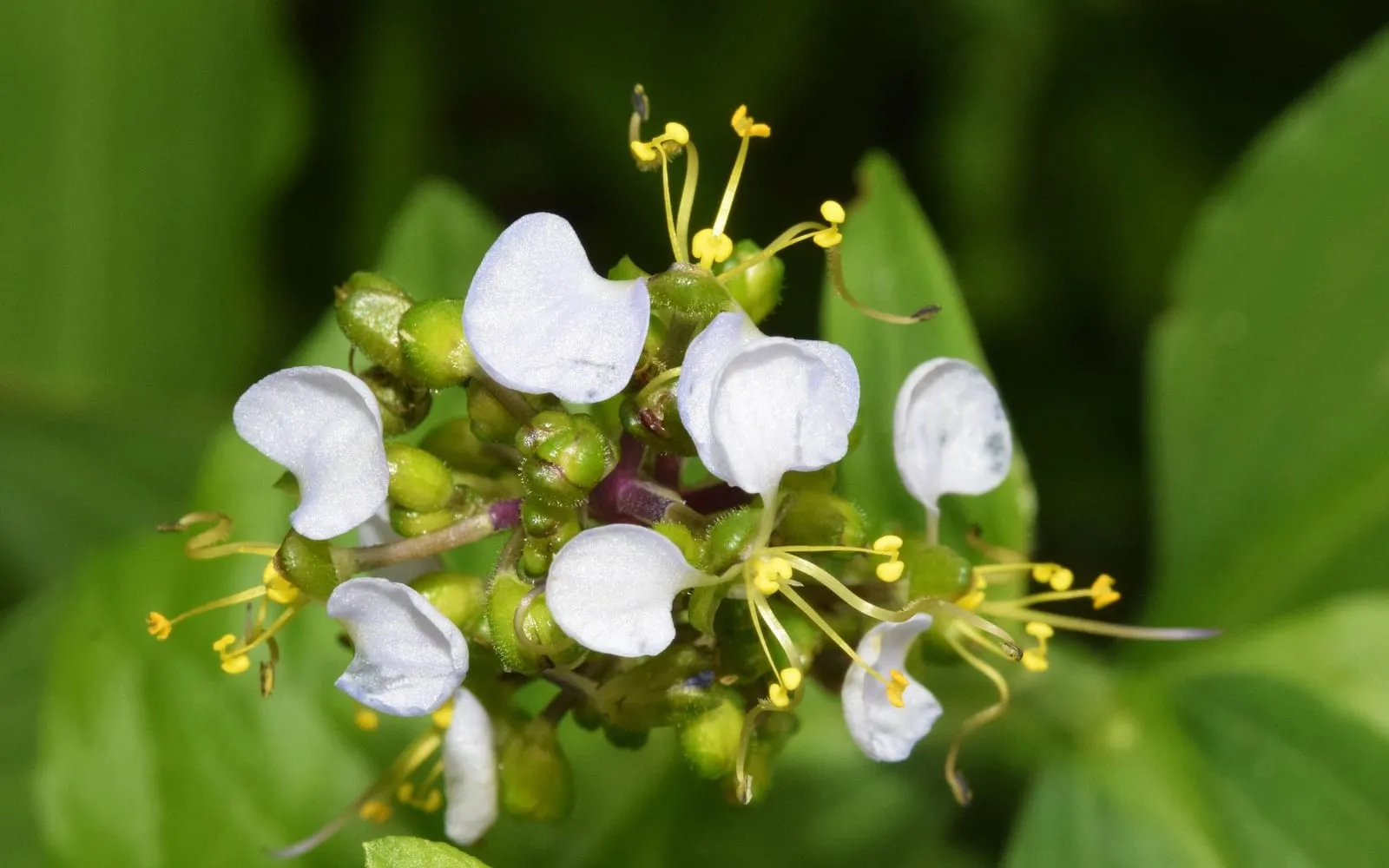
The photograph at the top of this page is Aneilema dregeanum, an African relative, because no picture of A. petersii exists under an open licence. It shows the small pale flowers and the lance-shaped leaves the two share across the genus, though A. petersii is the tougher, more drought-hardened plant of the two.
The plant forms a spreading clump of jointed, succulent stems that root where they run and lean out across the surface, building into a low, leafy patch instead of a tall or trailing shape. The fleshy stems store a little water, which is part of how it rides out dry spells.
The leaves are lance-shaped with clasping bases, firmer and more drought-tolerant than the thin foliage of shade-dwelling species. They range from grey-green to fresh green depending on the light. Its flowering heads branch into loose sprays of small pale flowers held above the leaves. The flowers are brief and unshowy.
Where it is from
Aneilema petersii grows in the drier bushland, coastal thicket and rocky ground of eastern tropical Africa, where the sun is stronger and the soil sharper-draining than in the rainforest. It roots in gritty, well-drained ground and copes with far more light and drought than its forest relatives.
That open, stony home explains its unusual tolerance. It takes the brightest position of the African aneilemas, though it still does badly in a scorching midday beam, and it prefers a compost that dries out between waterings. A sharp, free-draining mix with added grit matches the rocky ground it grows among in the wild.
How it grows
The clump grows steadily through the warm months, spreading its fleshy stems and rooting as it goes, then rests when light and warmth drop. Its water-storing stems let it pause without harm through a dry spell, which makes it more resilient than the thin-leaved forest species.
Pot it in a gritty, quick-draining compost and let it dry out well between waterings, in a bright but not scorching spot. It needs less pampering than its cousins and dislikes being kept constantly wet. Increase it easily from stem cuttings, which root fast in warmth, or by dividing an established clump in spring.
Through the seasons
Spring wakes the clump into fresh growth. Divide it if crowded, repot into gritty compost, and begin watering and feeding again.
Summer brings the strongest spread. Keep it warm and brightly lit out of harsh sun, watering well but letting the compost dry between drinks.
Autumn slows it as light fades. Cut back feeding and stretch the intervals between waterings further.
Winter is a dry rest. Water rarely, keep the plant warm and frost-free, and let it sit on the dry side until spring.
Care difficulty
This is one of the more forgiving aneilemas, thanks to its bushland tolerance. It needs a bright position out of fierce sun, warmth clear of frost, and a sharp compost that can dry between waterings. The main way to lose it is to treat it like a bog plant, since cold, constantly wet compost rots the roots faster than drought harms them. Dry air is less of a problem here than for the forest species, though very arid heat can still brown the leaf edges.
Watering
Let the compost dry out well between waterings, then soak the pot thoroughly and let it drain. Unlike its shade-loving cousins, this plant would rather run a touch dry than sit damp, and its fleshy stems carry it through the gaps.
Water rarely through winter, when growth stops and cold, wet compost turns dangerous. A near-dry rest suits it, and overwatering in the cool months is the commonest way to rot the roots of an otherwise tough plant.
Warning signs, diseases and pests
Soft, translucent stems and a sodden pot mean it has been kept far too wet, especially in the cool months. Cut back sharply on water, take firm cuttings as insurance, and repot into a grittier, faster-draining compost.
Brown, crisping leaf edges follow very dry, heated air, eased by a little more humidity and distance from radiators. Spider mites can attack in hot, dry rooms and mealybugs shelter in the leaf joints; look the plant over now and then and treat either early before it builds.
Growing environment
Give it the brightest spot of any African aneilema, a well-lit position screened only from the fiercest direct midday sun. Good light keeps the drought-hardy foliage firm and compact, while deep shade draws it soft and weak.
Warmth clear of frost suits it, and it tolerates ordinary room air better than the forest species, though it still appreciates some humidity. Pot it in a sharp, gritty, free-draining compost in a container that is not too large, so the roots are never left standing wet.
Feeding
Feed a dilute, balanced fertiliser occasionally through the growing season, less often than you would a lush forest plant. This is a lean-country species that makes modest growth and does not want a rich diet.
Stop feeding through the dry winter rest. A cutting or division freshly potted into gritty compost needs no feed for the first several weeks while it roots in.
Troubleshooting
Why have the stems gone soft and see-through? Overwatering, usually in the cool months. Let the compost dry right out, take firm cuttings, and repot into grittier mix.
Why are the leaf edges browning? Very dry, hot air. Add a little humidity and move the plant off heat sources.
Why is it growing soft and floppy? Too little light for a sun-country plant. Move it somewhere brighter, out of scorching midday sun.
How do I propagate it? Take stem cuttings, which root fast in warmth, or divide an established clump in spring.
Is it safe around pets? It is not recorded as a serious poison. Related spiderworts can irritate the skin of cats and dogs, so keep a chewing pet away from it.
Peters' Aneilema Spiderwort problem guides
Not sure what is wrong? See the common houseplant pests guide.