
Houseplant
Schweinfurth's Sarcophrynium Prayer Plant
Sarcophrynium schweinfurthianum
Also known as Sarcophrynium schweinfurthianum
How to grow Sarcophrynium schweinfurthianum, an African rainforest prayer-plant relative named for the explorer Georg Schweinfurth.
At a glance
- Difficulty
- Easy
- Water
- When the top few centimetres of mix have dried
- Light
- Bright indirect light to light shade
- Temperature
- Warm; keep above about 13 deg C
- Humidity
- Average to high
- Hardiness
- USDA 10-12, RHS H1b, hardy to 13 C
- Type
- Perennial
- Height
- 1.5-3 m
- Native to
- tropical Africa
A tender tropical foliage plant from tropical Africa, growing in warm, humid, shaded to filtered light. It needs warmth, humidity and bright indirect light, and it cannot take frost or chill. It is safest above about 13 deg C, and cold, wet compost or dry air spoils it.
Hardiness zones describe winter cold alone. Summer heat, humidity, rainfall and the length of the growing season decide as much, so treat the range as the outer limit rather than as a recommendation.
Not known to be toxic
Sarcophrynium schweinfurthianum, the schweinfurth's sarcophrynium prayer plant, is not recorded among the seriously toxic plants, and related plants in its group are not listed as toxic by the ASPCA or the RHS. A pet or child that chewed a leaf would be unlikely to come to serious harm beyond a possible mild stomach upset.
Sources: ASPCA toxic and non-toxic plants, RHS potentially harmful garden plants
A plant named for an explorer
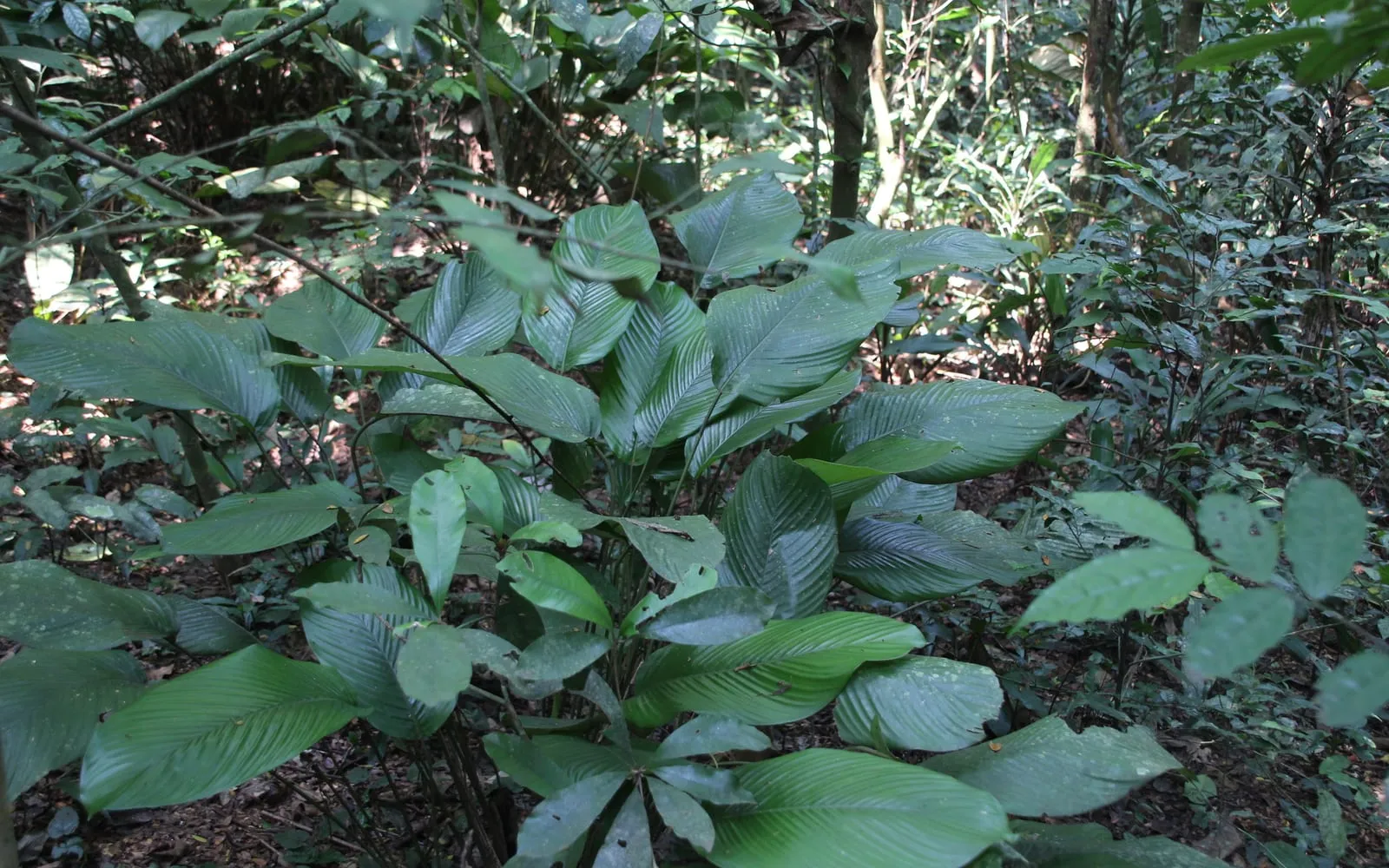
Sarcophrynium schweinfurthianum is a sturdy prayer-plant relative from the African rainforest floor. It is more common in botanical collections than on windowsills. From a spreading rhizome it sends up large leaves on long stalks, forming a broad leafy clump over time. Its name honours the man who helped bring central Africa’s flora to European notice.
Who Schweinfurth was
Georg Schweinfurth was a German botanist and traveller who explored central Africa in the nineteenth century, including forests and river systems that European science had barely recorded. He collected plants across the region and sent specimens back for study, and many species now bear his name. This plant is one of them. Schweinfurth also wrote widely on the peoples and landscapes he passed through, so his name is tied to a wider chapter of European contact with the central African interior rather than one plant.
The plant close up
Broad blades sit on long, upright stalks that rise from the rhizome. Each stalk ends in a short swollen joint, the pulvinus, that marks the prayer-plant family. That hinge angles the leaf towards light and controls its daily movement. After flowering, the plant ripens the soft, fleshy fruit described by the genus name Sarcophrynium, with “sarco” coming from the Greek for flesh. The leaf is still the main feature: it unrolls from a tight tube and broadens as it matures. It grows across west central Africa, from Cameroon, Equatorial Guinea and Gabon through the Congo basin to South Sudan and Uganda. Botanists first placed it in Phrynium and then in Clinogyne, and it carried the name Phrynium baccatum before settling in Sarcophrynium.
The prayer-plant movement
As the light fades, the leaves swing upward and press together. By mid-morning, they have spread and settled again. Botanists call this daily cycle nyctinasty. It depends on the pulvinus at each leaf base, where cells take up and release water. The change in pressure raises or drops the blade. Regular folding usually means the plant is warm and has enough water. Leaves that stay still often point to chill or thirst.
Forest origins and everyday use
In its native range, the plant grows on the shaded floor of lowland forest, spreading through the understorey where the canopy softens the light. People across the region cut its broad, hard-wearing leaves to wrap food and produce and to thatch simple buildings, a practical use it shares with several relatives. The forest climate is warm, wet and frost-free all year, so a heated, humid, shaded spot indoors is the closest match. In a colony, the leaves overlap and shade the soil, keeping it damp and cool. That is why the plant struggles in a dry, sunlit room.
Light
Aim for bright light kept off the leaf, the diffuse brightness found a pace or two inside a sunny window or behind a thin curtain. Direct sun through glass scorches and pales the large blades within a short spell, and dense shade thins the growth and lengthens the stalks. An east or north aspect tends to give the balance it needs. Rotate the pot occasionally so the clump does not crowd towards the light on one side.
Watering
Let the surface few centimetres of the mix dry, then water thoroughly and tip away whatever drains through. Cold, sodden compost rots the root system faster than any pest, so lean towards free drainage and never leave the pot in a full saucer. Hard tap water leaves lime deposits that scorch the leaf margins, so rainwater or filtered water is better. In the cool, dim months, water much more sparingly.
Warmth and moisture
Hold it in steady warmth and keep it clear of anything below about 13 deg C, cold draughts and the cold air beside a winter window. Dry indoor air is the usual cause of browned edges, so raise the humidity with a wide tray of damp gravel, a group of other foliage plants, or a nearby humidifier. Gentle air movement helps, provided it is not cold.
Compost, feed and propagation
Set it in an open, peat-free mix loosened with bark, coir and perlite so surplus water escapes and air reaches the roots. Feed from spring to early autumn with a balanced liquid fertiliser at half strength every two or three weeks, and give none over winter. It is a strong grower and may need a larger pot sooner than many houseplants. Propagate it by dividing the rhizome in spring, leaving each division with sound roots and a growing shoot.
Problems to watch for
A collapsing plant in wet, foul-smelling compost usually has cold, rotting roots. Dry it out and correct the drainage. Crisp brown margins come from dry air or hard-water build-up on the leaf. Warm, dry rooms encourage spider mites, which mottle the undersides and lay fine webs, and mealybugs, which gather as white waxy fluff in the leaf joints. Rinse the plant, raise the humidity, and remove the pests with a cotton bud dipped in dilute surgical spirit.
Safety with pets and children
There is no record listing this plant or its family among the dangerous ones, and its close relatives are noted as safe around cats and dogs. A bitten leaf should bring nothing beyond a brief, mild stomach upset. The ASPCA lists the related Calathea and Maranta as non-toxic. A chewed leaf can still upset a stomach, so keep a determined chewer away from it.
Questions growers ask
Who was it named after? Georg Schweinfurth, a German botanist who explored central Africa in the nineteenth century and collected many of its plants.
Does it flower and fruit indoors? Flowering is uncommon in a pot, but a settled plant can set the soft, fleshy fruit that names the genus.
Why are the leaf edges browning? Dry air or hard water. Lift the humidity and switch to rainwater or filtered water.
How do I propagate it? Divide the rhizome in spring, keeping roots and a shoot on each section.
Schweinfurth's Sarcophrynium Prayer Plant problem guides
Not sure what is wrong? See the common houseplant pests guide.