
Houseplant
Lance-Leaved Aneilema Spiderwort
Aneilema lanceolatum
Also known as Aneilema lanceolatum
How to grow Aneilema lanceolatum, a narrow-leaved tropical African spiderwort grown for grassy foliage, and how to water, feed and site it under glass.
At a glance
- Difficulty
- Easy
- Water
- When the top few centimetres of mix have dried
- Light
- Bright indirect light to light shade
- Temperature
- Warm; keep above about 13 deg C
- Humidity
- Average to high
- Hardiness
- USDA 10-12, RHS H1b, hardy to 13 C
- Type
- Perennial
- Height
- 30-60 cm
- Native to
- tropical Africa
A tender tropical foliage plant widespread across tropical Africa, growing in warm, humid, shaded to filtered light. It needs warmth, humidity and bright indirect light, and it cannot take frost or chill. It is safest above about 13 deg C, and cold, wet compost or dry air spoils it.
Hardiness zones describe winter cold alone. Summer heat, humidity, rainfall and the length of the growing season decide as much, so treat the range as the outer limit rather than as a recommendation.
Not known to be toxic
Aneilema lanceolatum, the lance-leaved aneilema spiderwort, is not recorded among the seriously toxic plants, and related plants in its group are not listed as toxic by the ASPCA or the RHS. A pet or child that chewed a leaf would be unlikely to have more than a possible mild stomach upset.
Sources: ASPCA toxic and non-toxic plants, RHS potentially harmful garden plants
About
Aneilema lanceolatum takes its name from its leaves, which are long, slim and lance-shaped, giving the plant an almost grassy look quite unlike the broad-leaved members of its genus. It belongs to a wide African group of small spiderwort-family herbs, most of them growing in damp, shaded places and known chiefly to botanists. This one is grown as a foliage curiosity, a tender clump of narrow blades that looks more like an ornamental grass than a typical leafy houseplant.
Its flowers follow the family pattern, three small petals opening for a single morning in a loose, branching head, and they take second place to the slender foliage. The plant comes from the warm, humid shade of tropical Africa, so it needs heat, moist air and a screened, diffuse light. If the roots are cold and wet, or the room is too dry, the narrow leaves brown quickly and the plant declines.
Appearance and character
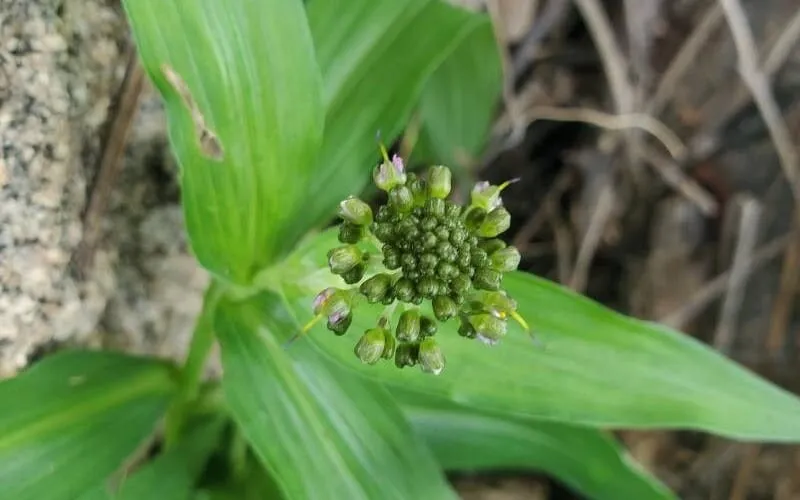
The narrow leaves are the main feature of the plant. Each blade is long and tapering, folded slightly along its midrib and clasping the fleshy stem at its base, so a well-grown plant looks like a soft, arching tuft of green ribbons.
The stems are jointed and succulent, upright at first and leaning out with age, and they grow from a central crown. When flowering comes, the plant sends up an open, wiry spray of tiny pale flowers above the leaves. The flowers suit the fine-textured foliage without dominating it.
Where it is from
Aneilema lanceolatum is widespread across tropical Africa. It grows in shaded grasslands, forest margins and damp clearings, rooting in moist ground where trees or tall vegetation break the sun.
That habitat is the guide to its care. It needs diffuse light well back from a hot window, warmth that never approaches frost, and air kept from drying out. A loose blend of bark, coir and grit that drains quickly while holding a little moisture matches the well-worked soil of its native clearings.
How it grows
Warmth and moisture keep the tuft growing through the growing season, with fresh narrow-leaved stems emerging from the crown, then slowing to a rest when the light drops.
Grow it in a pot sized to the clump, in a free-draining compost kept lightly moist, and shade it from direct sun. Let the top third of the pot dry, then water well and let it drain. Increase it by dividing the clump in spring, teasing the crown into rooted pieces, or by striking jointed stem cuttings in a warm, humid propagator.
Through the seasons
Spring starts the crown into fresh growth. Divide a congested clump, top up the compost, and begin watering and feeding again.
Summer brings the strongest flush of narrow leaves. Keep the plant warm, shaded and humid, and water enough to hold the compost evenly damp.
Autumn slows the tuft as the days shorten. Ease back on feeding and let the compost dry a shade more between waterings.
Winter is a quiet spell. Water lightly, keep the plant frost-free and off cold glass, and expect little growth until spring.
Care difficulty
It is easy enough once you give it shade, moisture and warmth. It needs screened light, humid air and a compost that drains freely while holding some damp. The narrow leaves show problems quickly, so the two faults to avoid are a cold, waterlogged root run that rots the crown and dry, heated air that browns the leaf tips. Direct sun on those slim blades scorches them fast.
Watering
Let the top third of the compost dry out, then water the pot thoroughly and allow the surplus to drain away. The plant likes steady moisture through growth but hates a permanently soggy root run, so aim for evenly damp instead of wet.
In winter, with growth paused, water noticeably less and let more of the pot dry between drinks. A cold, saturated compost is the main danger in the resting months and rots the crown before any drought would harm it.
Warning signs, diseases and pests
A collapsing, yellowing clump with a soft base has been kept too cold and too wet. Take healthy divisions as a safeguard, cut out the rot, and repot into drier, more open compost.
Fine brown tips and dry edges along the narrow leaves mean the air is too dry. Raise humidity and move the plant away from heat sources. Spider mites can bronze the slim foliage in dry rooms and mealybugs shelter in the leaf sheaths; check the plant over and treat either promptly before they spread.
Growing environment
Site it in shade or gently filtered light out of direct sun, such as a north-facing spot or a position screened by a sheer curtain. Strong light bleaches and burns the fine leaves, while deep gloom draws the tuft thin.
Keep the room warm and the air moist, grouping the plant with others or using a humidity tray to raise local humidity. Pot it in an open, quick-draining compost that still holds a little moisture, in a container matched to the size of the clump.
Feeding
Feed a weak, balanced liquid fertiliser every few weeks through spring and summer to keep the narrow leaves fresh and green. Little and often suits it, since strong feeding pushes soft growth that flops and browns.
Stop feeding over the winter rest. A newly divided or repotted plant has enough nutrients in its fresh compost for the first weeks and needs no feed until it is established.
Troubleshooting
Why are the leaf tips going brown? Dry air, the commonest complaint on a fine-leaved plant like this. Raise the humidity and keep it off radiators.
Why has the clump gone soft at the base? Cold, waterlogged compost. Reduce watering, take healthy divisions, and repot drier.
Why are the leaves scorched and pale? Direct sun. Move the plant into shade or behind a screen of light fabric.
How do I propagate it? Divide the crown in spring, or root jointed stem cuttings in a warm, humid propagator.
Is it safe around pets? It is not listed as toxic by the ASPCA or the RHS. Some spiderwort relatives, such as Tradescantia, can irritate the skin of cats and dogs through contact with the sap, so rinse it off if a pet brushes against a cut stem.
Lance-Leaved Aneilema Spiderwort problem guides
Not sure what is wrong? See the common houseplant pests guide.