
Houseplant
Saw-Margined Sarcophrynium Prayer Plant
Sarcophrynium prionogonium
Also known as Sarcophrynium prionogonium
How to grow Sarcophrynium prionogonium, the saw-margined sarcophrynium prayer plant, a strong west African rainforest herb with large blades.
At a glance
- Difficulty
- Easy
- Water
- When the top few centimetres of mix have dried
- Light
- Bright indirect light to light shade
- Temperature
- Warm; keep above about 13 deg C
- Humidity
- Average to high
- Hardiness
- USDA 10-12, RHS H1b, hardy to 13 C
- Type
- Perennial
- Height
- 1-2 m
- Native to
- tropical Africa
A tender tropical foliage plant from tropical Africa, growing in warm, humid, shaded to filtered light. It needs warmth, humidity and bright indirect light, and it cannot take frost or chill. It is safest above about 13 deg C, and cold, wet compost or dry air spoils it.
Hardiness zones describe winter cold alone. Summer heat, humidity, rainfall and the length of the growing season decide as much, so treat the range as the outer limit rather than as a recommendation.
Not known to be toxic
Sarcophrynium prionogonium, the saw-margined sarcophrynium prayer plant, is not recorded among the seriously toxic plants, and related plants in its group are not listed as toxic by the ASPCA or the RHS. A pet or child that chewed a leaf would be unlikely to come to serious harm beyond a possible mild stomach upset.
Sources: ASPCA toxic and non-toxic plants, RHS potentially harmful garden plants
A forest herb with a toothed edge
Sarcophrynium prionogonium is a strong ground-layer herb of west African rainforest, grown by collectors and botanic gardens instead of sold as a mainstream houseplant. It builds up a clump from a creeping rhizome, sending large blades up on long, upright stalks. It is not a plant of intricate patterning; its interest is in bold, sizeable leaves and in the sharply defined edge or rib that gives it both its common name and part of its scientific one. Expect a big, leafy plant instead of a neat little rosette.
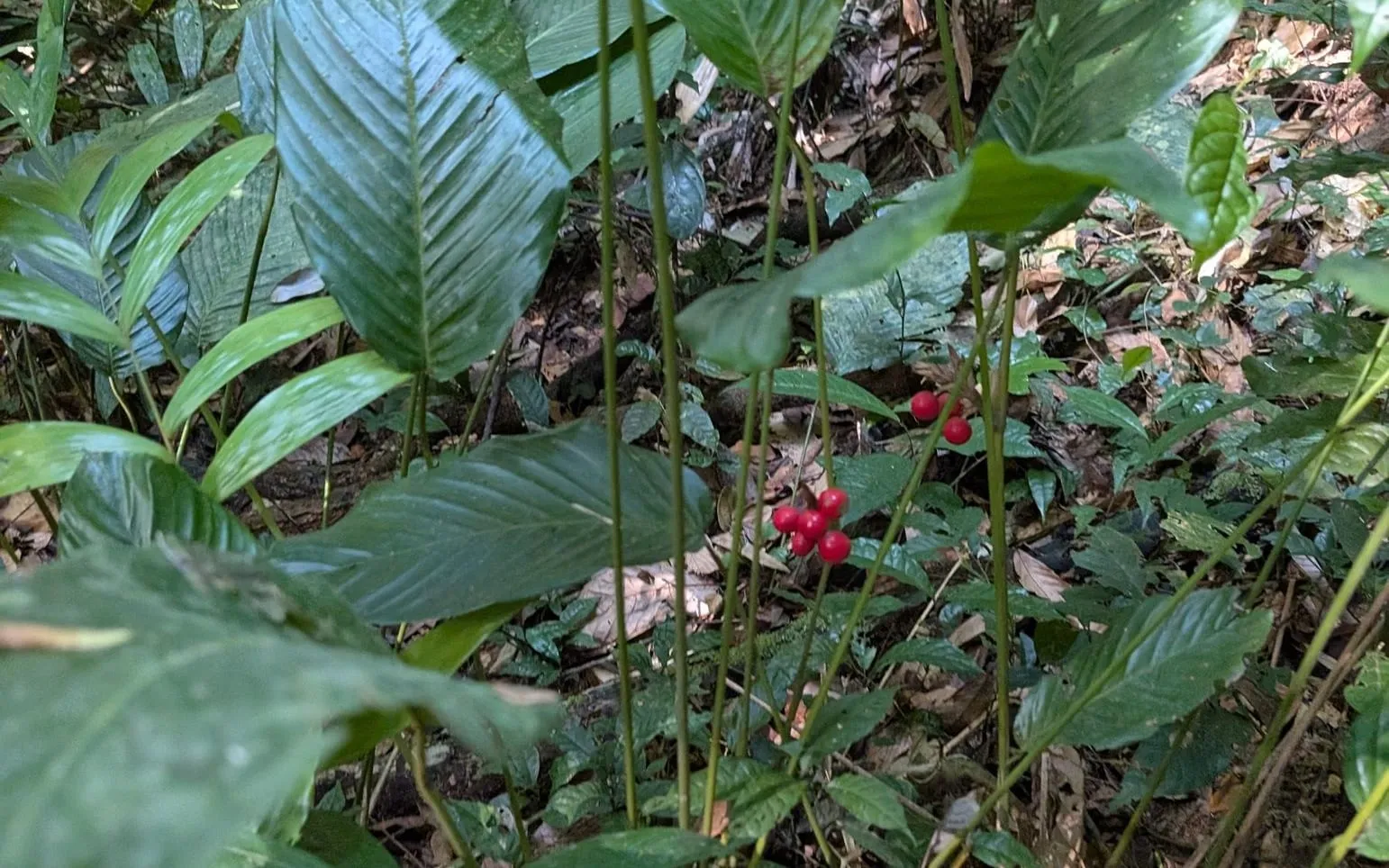
The photograph at the top of this page is Sarcophrynium brachystachys, a west African relative in the same genus, because no picture of S. prionogonium exists under an open licence. It shows the genus well, the same large blades held up on long stalks over the forest floor.
The story in its name
The genus Sarcophrynium takes its first half from the Greek “sarco”, meaning flesh, a reference to the soft, fleshy fruits these plants ripen after flowering. The species name draws on “prion”, the Greek for a saw, and points to a toothed or sharply angled margin along the leaf or its rib. Put together, the name describes a fleshy-fruited relative of the prayer plants with a saw-like edge. The common name translates that saw into English.
Getting to know the plant
Large oval blades sit on stalks that rise straight from the rhizome, and each stalk carries a short swollen segment, the pulvinus, at the point where it meets the leaf. That joint tilts the blade towards the light and, as with every prayer plant, controls its daily movement. After flowering the plant sets the soft fruits that name the genus. On a plant of this scale the leaf itself is the feature worth watching, unfurling from a rolled tube and firming up as the season goes on.
Why the leaves shift position
Each evening the blades rise and draw together, then open out and lie flatter once the sun is up. Naturalists call this daily habit nyctinasty. The pulvinus drives the movement, with cells moving water in and out so pressure rises or falls. A plant that keeps folding on schedule is warm and well supplied with water; one that holds its leaves stiff and unmoving is usually cold or short of a drink.
Its home and how people use it
In the forests of west Africa the plant grows on the shaded floor, spreading into stands along stream banks and in clearings where the canopy breaks. Local people cut the broad tough leaves to wrap food and market goods and to line and cover simple structures, a use common to several of its relatives. The wild climate stays warm all year, with regular rain, shade from tall trees and no frost. Those facts set the terms for growing it under cover.
Choosing a position
Site it in bright but filtered light, out of any direct sun through glass. A spot a little back from an east window, or behind a light curtain on a brighter side, gives roughly the light it would get beneath the canopy. Scorching sun bleaches and blisters the large blades; a dark corner stretches the stalks and slows growth. Because the leaves are broad and tall, allow it room to spread instead of wedging it onto a narrow sill.
Water and the tap-water problem
Water once the upper few centimetres of compost have gone dry to the touch, then drench the rootball and drain off the surplus. Cold, waterlogged compost is the surest way to rot the roots, so keep the mix open and never leave the pot standing in water. Like others in the family it dislikes hard water; the lime and chlorine mark and brown the leaf edges over time, so use rainwater or filtered water where you can. Through winter, water noticeably less.
Heat and a humid atmosphere
Warmth suits it best, and it should not fall below about 13 deg C or catch a cold draught. Dry household air is what browns the margins and tips, so lift the humidity around the plant with a broad gravel tray, close-planted neighbours, or a humidifier running nearby. Steady air movement that stops short of a chill keeps rot from settling into the crowded leaf bases.
Potting, feeding and splitting
Grow it in a loose, peat-free mix opened up with bark, coir and perlite so water passes through and air reaches the roots. From spring to early autumn feed every couple of weeks with a balanced liquid fertiliser at half the recommended strength, then stop for the winter. It is vigorous, so it fills a pot quickly and may need moving up a size in spring. Propagate by dividing the rhizome at the same time, leaving each section with live roots and a shoot.
Faults and pests
Wilting over sodden, sour compost means the roots are suffocating in cold, wet mix, so let it dry and improve the drainage. Dry, brittle edges follow low humidity or a hard-water build-up. Warm, dry conditions bring spider mites, which fleck the undersides and spin fine webbing, and mealybugs, which lodge as white waxy tufts in the leaf joints. Rinse the foliage, raise the moisture in the air, and lift the pests off with cotton wool dipped in dilute surgical spirit.
Around pets and children
Nothing on the record flags this plant or its family as gravely toxic, and its close relatives are listed as safe around cats and dogs. A nibble should cause nothing worse than a short, mild stomach upset. The ASPCA lists the related Calathea and Maranta as non-toxic. A chewed leaf can still upset a stomach, so keep a determined chewer away from it.
Common questions
What does the “saw-margined” part mean? It translates the name, which points to a toothed or sharply angled edge on the leaf or its rib.
Does it fruit indoors? It can set the soft, fleshy fruit that gives the genus its name, though flowering is uncommon in a pot.
Why are the leaf edges going brown? Dry air or hard water. Raise the humidity and switch to rainwater or filtered water.
How do I get more plants? Divide the rhizome in spring, keeping roots and a shoot on each piece.
Saw-Margined Sarcophrynium Prayer Plant problem guides
Not sure what is wrong? See the common houseplant pests guide.