
Houseplant
Perpetual Begonia
Begonia longifolia
Also known as Begonia longifolia
How to grow Begonia longifolia, the perpetual begonia, an upright Asian shrub with glossy, narrow, pointed leaves and a long flowering season.
At a glance
- Difficulty
- Easy
- Water
- When the top few centimetres of mix have dried
- Light
- Bright indirect light to light shade
- Temperature
- Warm; keep above about 13 deg C
- Humidity
- Average to high
- Hardiness
- USDA 10-12, RHS H1b, hardy to 13 C
- Type
- Perennial
- Height
- 1 to 1.5 m
- Native to
- tropical Asia
A tender tropical foliage plant from tropical Asia, growing in warm, humid, shaded to filtered light. It needs warmth, humidity and bright indirect light, and it cannot take frost or chill. It is safest above about 13 deg C, and cold, wet compost or dry air spoils it.
Hardiness zones describe winter cold alone. Summer heat, humidity, rainfall and the length of the growing season decide as much, so treat the range as the outer limit rather than as a recommendation.
Harmful if eaten
- Do not eat
- All parts, the underground parts most of all
- Harm from
- Eating it and handling it
- Affects
- People, cats, dogs and horses
Begonia longifolia, the perpetual begonia, is toxic to cats, dogs and horses. The ASPCA lists begonias for the soluble calcium oxalates they carry, most concentrated in the underground parts, and chewing the plant can burn the mouth and cause drooling and vomiting. The RHS rates begonias as mildly harmful if eaten and a possible skin irritant. Keep it out of reach of pets and small children, and wash your hands after cutting stems.
Sources: ASPCA toxic and non-toxic plants, RHS potentially harmful garden plants
About this plant
Begonia longifolia is an upright, shrubby begonia from the warm forests of tropical Asia. It is grown for glossy, elongated leaves and for a long flowering season, which gives it the name perpetual. Its species name means long-leaved, describing blades far narrower and more drawn-out than the rounded leaf of a typical begonia. It builds into a sturdy, branching bush on firm stems, useful where a taller, self-supporting foliage plant is wanted. It settles easily into warm indoor conditions with a little humidity and shade.
Its leaves and flowers
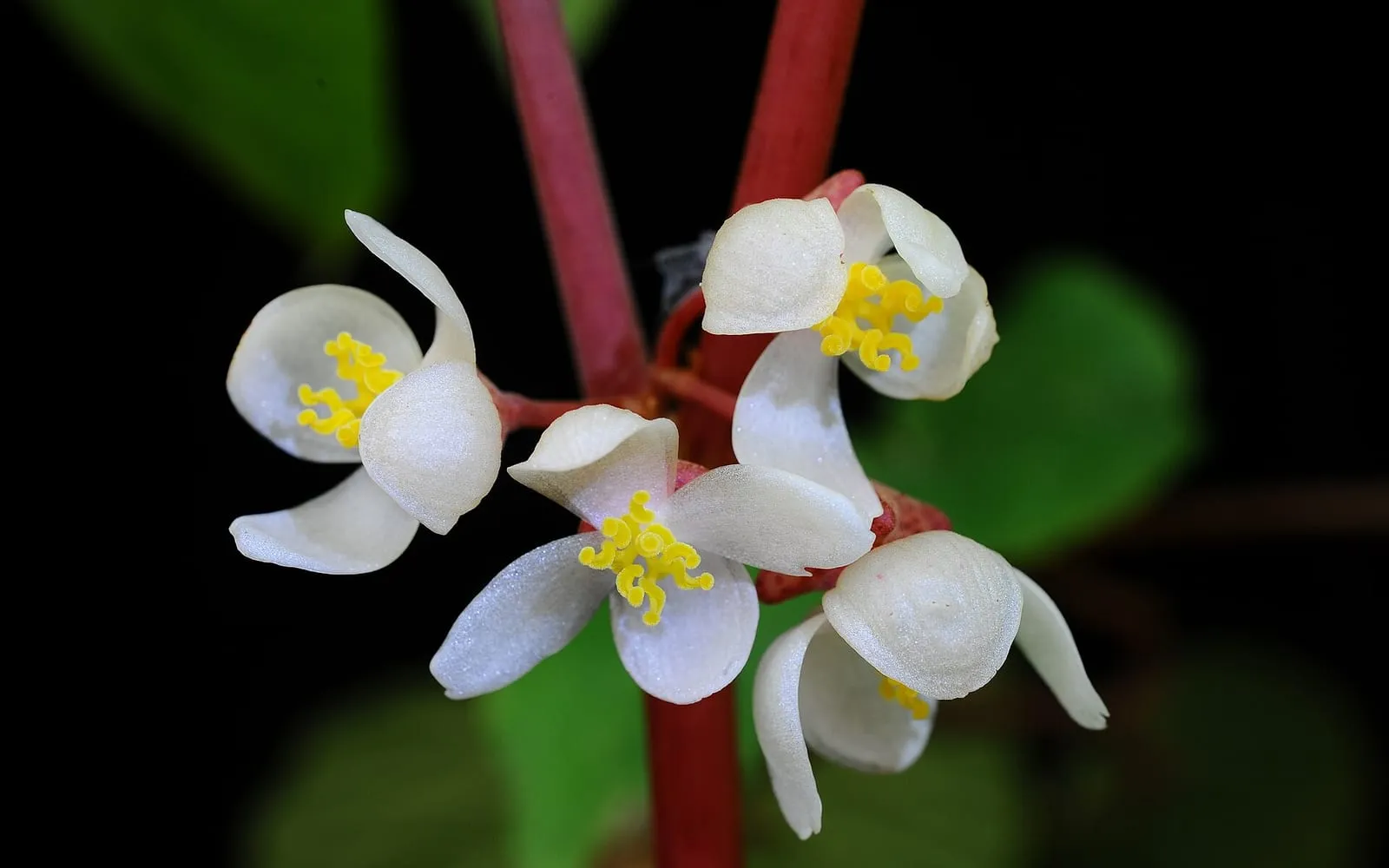
The leaves are long, narrow and pointed, lopsided at the base as begonia leaves are, deep green and shiny with a leathery firmness that sets the plant apart from soft-leaved kinds. They are carried on stout, branching stems that hold themselves up without support for a good while. Small white flowers open in clusters near the shoot tips through much of the year, followed on the female flowers by small winged capsules and, in this species, rounded reddish fruits. The long flowering season, rather than one showy flush, gives it its name. The firm, almost waxy foliage holds up better in ordinary room air than the tissue-thin leaves of many begonias.
Where it grows wild
In nature it grows in the humid, shaded forests of tropical Asia, rooting in warm, damp, leafy ground and taking the broken light that reaches the understorey. Give it steady warmth without cold spells, moist air around the leathery leaves, moisture at the root, and bright light softened before it strikes the foliage. Aim for warm shade, steady moisture and softened light.
Light and siting
Bright, indirect light keeps the leaves glossy and the flowering steady. An east or north-east window, or a place set back from a brighter one, suits it. The firm leaves stand a little more light than the thin-leaved begonias, but hot direct sun through summer glass still scorches and dulls them, and deep shade draws the stems up leggy with sparse leaves. A well-lit spot out of the direct beam keeps the bush compact and well clothed. Turn the pot occasionally so it grows evenly.
How to water
Let the top few centimetres of compost dry, then soak the root ball and let it drain freely. The firm, waxy leaves lose water slowly, so this begonia stands a longer gap between drinks than the tissue-thin kinds, though the roots still rot in cold, waterlogged compost. Keep it evenly moist through the growing season, ease right back in the cooler, darker months as growth slows, and water onto the compost instead of over the crown of stems.
Warmth and humidity
Keep it in comfortable warmth and above about 13 deg C, out of chilling draughts. Dry heated air browns the leaf tips even on this firmer-leaved species, so raise the humidity with a pebble tray, a plant grouping, or a naturally moist room. Its upright, branching shape lets air move through it, which helps keep fungal problems away. Wipe the glossy leaves now and then to keep them clean and breathing.
Feeding
Through spring and summer, a balanced liquid feed at half strength every couple of weeks keeps the narrow leaves glossy and the flowers coming. This begonia grows and flowers over much of the year, so steady light feeding suits it. Heavy doses still force soft, weak stems. Ease off through autumn and stop over winter, resuming as new shoots appear.
Pruning and propagation
Shorten the stems by up to a third in spring to keep an old plant bushy and to stop it growing gaunt and bare at the base; the prunings make ready cuttings. Root a firm stem section, trimmed below a node, in warm, damp, open compost under cover, where it strikes in a few weeks. A leaf with a length of stalk will also root in damp compost kept humid. Divide a large, multi-stemmed plant at repotting in spring, and pot on a vigorous young plant a size at a time as it fills its container.
Health and pests
Kept warm, humid and airy, the perpetual begonia tolerates most trouble, and its upright, branching shape lets air run through it so damp seldom settles. Dry air brings spider mites, seen as fine speckling and slight webbing on the glossy leaves; lift the humidity and rinse the foliage to hold them down. Mealybugs lodge in the forks of the stout stems and wipe away with dilute alcohol. Grey mould can spot leaves left cold and wet in still air. A plant gone gaunt and bare at the base has had too little light or missed its spring prune, both cured by a brighter spot and a cut-back.
Around the year
Spring starts strong new growth; prune to shape, take cuttings and begin feeding.
Summer brings full leaf and steady flowering; water regularly, feed and keep the air moist.
Autumn slows the plant as light fades; reduce water and let the feed tail off.
Winter is a warm rest as the flowering tails off; hold it above chilling cold, water sparingly and let the pot dry further between drinks.
Questions and answers
Why is it called perpetual begonia? It can flower over a long stretch of the year rather than in one short flush.
Does it need direct sun? No. Bright, filtered light keeps the leaves glossy; strong sun scorches even these firm blades.
How often should I water it? Once the top few centimetres have dried. The leathery leaves let it go a little longer between drinks than a soft-leaved begonia, so keep it evenly moist in growth and considerably drier in winter.
How do I propagate it? Root a firm stem cutting in warm, damp compost, taken from spring prunings, or divide a large clump.
Is it safe with pets? Treat it as mildly toxic. The plant holds soluble calcium oxalates, most of them in the underground parts, so keep the perpetual begonia away from cats, dogs and horses that chew.
Perpetual Begonia problem guides
Not sure what is wrong? See the common houseplant pests guide.