
Houseplant
Schott's Century Plant
Agave schottii
Also known as Agave schottii
How to grow Agave schottii, the shindagger or amole, a grass-leaved agave of Arizona and Sonora that clumps into dense mounds.
At a glance
- Difficulty
- Easy
- Water
- When the mix has dried right through
- Light
- Full sun to bright light
- Temperature
- Hardy to about -9 C in free-draining ground; keep dry in winter
- Humidity
- Low
- Hardiness
- USDA 8-10, RHS H4, hardy to -9 C
- Type
- Perennial
- Height
- 30-50 cm
- Native to
- the southwestern United States, Mexico
A mountain agave from southern Arizona and northern Sonora, tolerant of frost down to about -9 C when the ground drains sharply. It needs full sun and a dry winter, and it rots in cold, wet compost. Summer rain is fine, but a wet winter is not.
Hardiness zones describe winter cold alone. Summer heat, humidity, rainfall and the length of the growing season decide as much, so treat the range as the outer limit rather than as a recommendation.
Harmful if eaten
- Do not eat
- The leaves and sap
- Harm from
- Eating it and handling it
- Affects
- People, cats and dogs
Agave sap holds calcium oxalate crystals and saponins. On skin it can cause an itchy, sometimes blistering rash, and the sharp leaf tips add puncture wounds. Eaten, it can cause drooling, vomiting and diarrhoea in a pet or child. The ASPCA lists Agave as toxic to cats and dogs, and it names other species of the genus instead of A. schottii, so the same caution applies. Wear gloves and sleeves when handling or dividing it, and wash off any sap.
Sources: ASPCA toxic and non-toxic plants, RHS potentially harmful garden plants
About
Agave schottii looks unlike the usual broad-leaved agave. In place of a broad crown of fat, dagger leaves it makes a low hummock of thin, grassy blades, so a colony passes for tussocky sedge from a distance until you crouch to look. Its everyday name, shindagger, is a warning: those slender leaves are stiff enough to jab a passing leg.
The plant lives in the mountains of southern Arizona and northern Sonora, spreading into low, tight colonies on rocky ground at moderate elevation. Its roots were once pounded to a lather for washing, which earned it the further name amole, shared with several south-western plants used the same way.
For a grower it is neat and out of the ordinary. It stores water in its narrow leaves, gathers into a dense cushion, and wants good light and quick drainage. Cold, waterlogged roots are the one thing it cannot survive, so water lightly in cold weather.
Appearance and character
The leaves are long, slim and nearly round in section, a deep green, supple enough to bow instead of stab like the broad blades of other agaves. Fine pale fibres lift free along the margins and curl away in threads, and each leaf tapers to a slender, sharp point.
Offsets pack in tightly around the base, so a lone plant forms a low, close cushion as the years pass. That crowded habit lets it cover desert slopes in the wild and makes the species a distinctive filler in a pot or a dry bed.
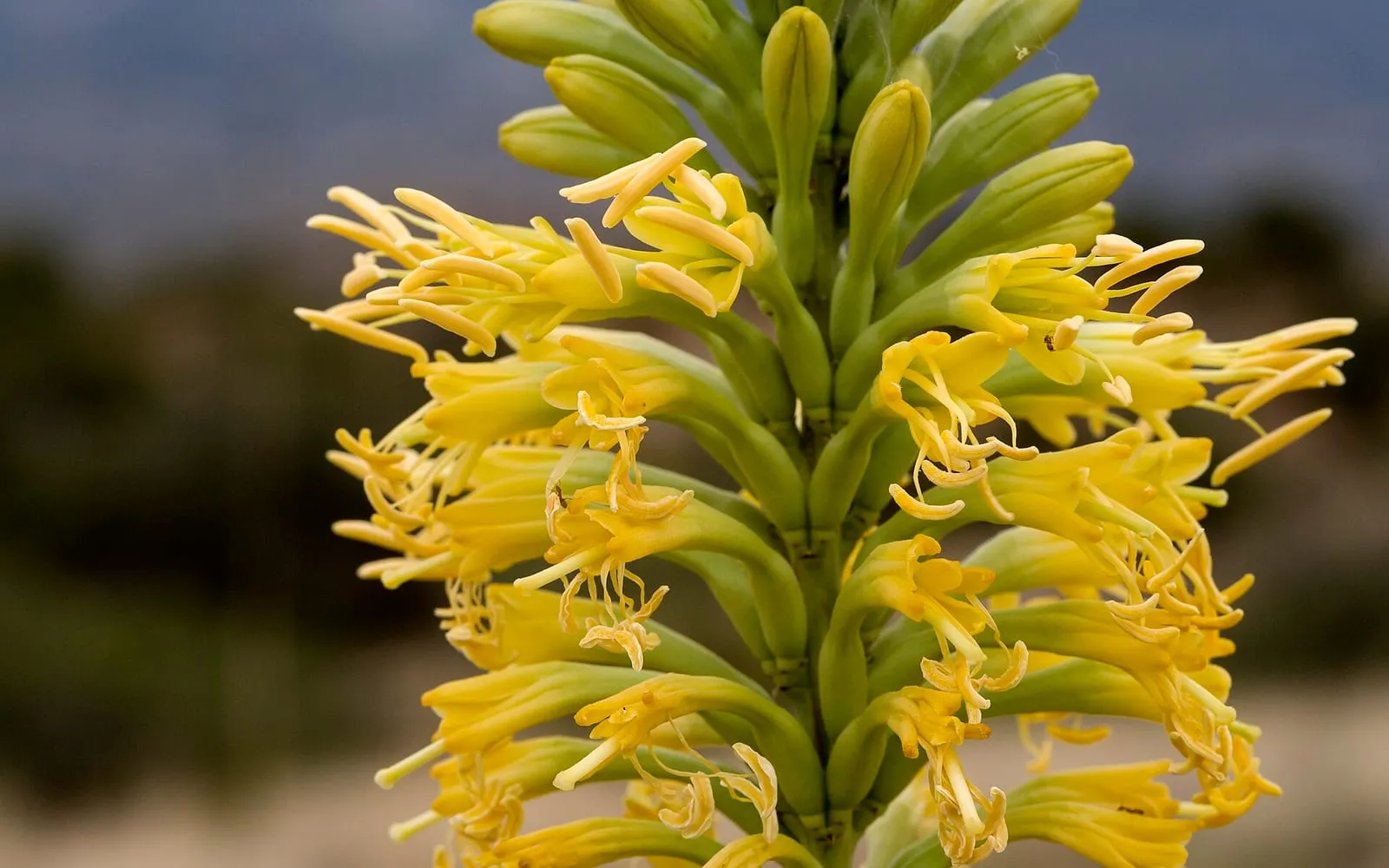
It flowers from a single rosette while the surrounding offsets live on, so a colony is seldom lost in one go. A slender wand of yellow flowers rises after several years, and a potted plant rarely reaches that stage at all.
Where it is from
Rocky slopes, canyon sides and grassy ridges in the mountains of southern Arizona and northern Sonora hold this plant at moderate elevation. Warmth and a long dry season govern the year, and the coarse ground drains quickly once the summer storms have moved through.
That mountain habitat explains its care in a pot. It needs strong light and a mix that lets surplus water drain at once. A chilled, boggy container is unlike its natural conditions. Heat, brightness and grit give it the closest indoor match.
How it grows
Narrow leaves and tightly packed pups build over the warm season, and the hummock then slows as daylight shortens. Under bright light the blades keep their firmness and the edge threads stay crisp; without enough light they soften and the mound grows sparse.
Bed it in a rough, fast-draining mix. Once settled, water only after the blend has dried right through, and let the grassy leaves use their stored water across the dry weeks, because moisture that sits around the roots causes rot.
It survives frost outdoors down to about -9 C in sharply drained ground, but wet cold rots it, so keep a pot dry in winter. The easiest way to raise more is to lift and split the hummock, since every pup arrives on roots of its own.
Through the seasons
Spring starts the hummock into growth as light returns. Start watering again and divide a crowded plant that needs the space.
Summer is the main growth period. Water it once the grit has dried, and give it the fullest sun you can.
Autumn slows the pace. Lengthen the dry spells and taper the feed as the days shorten.
Winter is a cool, dry pause. Give barely any water, and keep the hummock away from cold, damp air.
Care difficulty
Easy, and a neat, unusual hummock where light and drainage suit it. It offsets, stores water and needs little feeding. The main risk is a cold, wet root run at the base, so hold it dry through the cold months. The slim, sharp tips can still nick a careless shin, so allow the mound its space.
Watering
Let the grit dry right through the pot before you water, then soak it and tip away what drains. Each grassy blade holds only a thin reserve, so the hummock relies on the mass of packed leaves instead of a few fat ones to carry it through a dry spell. Roots left in wet compost will rot.
Over winter cut it to the barest trickle, since a chilled, saturated mix rots a settled cushion from the base out. Faced with the choice, leave the shindagger unwatered, since it comes back from a dry month far more readily than from a waterlogged week.
Warning signs, diseases and pests
A cold, waterlogged root run is the usual way to lose it, and the packed cushion hides the trouble until a soft, darkening base or a slack hummock gives it away. Lift a suspect plant, open up the drainage, cut the water right back through winter, and stand it in strong light.
Dry indoor air encourages spider mites, and mealybugs tuck into the crowded pups and the curling margin fibres where a casual glance misses them. Part the cushion to look it over, and treat any outbreak before it works through the colony.
Brown tips on the slim leaves usually signal dry air. A little more humidity and steadier watering green them again.
Growing environment
Give it the brightest light you have. Full sun keeps the round blades firm, the cushion tight and the edge fibres crisp and curling; short of it the leaves go limp and the hummock spreads and thins.
Its mountain home has frosty winters, so it takes cold to about -9 C as long as it stays dry. Keep it out of cold, wet ground. A bright sill or a sunny glasshouse suits it, and a spell outdoors through a warm summer firms the growth.
Bed it in a lean, sharp, gritty mix in a fast-draining pot, and leave the cushion room to spread sideways as the pups crowd in. Lift it by the pot, since every slim leaf tapers to a point that jabs an unwary hand.
Feeding
A weak, balanced feed once or twice across the warm season is enough. Push it harder and the grassy blades grow up soft and floppy and lose the stiffness that holds them upright, so keep the dose light.
Give none through winter while growth has stopped. A move into fresh grit every few years supports the shindagger more steadily than any bottle, so rely on the repot instead of the feed.
Troubleshooting
Why is my shindagger going soft? A cold, wet root run is the likely cause, and softening spreads fast through a crowded cushion. Open up the drainage, water much less, and hold it warm and bright.
How much light does it need? As much direct sun as you can manage. Starved of it the round blades slacken, the cushion opens out and the edge fibres stop curling.
How often should I water it? Only once the mix has dried right through, and barely at all over winter, going by the compost instead of the calendar.
How do I propagate it? Tease the low cushion apart and pot the outer pups, each of which lifts on roots of its own.
Is it safe around pets? The sap is a mild irritant and the ASPCA lists Agave as harmful to cats and dogs, so keep chewing pets away from it, and mind the stiff leaf points around bare legs.
Schott's Century Plant problem guides
Not sure what is wrong? See the common houseplant pests guide.