
Houseplant
Havard Agave
Agave havardiana
Also known as Agave havardiana
How to grow Agave havardiana, the havard agave, a broad grey-blue rosette from Big Bend that is hardy outdoors yet rots in a cold wet pot.
At a glance
- Difficulty
- Easy
- Water
- When the mix has dried right through
- Light
- Full sun to bright light
- Temperature
- Hardy to about -15 deg C when dry; keep the pot dry in winter
- Humidity
- Low
- Hardiness
- USDA 6-10, RHS H5, hardy to -15 C
- Type
- Perennial
- Height
- 40-80 cm
- Native to
- the southwestern United States, Mexico
A desert agave from the Chihuahuan Desert uplands of west Texas and northern Mexico, which takes dry winter cold to about -15 deg C and colder in places. It needs full sun, sharp drainage and a dry winter. Cold combined with wet soil kills it long before frost does, and it does badly in humid summers.
Hardiness zones describe winter cold alone. Summer heat, humidity, rainfall and the length of the growing season decide as much, so treat the range as the outer limit rather than as a recommendation.
Toxic if eaten
- Do not eat
- The leaves and sap
- Harm from
- Eating it, handling it and sap in the eyes
- Affects
- People, cats, dogs and horses
Agave havardiana, the havard agave, has a sap that carries calcium oxalate crystals and saponins. On skin it can cause redness, itching and blistering, and in the mouth it burns and swells, with drooling and vomiting if swallowed. The ASPCA lists the genus as toxic to cats, dogs and horses. Sap in an eye is painful, and the terminal spine can cause a serious puncture wound. Wear gloves and eye protection when cutting it, and keep it away from pets that chew.
Sources: ASPCA toxic and non-toxic plants, RHS potentially harmful garden plants
About
Agave havardiana is a broad, single rosette of thick grey-blue leaves from the Trans-Pecos. It honours Valery Havard, a US army surgeon who botanised across the Texas borderlands in the 1880s, and it is one of the characteristic agaves of the high country around Big Bend.
Out on its native grassland the species meets winters that would kill most agaves, dropping well below freezing on clear nights, and it tolerates that cold when the ground is dry. That wild toughness misleads a keeper. In a container the cold itself is rarely the problem, because a chilled root run sitting in wet compost rots the plant long before the air ever would, so in a pot it is kept dry through winter.
It responds to restraint. Bright exposure, a stony pot and a warm room supply almost everything it needs, and the swollen leaves store enough water to get through long dry spells. Too much water harms it more than weeks of neglect.
Appearance and character
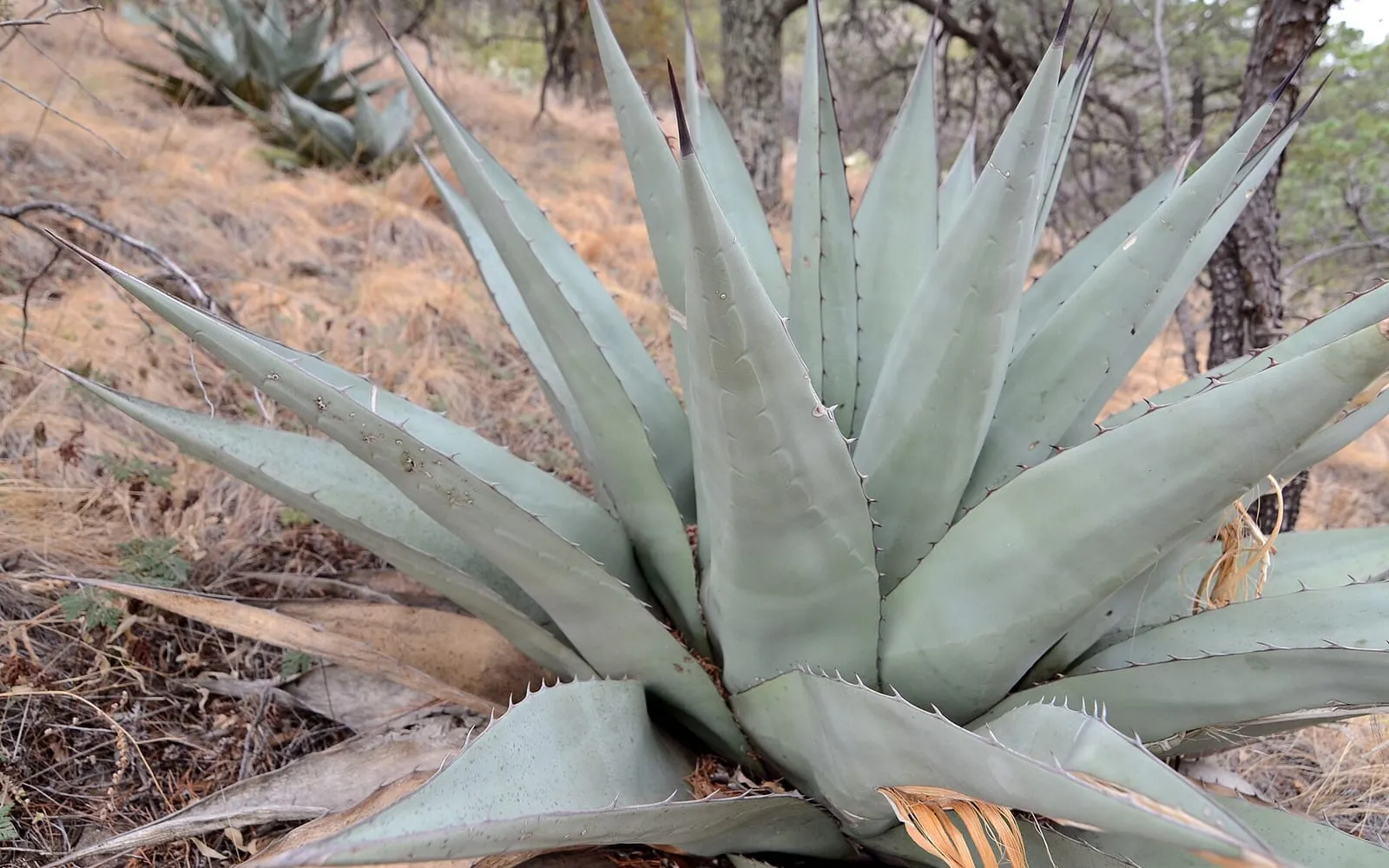
The leaves are broad, short and stiff, a cool powder-blue over grey, and they cup inward to shape a dense, symmetrical rosette. Heavy teeth line the margins, and each blade finishes in a long, thick terminal spine that keeps anyone sensible at arm’s length.
This is a solitary agave. It rarely makes offsets, so it grows as one symmetrical crown instead of a spreading clump, and that habit makes it a strong specimen in a wide, shallow pot.
In common with the whole genus it blooms once and then dies. After decades of growth a stout, branched stalk lifts yellow flowers far above the leaves, seed ripens, and the flowered crown dies back. A potted plant seldom lives long enough or grows large enough to reach that point, so the blue rosette is the whole of the display.
Where it is from
Desert grassland, limestone ridges and rocky benches across the high borderlands of west Texas and the adjoining states of Chihuahua and Coahuila are its ground. Summers roast, winters swing cold and dry, and a cloudburst runs off the stony slopes and is gone within minutes.
Those extremes explain the growing rules. It needs strong light and a mix that drains as soon as it is watered, and it cannot survive a cold container holding water around the roots. Give it heat, grit and full light.
How it grows
A handful of fat leaves is a fair season’s growth, and between spells of growth the plant holds its form through the cold. Given full sun the blades stay wide, blue and cupped inward; short of it the rosette opens and the colour fades.
Set it into a rough, gritty mix with little to hold water. After potting, leave it unwatered until the whole pot has dried out, and let the swollen blades use their own reserves through the dry weeks, since a mix that stays damp rots the roots.
It is hardy outdoors, and in a pot the threat is wet winter soil. Keep the compost dry through winter, and a cool, bright spot just above freezing does it no harm. It offsets so seldom that seed is the normal route to new plants, and the seedlings take their time.
Through the seasons
Spring starts growth as light grows stronger. Reintroduce water little by little and shift a crowded plant into a bigger pot of fresh grit.
Summer brings the season’s growth. Water once the pot has dried out, and give it full, unshaded sun.
Autumn slows growth. Widen the gaps between drinks and cut the feed back as daylight fades.
Winter is a cool, dry rest. Water at rare intervals and keep the crown out of cold, damp air.
Care difficulty
Easy, and a good solitary specimen wherever light and drainage suit it. It stores its own water and asks for little feeding or fuss. The error that catches people is a cold, wet root run rotting the base, so keep it dry over winter, and the heavy teeth and long spine deserve a spot no one brushes against.
Watering
Allow the grit to dry to the bottom of the pot, then soak it thoroughly and let the surplus drain away. The reserve in the thick blue leaves carries the rosette through a dry spell, but a wet pot can rot the roots.
Through winter give almost nothing, since a chilled, saturated mix can rot an otherwise settled plant. When you are unsure, hold off, because this agave copes with thirst far better than with sodden roots.
Warning signs, diseases and pests
A cold, waterlogged root run is the usual cause of loss, shown by a soft, darkening base or a crown gone loose in its mix. Sharpen the drainage, water far less, above all over winter, and hold it under strong light.
Dry indoor air brings spider mites, and mealybugs work into the packed leaf bases. Search the folds of the rosette and treat any early outbreak while it is small.
Brown tips generally follow parched air or scorch behind glass. Steadier watering and a little ventilation help prevent more damage.
Growing environment
Give it the brightest spot you can find. Full sun keeps the rosette compact and the leaves blue and cupped; in shade the form opens and the grey fades.
It needs no winter heat. A bright sill or a sunny glasshouse suits it, it tolerates a cool, dry winter rest, and it can spend summer outside.
Grow it in a lean, sharp, gritty mix in a pot that drains quickly, turning it for symmetry. Lift it by the pot so the long spine stays well clear of your hands.
Feeding
A weak, balanced feed once or twice through the growing season is plenty. Rich feeding softens and stretches the blades and spoils the compact rosette, so keep the dose slight.
Feed nothing over winter. A repot into fresh grit carries it a long while, so fresh mix matters more than fertiliser.
Troubleshooting
Why is my havard agave going soft at the base? A cold, wet root run is the usual reason. Open up the drainage, water much less, and hold it warm and bright.
How much light does it need? As much direct light as you can give. In shade the rosette opens and the blue dulls.
How often should I water it? Once the pot has dried through, and sparingly over winter, judged by the mix.
How do I propagate it? Sow seed, since it rarely offers offsets.
Is it safe around pets? The sap is a mild irritant and the ASPCA lists Agave as harmful to cats and dogs, so keep chewing pets off it and mind the heavy teeth and long spine.
Havard Agave problem guides
Not sure what is wrong? See the common houseplant pests guide.