
Houseplant
Broad-Leaved Palm Lily
Cordyline petiolaris
Also known as Cordyline petiolaris
How to grow Cordyline petiolaris, the broad-leaved palm lily, an Australian rainforest plant with wide stalked leaves and long-lasting sprays of red berries.
At a glance
- Difficulty
- Easy
- Water
- When the top few centimetres of mix have dried
- Light
- Bright indirect light to light shade
- Temperature
- Warm; keep above about 13 deg C
- Humidity
- Average to high
- Hardiness
- USDA 10-12, RHS H1b, hardy to 13 C
- Type
- Perennial
- Height
- Up to 6 m
- Native to
- eastern Australia
A tender tropical foliage plant from eastern Australia, growing in warm, humid, shaded to filtered light. It needs warmth, humidity and bright indirect light, and it cannot take frost or chill. It is safest above about 13 deg C, and cold, wet compost or dry air spoils it.
Hardiness zones describe winter cold alone. Summer heat, humidity, rainfall and the length of the growing season decide as much, so treat the range as the outer limit rather than as a recommendation.
Harmful to cats and dogs if eaten
- Harm from
- Eating it
- Affects
- Cats and dogs
Cordyline petiolaris, the broad-leaved palm lily, is toxic to cats and dogs. The leaves contain saponins, and chewing or swallowing them can cause vomiting, sometimes with blood, along with drooling, a loss of appetite and, in cats, dilated pupils. People are far less sensitive, but keep it away from pets and stop children chewing the foliage.
Sources: ASPCA toxic and non-toxic plants, RHS potentially harmful garden plants
About
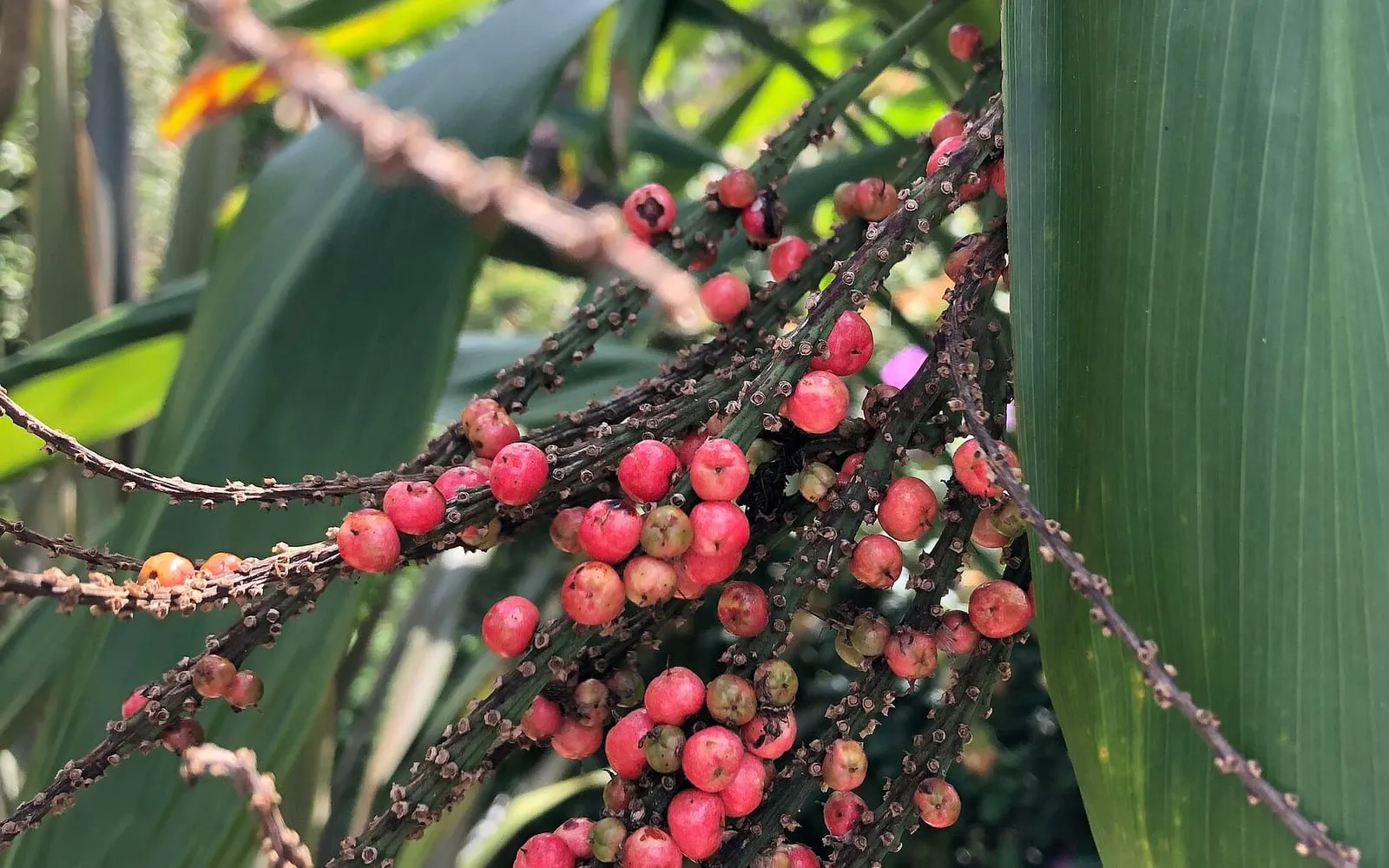
Cordyline petiolaris is grown for two things: broad, glossy leaves and long, dangling clusters of scarlet berries that hang on for months. The common name palm lily is the Australian label for the cabbage-tree group, and the qualifier broad-leaved separates it from the stiff, narrow-leaved relatives grown alongside it. Neither name is botanically exact, since the plant is no palm and no lily but a monocot in the asparagus family.
The scientific name refers to the leaf. Petiolaris means stalked, and each wide blade narrows to a distinct leaf stalk before it meets the cane, which gives the foliage a tiered look quite unlike the stalkless leaves of the narrow palm lilies. In its home forests it forms a clump of upright canes crowned with these broad leaves, and mature plants produce the heavy berry sprays that make it a favourite.
Indoors it looks like a bold, upright foliage plant that tolerates shade well. It is easy once kept warm and moist, and it holds its leaves through the year in a heated room.
Appearance and character
The leaves are wide, deep green and softly glossy, held on obvious stalks that space them along the cane. They are broader and more paddle-like than the leaves of most palm lilies, and a well-grown plant has a generous, spreading head of them.
Stems form as slender canes that lengthen and clump over time, so an older plant can become a small thicket of stems. In good conditions it produces arching panicles of small mauve-to-cream flowers, followed by pendent strings of glossy red berries.
Where it is from
Cordyline petiolaris grows in the subtropical and warm-temperate rainforests of eastern Australia, from the coastal ranges of New South Wales into Queensland. It lives in the shaded understorey and along moist gullies, rooted in leaf-rich soil beneath a closed canopy.
Give it gentle, filtered light instead of sun, steady warmth, humid air and a root run that stays moist without waterlogging. A plant used to the sheltered floor of a rainforest adapts well to a shaded corner of a warm room.
How it grows
The plant grows through the warm months and slows in winter, building up its clump by producing new canes from the base while each existing cane adds leaves at its tip. Lower leaves yellow and drop as the cane lengthens, gradually raising the crown.
Pot it in a light, free-draining mix that retains some moisture, working grit or bark through a peat-free compost. Keep it in filtered light, hold the roots evenly damp during growth, and move it up a pot size in spring when the clump becomes crowded.
Propagate it by dividing the clump, by cane cuttings laid in warm damp mix, or from the seed inside ripe berries. Division of a multi-caned plant is the quickest way to a new specimen.
Through the seasons
Spring starts active growth. Resume full watering, begin feeding, and divide or repot congested clumps.
Summer is the strongest growing spell. Keep it in bright, filtered light, water once the surface starts to dry, and keep the air humid if the room warms up.
Autumn slows things down. Cut back the feed and let the mix dry a little more between waterings.
Winter is a rest. Hold it warm and above the low teens in Celsius, water sparingly, and keep it clear of dry heat and cold draughts alike.
Care difficulty
Broad-leaved palm lily is among the more forgiving houseplants of its kind, tolerating shade well so long as it is kept warm and evenly moist. Its rainforest origins mean it dislikes only extremes of dryness and cold.
The two main problems have clear symptoms. Browning leaf edges follow dry air or an over-dry pot. A soft, darkening cane base follows cold, waterlogged compost. Improve the conditions and the plant usually recovers.
Watering
Water when the top few centimetres of the mix have begun to dry, giving enough to wet the whole rootball and letting the excess drain off. The broad leaves lose more moisture than narrow ones do, so a plant in a warm room can drink steadily through summer.
Ease right back in winter, letting the surface dry further before each drink, because cold roots in wet compost rot quickly. Where tap water is very hard, an occasional watering with rainwater keeps the leaf tips from browning.
Warning signs, diseases and pests
Dry, brown leaf margins usually mean arid air or a pot dried out too hard. Raise the humidity, move it off any heat source, and keep the compost evenly moist.
A cane that softens and darkens at the base has root rot from cold, sodden compost. Improve drainage, warm the plant, and withhold water until it firms up.
In dry indoor air, spider mites speckle the leaves and mealybugs appear as white tufts where leaf stalks meet the cane. Sponge the foliage, lift the humidity, and treat any lasting colony with an insecticidal soap.
Growing environment
Filtered light or light shade suits it best, like the forest floor it comes from, and it will hold good colour in a spot too dim for many plants. Keep it out of hard direct sun, which scorches the broad blades.
Warmth and humid air keep it healthy. Stand it away from radiators and cold windows, and group it with other plants or use a damp gravel tray to steady the humidity around the leaves.
Feeding
Feed through spring and summer with a dilute balanced liquid feed at about half strength, every few weeks while the plant is in growth. Regular weak feeding keeps the foliage broad and firm without forcing weak stems.
Stop feeding in autumn and give none over winter. A freshly repotted plant needs no feed for the first few weeks, using the nutrients in the new mix.
Troubleshooting
Why are the leaf edges browning? Dry air or a pot left too dry. Increase the humidity and keep the root run moist.
Should the lowest leaves be yellowing and dropping? Yes, within reason. Each cane sheds its oldest leaves as it grows taller, which is normal.
The base of a cane has gone soft. What is wrong? Cold, waterlogged compost has rotted the roots. Improve drainage, warm it up, and water much less.
How do I propagate it? Divide the clump, root cane cuttings in warm damp mix, or sow seed from ripe berries.
Is it safe around pets? No. The ASPCA lists Cordyline as toxic to cats and dogs because of its saponins, so keep it away from pets that chew.
Broad-Leaved Palm Lily problem guides
Not sure what is wrong? See the common houseplant pests guide.