
Houseplant
Lecheguilla Agave
Agave lechuguilla
Also known as Agave lechuguilla
How to grow Agave lechuguilla, the lecheguilla agave, the fibre plant of the Chihuahuan Desert, with hooked teeth, rhizome colonies and a hard terminal spine.
At a glance
- Difficulty
- Easy
- Water
- Only once the mix has dried right through
- Light
- Full sun
- Temperature
- Hardy to about -10 deg C when dry; cold, wet winters rot it
- Humidity
- Low
- Hardiness
- USDA 7-11, RHS H4, hardy to -10 C
- Type
- Perennial
- Height
- 30-50 cm
- Native to
- Mexico, the southwestern United States
A plant of the Chihuahuan Desert, where summers pass 40 deg C and rain is scarce. It takes frost well while the soil is dry, but it rots in cold, wet winters, so outside an arid climate it needs a raised gritty bed or a pot under cover. The zone numbers say nothing about winter wet, which is what kills it.
Hardiness zones describe winter cold alone. Summer heat, humidity, rainfall and the length of the growing season decide as much, so treat the range as the outer limit rather than as a recommendation.
Toxic if eaten
- Do not eat
- The leaves and sap
- Harm from
- Eating it and handling it
- Affects
- People, cats and dogs
The leaves and sap hold saponins and needle-like calcium oxalate crystals. Sap on skin can cause itching, redness and blistering, and chewing the plant can cause drooling, vomiting and mouth irritation in people, cats and dogs. The ASPCA lists agaves as toxic to cats and dogs. Sheep and goats that eat the leaves develop liver damage and photosensitisation, which makes the plant a range-poisoning problem in the Chihuahuan Desert. Wear gloves and eye protection when cutting it, and keep pets from chewing it.
Sources: ASPCA toxic and non-toxic plants, RHS potentially harmful garden plants
About
Ecologists treat Agave lechuguilla as a marker of the Chihuahuan Desert, so reliably that its presence helps define the region’s boundary. Across that huge dry expanse it covers rocky slopes in packed stands, its narrow leaves held so upright and so close together that a walker soon learns to weave a path between them.
People have leant on the plant for generations. Its leaves are the source of ixtle, sometimes sold as tampico fibre, a stiff bristle beaten out of the leaf and twisted into cord, scrubbing brushes and matting, and the trade in it once supported whole borderland villages. Set beside the fat grey rosettes of its cousins it looks spare and economical, with a form shaped by dry desert conditions.
To grow it is to keep something tough and low-slung. It stores water in its slim leaves, travels sideways on underground stems, and needs little beyond full sun and quick drainage. The one arrangement it cannot survive is a cold pot full of standing water, so water carefully and let it dry.
Appearance and character
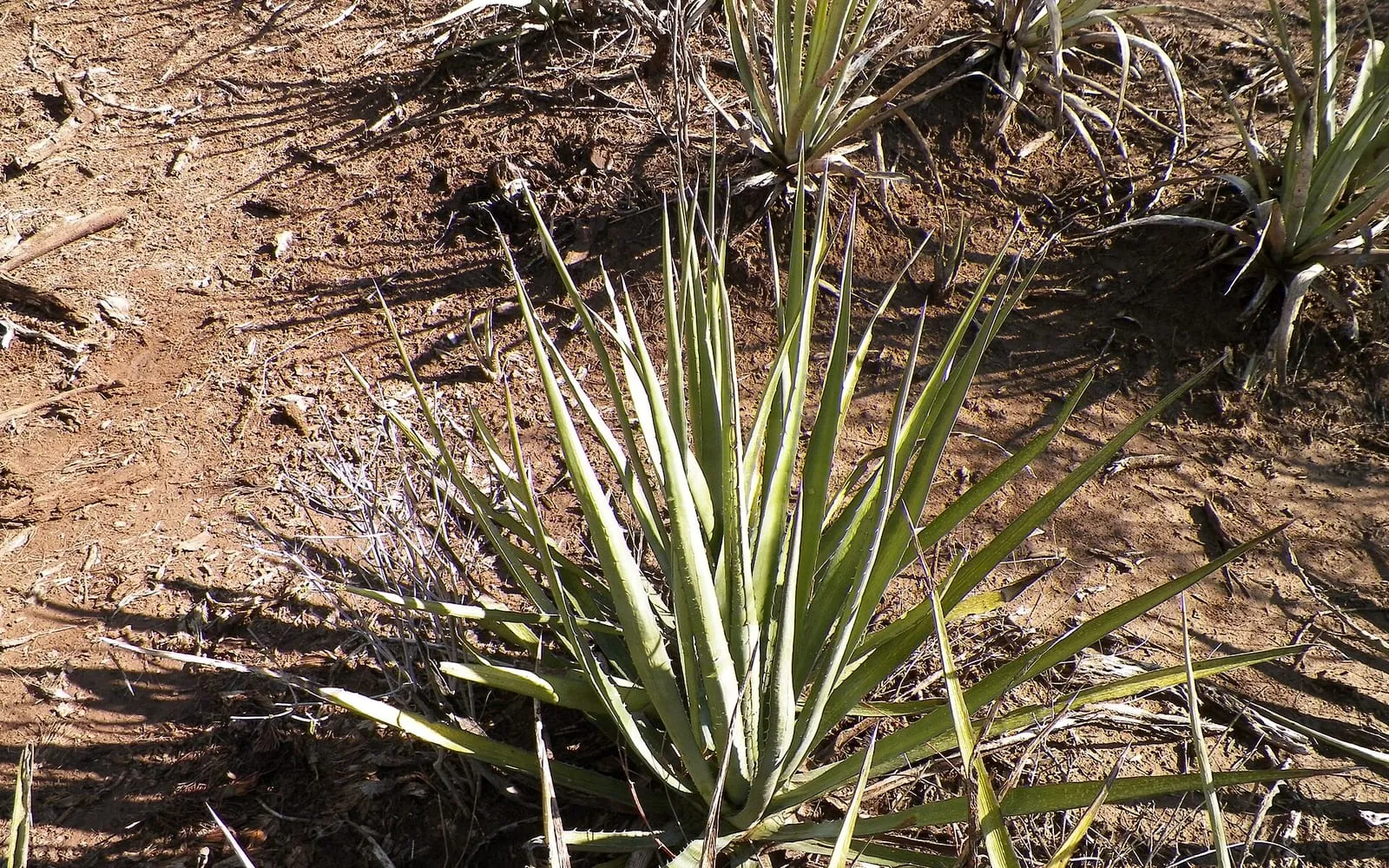
The leaves are long, thick-sectioned and rigidly upright, a light grey-green, and a rosette carries only a handful of them at a time. Down each margin sit hooked teeth that curve back towards the base, catching a fingertip drawn along the edge, and every blade ends in a hard, dark spine.
Underground runners push fresh rosettes up around the parent, so a single plant forms a dense colony as the years pass. That creeping habit is what lets it cover whole hillsides in the wild and fill a container quickly on a bench.
It flowers once and dies. After years of slow growth a rosette produces a tall, slender, unbranched spike hung with greenish flowers, sets seed, and gives way to the offsets ranged around it. A potted plant rarely reaches flowering age, so its upright, blade-like leaves are what a keeper grows it for.
Where it is from
Across the Chihuahuan Desert, from north-central Mexico up into west Texas and southern New Mexico, this agave spreads over limestone slopes, gravel flats and rocky rims. Rainfall there is meagre and seasonal, the sun is strong, and storm water drains quickly through the stony ground.
Its care follows from that habitat. It needs strong light and a stony mix that drains quickly after watering. A chilled, sodden pot is unsafe for it.
How it grows
Over the warm months a rosette produces leaves while runners raise fresh crowns close beside it, and the whole colony then slows as the light falls back. In full sun the leaves stand rigid, slim and near upright; short of it they tilt and the rosette splays.
Give it a rough, grit-heavy mix. Once it has taken, water only after the blend has gone dry to the very bottom, and rely on the slim leaves to carry their own supply through the rainless weeks, since a mix kept damp damages the roots.
It takes frost while dry, to about -10 deg C, but a cold, wet winter rots it, so keep it dry and under cover in a damp climate. The easiest way to raise more is to cut off a rooted runner, since a young crown comes away already established on its roots.
Through the seasons
Spring starts the colony back into growth as light climbs. Resume watering and move crowded runners into pots of their own.
Summer is its main growth period. Once the mix has dried, water it, and stand it in full sun.
Autumn slows it down. Widen the intervals and drop the feed as the season shifts.
Winter is a dry rest. Water very little and shelter the crowns from cold, damp air.
Care difficulty
Easy, and quick to form a colony where light and drainage suit it. It stores water, offsets freely and needs almost nothing in the way of feed. Its weak point is a cold, wet root run that rots the base, so keep it dry through the cold months, and leave room around the back-curved teeth and hard spine.
Watering
Leave the grit until it has dried through the pot, then soak it and tip off the surplus. The water stored in the slim upright leaves carries a rosette through a dry spell, while roots kept in wet compost rot.
Over winter reduce it to the barest trickle, since a chilled, saturated mix can rot a settled colony. When in two minds over a drink, skip it; a rhizome-spreading desert plant like this tolerates a dry spell but not a soaking.
Warning signs, diseases and pests
A cold, waterlogged root run is the usual way to lose it, shown by a soft, darkening base or by rosettes and runner-crowns going slack in the mix. Improve the drainage, water far less, above all over winter, and keep it in strong light.
Mealybugs lodge among the packed rosettes and runners. Search the crevices and clear any outbreak before it spreads through the colony.
Brown tips usually mean sun scorch or root damage from rot, so check the roots and the drainage first.
Growing environment
Offer it the brightest light you have. Full sun keeps the leaves rigid, slim and upright; shade loosens them and gapes the rosette wide.
Frost is not the danger while the mix is dry, since it survives to about -10 deg C. Winter wet is, so in a damp climate grow it in a pot under cover or on a raised, gritty bed. A sunny sill or glasshouse suits it, and it can go outdoors through the summer.
Grow it in a lean, sharp, gritty mix in a fast-draining pot, and give the colony room to spread. Handle it by the pot to keep clear of the hooked teeth and spine.
Feeding
A weak, balanced feed once or twice through the growing season is enough. Rich feeding stretches and softens the upright blades, so keep the dose light.
Feed nothing over winter. A repot into fresh grit every few years supplies the colony better than regular feeding.
Troubleshooting
Why is my lecheguilla agave going soft? A cold, wet root run rotting the base. Sharpen the drainage, water far less, and keep it in bright light.
How much light does it need? All the direct sun you can find. Without enough light the upright blades loosen and lean, and the rosette falls open.
How often should I water it? Only after the grit has dried out to the bottom, and barely at all in winter. Judge it by the mix, not the calendar.
How do I propagate it? Cut a rooted runner from the parent and pot it up.
Is it safe around pets? No. The sap irritates skin and mouth, and the ASPCA lists agaves as toxic to cats and dogs, so keep chewers away. Mind the hooked marginal teeth and the hard terminal spine as much as the sap.
Lecheguilla Agave problem guides
Not sure what is wrong? See the common houseplant pests guide.