
Houseplant
Schiller's Moth Orchid
Phalaenopsis schilleriana
Also known as Silver-leaf Phalaenopsis
How to grow Schiller's moth orchid as a houseplant. Its silver-mottled leaves, dense sprays of pink flowers, and why it needs a large, stable pot.
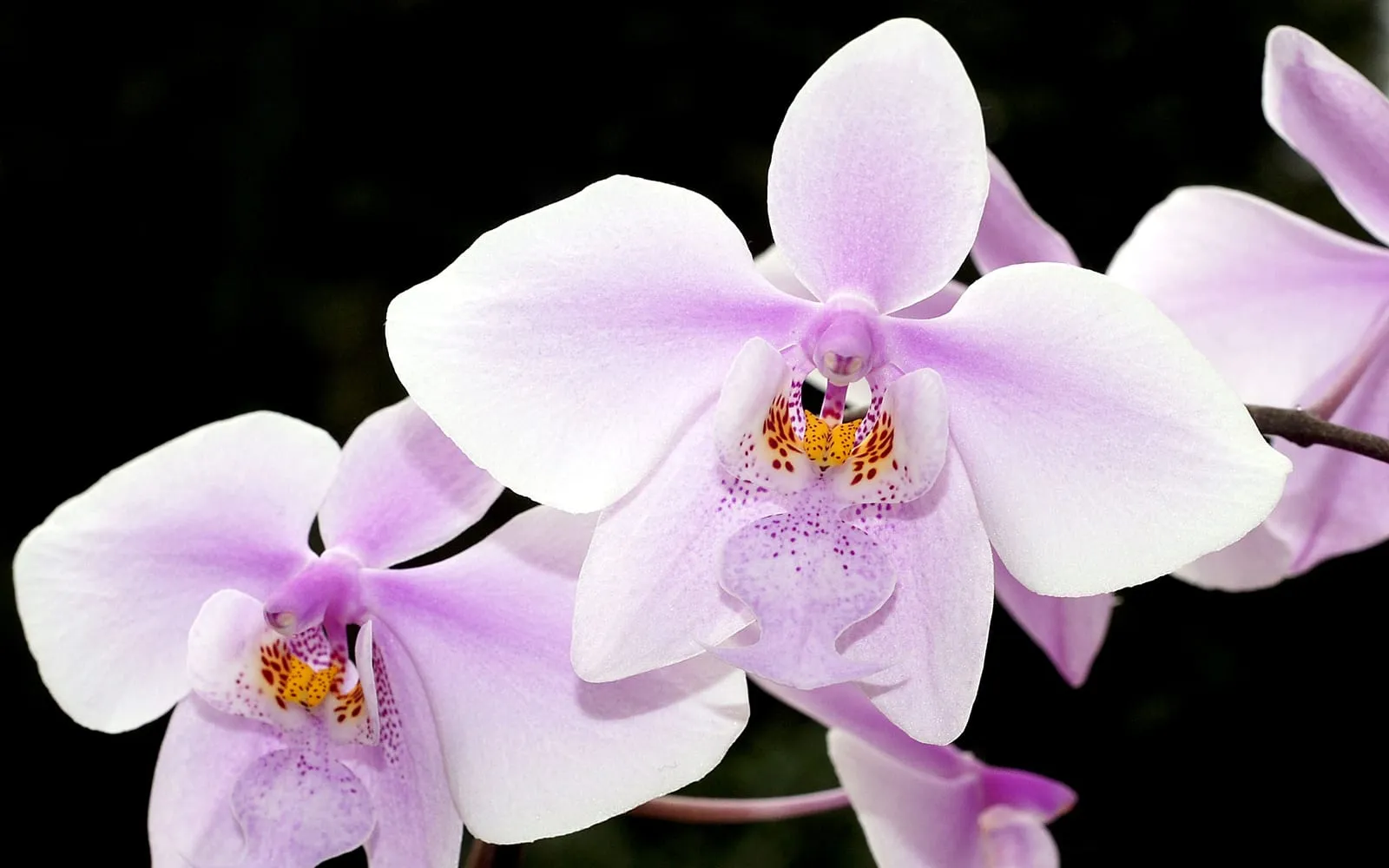
At a glance
- Difficulty
- Easy
- Water
- Water when the roots turn silvery-grey, roughly weekly
- Light
- Bright indirect light, no direct midday sun
- Temperature
- 18-30 deg C, avoid below 15 deg C
- Humidity
- High, 60 percent or more
- Hardiness
- USDA 11-12, RHS H1b, hardy to 15 C
- Type
- Evergreen epiphytic perennial orchid
- Height
- 30-50 cm including flower spikes
- Native to
- Philippines
A lowland tropical species with no cold tolerance, grown as a houseplant everywhere outside an equatorial climate. Its large size and vigorous root system need a stable, appropriately sized pot more than they need any particular seasonal treatment, and it grows and flowers on a broadly similar rhythm year round given consistent warmth and humidity.
Hardiness zones describe winter cold alone. Summer heat, humidity, rainfall and the length of the growing season decide as much, so treat the range as the outer limit rather than as a recommendation.
Not known to be toxic
Schiller's moth orchid has no toxicity listing from the RHS or the ASPCA, and Phalaenopsis orchids generally are considered safe around pets and children. There is no documented history of poisoning associated with this species.
Source: ASPCA
About
Schiller’s moth orchid is grown for two features in combination that few other Phalaenopsis species offer together: broad leaves marbled with silver-grey mottling that make the plant attractive even when it is not in flower, and long, gracefully arching, often branching spikes that can carry well over a hundred pale pink flowers on a single mature plant. Where many orchids are valued purely for their bloom, this species holds visual interest through the leaves alone for most of the year.
It is also one of the larger commonly grown Phalaenopsis species, and a mature specimen in full flower, with its long spikes sweeping outward under the weight of so many blooms, needs a heavier, more stable pot than a small hybrid moth orchid would, to avoid toppling under the weight.
Appearance and character
Broad, elongated leaves, sometimes reaching 30 cm or more on a mature plant, are patterned with an attractive marbled silver-grey mottling against a darker green background, a pattern most pronounced on younger leaves and often used to identify this species even without flowers present. The leaves arch outward in a substantial fan from a short, central stem.
Flower spikes emerge from between the lower leaves and can extend to a metre or more in length on a well-grown plant, arching under their own weight and frequently branching partway along, each branch holding further buds so that a single spike can open dozens of flowers over an extended season. Flowers are a soft pink, sometimes with darker spotting toward the lip, and much more numerous per spike than on many other Phalaenopsis species.
Where it is from
Lowland and lower montane forest across the Philippines, growing as an epiphyte on tree trunks in warm, humid, well-shaded conditions.
Its more vigorous, larger-growing nature compared with many other Phalaenopsis species reflects a habitat with reliably high humidity and consistent warmth year round, conditions that let it invest energy in substantial leaf growth and exceptionally long flower spikes rather than in surviving a difficult season.
How it grows
A vigorous root system, thick and silvery-green, extends both into the bark mix and out into open air, and a mature plant’s roots often noticeably outgrow a pot sized for the leaves alone, which is worth allowing for when choosing a container. New leaves add steadily from the centre of the fan, each one larger than the last on a young, actively growing plant, until the plant reaches its mature size.
Because flower spikes grow so long and carry so many blooms, they usually need staking to keep the weight from bending or snapping the spike, particularly once side branches have developed and added further weight along its length.
Through the seasons
Spring growth and new spike production often strengthen as light increases.
Summer is usually the strongest growing period, with the fastest leaf production. Water and feed on a regular weekly rhythm.
Autumn established spikes may continue flowering or branching further given consistent warmth, with growth slowing only slightly as light drops.
Winter keep the plant away from cold draughts and cold glass; this species has no strong seasonal dormancy indoors given stable indoor warmth.
Care difficulty
Easy in terms of routine care, though its size means practical considerations, a large enough pot, sturdy staking for heavy spikes, and enough space for the leaves to spread, matter more here than with a compact hybrid moth orchid.
Watering
Water when the roots have turned a silvery-grey rather than on a fixed calendar, typically around once a week in a warm home, soaking the compost thoroughly and letting every drop of excess water drain away. Given the plant’s size, check that a large pot has drained fully rather than assuming a quick pour was enough.
Warning signs, diseases and pests
Scale insects and mealybug both occasionally colonise the leaves or the base of a spike, appearing as small stationary bumps or cottony clusters, and are treated with careful manual removal or a horticultural soap for persistent infestations. Spider mites can appear in warm, dry indoor air, showing as fine speckling on the leaves.
A spike that bends sharply or snaps under its own weight usually means it was not staked early enough as it lengthened and branched; supporting a young spike from early in its growth prevents this. Soft, translucent patches on leaves indicate crown rot from water pooling in the growing point, and tipping the plant to drain the crown fully after every watering avoids it.
Growing environment
Bright, indirect light suits it well, with protection from direct midday sun, which can scorch the broad leaves. High humidity supports the best growth and the longest, most heavily flowered spikes, and given the plant’s eventual size, allow generous space around it for the leaves and arching spikes to develop without obstruction.
Feeding
A balanced orchid fertiliser at quarter strength, applied with most waterings during active growth, supports the substantial leaf growth and long flower spikes this species is capable of. A plant investing energy into a spike holding many buds benefits from consistent feeding through that period rather than a gap.
Troubleshooting
A flower spike has bent or snapped. This usually means it was not staked before it grew heavy with branches and buds. Support future spikes early, tying loosely as they lengthen rather than waiting until they are fully grown.
Leaves have gone soft and translucent near the crown. Suspect crown rot from water pooling in the growing point. Always tip the plant to drain the crown after watering.
Roots are visibly spilling out over the top of the pot. This is normal for a vigorous, maturing plant of this species. Move it to a larger pot at the next repotting rather than trying to contain the roots in an undersized one.
The plant has produced fewer flowers than in a previous year. Check that it is getting enough bright, indirect light and consistent feeding, since a large plant of this size needs sustained resources to support another season of long, heavily flowered spikes.
Schiller's Moth Orchid problem guides
Not sure what is wrong? See the common houseplant pests guide.