
Houseplant
Madagascar Jasmine
Stephanotis floribunda
Also known as Bridal wreath, Waxflower
How to grow Madagascar jasmine as a houseplant. Its intensely fragrant waxy white flowers, and why it resents having its pot moved once buds have formed.
At a glance
- Difficulty
- Moderate
- Water
- Regular watering in summer, reduced in winter
- Light
- Bright indirect light, some gentle direct sun
- Temperature
- 16-24 deg C in summer, cooler in winter
- Humidity
- Moderate to high
- Hardiness
- USDA 10-11, RHS H1c, hardy to 10 C
- Type
- Evergreen twining climber
- Height
- 2-4 m given support
- Native to
- Madagascar
Frost-tender and grown as a houseplant or conservatory plant across almost the entire temperate world. It benefits from a distinctly cooler winter rest, a little above 10 deg C rather than kept at typical warm room temperature, which supports stronger flowering the following summer more reliably than being kept uniformly warm year round.
Hardiness zones describe winter cold alone. Summer heat, humidity, rainfall and the length of the growing season decide as much, so treat the range as the outer limit rather than as a recommendation.
Not known to be toxic
Madagascar jasmine has no toxicity listing from the RHS or the ASPCA and is considered safe around pets and children. There is no documented history of poisoning associated with this species.
Source: RHS
About
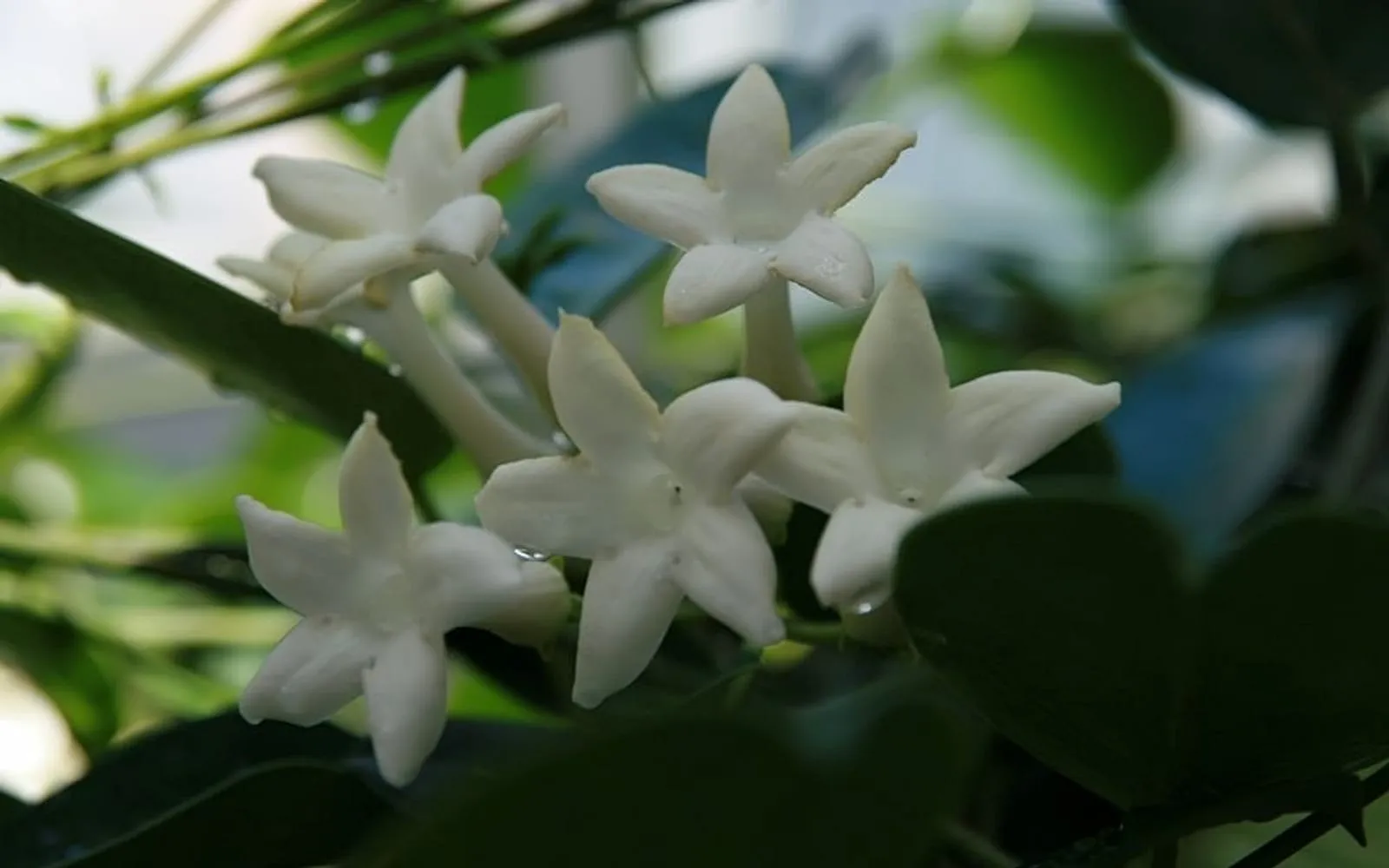
Madagascar jasmine is grown for its intensely fragrant, waxy white flowers, produced in clusters along twining stems and traditionally a popular choice for bridal bouquets thanks to both their scent and their long vase life once cut, which is where the alternative name bridal wreath comes from. It needs warmth, consistent care and, especially, minimal disturbance once flower buds have formed to perform at its best as a houseplant.
Unlike some flowering climbers that tolerate being moved or turned without complaint, this species has a reputation for dropping its buds if the pot is rotated or relocated while they are developing, a sensitivity important to know before repositioning a plant that has just started to bud.
Appearance and character
Glossy, thick, dark green oval leaves clothe twining stems that wind around any suitable support, and clusters of waxy, star-shaped white flowers open from clustered buds, holding a strong, sweet fragrance that many growers compare to true jasmine despite the two being unrelated. Each flower is thick-textured and long-lasting compared with many other fragrant climbers, holding its shape and scent well both on the plant and once cut.
A well-grown specimen trained around a wire hoop or small trellis makes a compact, manageable flowering houseplant, much less sprawling than many other twining climbers when kept to a modest support.
Where it is from
Forest margins in Madagascar, in a warm, humid climate with generally consistent temperatures, though with enough seasonal variation to support a period of relatively cooler conditions during part of the year.
That native pattern, warmth for most of the year with a cooler spell at some point, is reflected in the plant’s response to a deliberately cooler winter rest in cultivation, which more reliably brings on strong summer flowering than keeping the plant at a constant warm room temperature throughout the year.
How it grows
Twining stems extend from the growing tips, winding around any suitable support as they lengthen, with flower buds developing in clusters along the stems once the plant has built sufficient growth and, ideally, experienced a cooler winter rest beforehand. Growth is steady given warmth, humidity and consistent care, slowing through the cooler winter period.
Because developing flower buds are sensitive to disturbance, the plant’s position and orientation toward the light are best left unchanged once budding has begun, since turning the pot to even out growth, a common habit with many other houseplants, can cause this species to drop its buds before they open.
Through the seasons
Spring growth resumes as light and temperature increase, with new twining growth and, on a well-rested plant, developing flower buds.
Summer is the main flowering season, with clusters of fragrant white flowers opening on established growth. Water and feed regularly, and avoid moving or turning the plant once buds have formed.
Autumn flowering tapers as temperatures drop; begin reducing watering in preparation for a cooler winter rest.
Winter provide a distinctly cooler rest, a little above 10 deg C rather than typical room temperature, watering sparingly, which supports stronger flowering the following summer.
Care difficulty
Moderate. The plant’s core needs, warmth, humidity and a real cooler winter rest, are straightforward to describe, but its sensitivity to disturbance once budding and its need for a cooler spell many homes do not have a suitable place for both add real complexity compared with an easier flowering houseplant.
Watering
Keep the compost evenly moist through the growing season without letting it become waterlogged. Reduce watering over winter, allowing the compost to dry rather more between waterings while the plant rests at cooler temperatures, though never letting it dry out completely.
Warning signs, diseases and pests
Mealybug and scale insects can both settle in leaf axils and along the stems, and are treated with careful manual removal or a horticultural soap for persistent infestations. Spider mites occasionally appear in warm, dry indoor air, showing as fine speckling on the leaves.
Flower buds dropping before they open is the most common frustration with this species, and is usually caused either by moving or turning the pot once budding has begun, or by insufficient light or an inadequately cool winter rest beforehand; addressing whichever applies generally improves the following season’s flowering.
Growing environment
Bright indirect light with some gentle direct sun suits it well, and moderate to high humidity supports healthy growth and flowering. Free- draining, humus-rich potting mix gives the best results, and a distinctly cooler spot for winter, whether an unheated but frost-free room or a cool conservatory, supports the seasonal rest this species benefits from.
Feeding
A high-potassium liquid feed formulated for flowering plants, applied every second watering through spring and summer, supports strong bud formation and flowering. Stop feeding through the cooler winter rest, when the plant is not actively growing.
Troubleshooting
Flower buds have dropped before opening. Check whether the pot was moved or turned recently, since this species is especially sensitive to disturbance once budding begins. Also consider whether the plant received an adequately cool winter rest beforehand.
The plant grows well but has never flowered. Provide a more distinctly cool winter rest, since this is the most common missing ingredient for reliable flowering in this species.
Leaves look dull and growth has slowed in summer. Check humidity levels, since this species benefits from moderate to high humidity through its main growing season, and consider grouping it with other plants or using a pebble tray if indoor air is particularly dry.
Small clusters are visible in leaf axils or along the stems. Check for mealybug or scale insects, and treat promptly with careful manual removal or a horticultural soap before an infestation spreads further through the plant.
You want to use cut flowers from this plant in an arrangement. The thick, waxy blooms hold up well once cut and are a traditional choice for bridal work, though picking too many at once from a young plant can set back its overall vigour, so limit harvesting to a well-established specimen with plenty of flowers to spare.
Madagascar Jasmine problem guides
Not sure what is wrong? See the common houseplant pests guide.