
Houseplant
Coconut Orchid
Maxillaria tenuifolia
Also known as Mexican coconut orchid
How to grow coconut orchid as a houseplant. The coconut scent its flowers release, its cascading pseudobulb habit, and why it needs a real winter rest.
At a glance
- Difficulty
- Difficult
- Water
- Regular watering in summer, a distinct dry rest in winter
- Light
- Bright indirect light, some morning direct sun
- Temperature
- 12-28 deg C, tolerates a cooler winter rest
- Humidity
- High, 60 percent or more
- Hardiness
- USDA 10-11, RHS H2, hardy to 5 C
- Type
- Evergreen epiphytic perennial orchid
- Height
- 20-40 cm
- Native to
- Mexico, Central America
Native to a range spanning warm lowland and cooler highland forest, so it tolerates a wider temperature range and a more distinct seasonal rest than many strictly lowland tropical orchids. A real drop in temperature and watering over winter, well above frost but noticeably cooler than summer, is closer to what this species needs than being kept warm and watered year round.
Hardiness zones describe winter cold alone. Summer heat, humidity, rainfall and the length of the growing season decide as much, so treat the range as the outer limit rather than as a recommendation.
Not known to be toxic
Coconut orchid has no toxicity listing from the RHS or the ASPCA, and orchids of this kind are considered safe around pets and children in general. There is no documented history of poisoning associated with this species.
Source: ASPCA
About
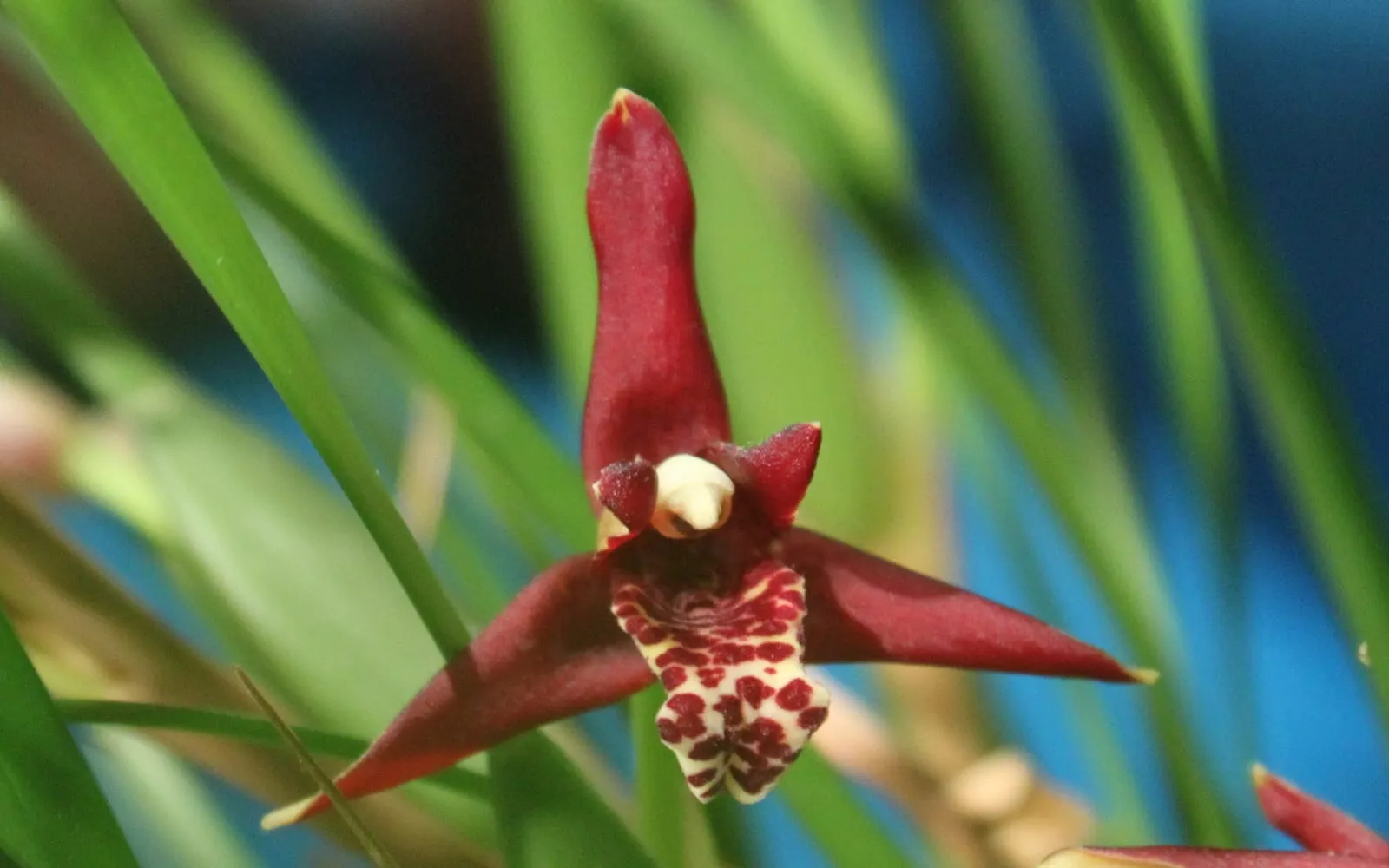
The coconut orchid earns its common name from one of the more distinctive scents in the orchid world. Its small, dark red-brown flowers release a strong, unmistakable smell of coconut, most noticeable on a warm day. It is grown as much for that scent as for its flowers, which are modest in size and largely hidden beneath the foliage rather than held above it like a Phalaenopsis spike.
Rather than a single upright stem, this species builds a spreading cluster of pseudobulbs, each holding one narrow, grass-like leaf, that gradually fills and eventually spills over the edge of its pot or mount, giving mature plants a loose, cascading habit quite different from the neater, more compact shape of many other popular orchids.
Appearance and character
Small, rounded pseudobulbs pack closely together as the cluster expands, each one topped with a single, narrow, strap-shaped leaf that arches outward and downward as it lengthens. Older pseudobulbs toward the back of the cluster gradually lose their leaf and shrivel slightly, becoming a water reserve for the rest of the plant rather than dying off entirely.
Flowers emerge from the base of the pseudobulbs, largely tucked beneath the leaf canopy rather than raised on a tall spike, dark maroon-red with a waxy texture, and the strong coconut fragrance is usually the first thing a grower notices about them, well before the flowers themselves are spotted among the foliage.
Where it is from
Forest from Mexico down into Central America, spanning both warm lowland sites and much cooler, cloud-wrapped highland slopes, an unusually broad elevation range for a single widely grown orchid species.
Populations from higher ground in particular experience a real seasonal contrast in the wild, with a distinctly cooler, drier period each year, and it is that rhythm, carried into cultivation, that most reliably brings on strong flowering rather than keeping the plant uniformly warm through every month.
How it grows
New pseudobulbs form one at a time at the edge of the expanding cluster, each one storing enough water and nutrients to carry the plant through short dry spells between waterings. Because the whole plant depends on many pseudobulbs working together rather than a single crown, losing one or two older, spent bulbs at the back rarely threatens the plant overall, and leafless old pseudobulbs are often left in place deliberately as a backup reserve.
Grown mounted on bark or cork rather than potted, the roots sit largely exposed to open air, which suits the plant’s epiphytic nature well but needs closer attention to humidity than a potted specimen gets, since there is no surrounding bark mix to buffer against a dry spell.
Through the seasons
Spring growth resumes as the plant comes off its winter rest, with new pseudobulbs beginning to form.
Summer is the main growing season, with the fastest pseudobulb production given warmth and regular watering. Feed every second watering through this period.
Autumn growth slows as the plant prepares for its winter rest; begin easing off watering gradually.
Winter provide a distinctly cooler, drier rest, watering only occasionally, since this seasonal contrast is what most reliably brings on strong flowering the following year.
Care difficulty
Difficult. The hard part is giving it a real winter rest. A plant kept warm and watered all year can grow healthy pseudobulbs indefinitely without ever flowering, which is the most common frustration with this species.
Watering
Water generously through the warmer months, always allowing full drainage afterward, then ease off sharply as temperatures drop in autumn, letting the compost or mount approach real dryness between occasional winter waterings. Even a resting plant should not be allowed to shrivel entirely; a light watering every few weeks through winter is usually enough to keep it from drying out completely.
Warning signs, diseases and pests
Scale insects and mealybug can settle among the crowded pseudobulbs, where they are more easily overlooked than on a plant with more open growth; parting the cluster occasionally for a proper inspection catches an infestation before it spreads through the whole clump. Spider mites occasionally appear in warm, dry indoor air, showing as fine speckling on the leaves.
Shrivelled, wrinkled pseudobulbs indicate the plant has gone too long without water, more likely during active summer growth than during its intended winter rest. Soft, discoloured pseudobulbs point the other way, to rot from excess moisture, particularly if a winter rest was kept too warm and wet to allow proper drying between waterings; cutting away affected bulbs and adjusting the watering regime typically saves the rest of the cluster.
Growing environment
Bright, indirect light with a little gentle morning sun suits this species well; too little light produces plenty of healthy leaves but few if any flowers, an effect easily confused with a missed winter rest, so check both causes together when flowering disappoints. High humidity matters throughout the year, and a mounted specimen in particular benefits from a consistently humid spot given how exposed its roots are.
Feeding
A balanced orchid fertiliser at quarter strength, applied every second watering during active growth, supports steady pseudobulb production. Stop feeding once the plant enters its winter rest, when it is not actively taking up nutrients in any meaningful quantity.
Troubleshooting
The plant produces healthy new pseudobulbs but never flowers. Almost always a missing or insufficiently distinct winter rest. Reduce both temperature and watering more noticeably over winter and expect improved flowering within a season or two.
Old, leafless pseudobulbs remain on the plant. This is normal. They act as a backup reserve of water and nutrients for the rest of the cluster and can be left in place indefinitely, or removed once clearly shrivelled and spent for a tidier appearance.
The coconut scent seems stronger on some days than others. Fragrance in this species is typically strongest in warmth, often noticeably weaker in cool or overcast conditions, so this variation is normal rather than a sign anything is wrong.
You are deciding whether to grow this orchid mounted or potted. A mount suits the cascading pseudobulb habit well and many growers prefer it, but a mounted plant dries out faster and needs more frequent attention to watering and humidity than one grown in a bark-filled pot.
Coconut Orchid problem guides
Not sure what is wrong? See the common houseplant pests guide.