
Houseplant
Scaly Cynorkis Orchid
Cynorkis squamosa
Also known as Cynorkis squamosa
How to grow Cynorkis squamosa, the scaly cynorkis orchid, a small Madagascan tuberous orchid with scale-like bracts on its flowering stem.
At a glance
- Difficulty
- Difficult
- Water
- Evenly moist in growth; ease off for any rest
- Light
- Bright indirect light
- Temperature
- Warm; keep above about 10 deg C
- Humidity
- High
- Hardiness
- USDA 10-12, RHS H1c, hardy to 10 C
- Type
- Perennial
- Height
- 10-25 cm
- Native to
- Madagascar
An orchid from Madagascar, grown in an open, bark-based or free-draining medium. It needs bright filtered light, an open root run, even moisture in growth and the seasonal rest of its origin. It is kept in the temperatures its origin suggests and frost-free unless known to be hardy.
Hardiness zones describe winter cold alone. Summer heat, humidity, rainfall and the length of the growing season decide as much, so treat the range as the outer limit rather than as a recommendation.
Not known to be toxic
Cynorkis squamosa, the scaly cynorkis orchid, is not recorded among the seriously toxic plants, and related plants in its group are not listed as toxic by the ASPCA or the RHS. A pet or child that chewed a leaf would be unlikely to come to serious harm beyond a possible mild stomach upset.
Sources: ASPCA toxic and non-toxic plants, RHS potentially harmful garden plants
About
Cynorkis squamosa is a small tuberous orchid from Madagascar, its species name meaning scaly and referring to the scale-like bracts on the flowering stem. It is one of the island’s many delicate ground orchids, growing among rocks, mossy banks and grassy places, and it follows the familiar pattern of the genus: active growth during the warm rains and dormancy as a tuber through the dry season. Its flowers are small and typically pink to purplish, held above modest foliage on a stem whose scaliness is the easiest identifier. Seldom grown, it is mainly of interest to those who study Madagascan orchids, so this guide explains how to recognise it and the seasonal tropical life it has in the wild.
Appearance and character
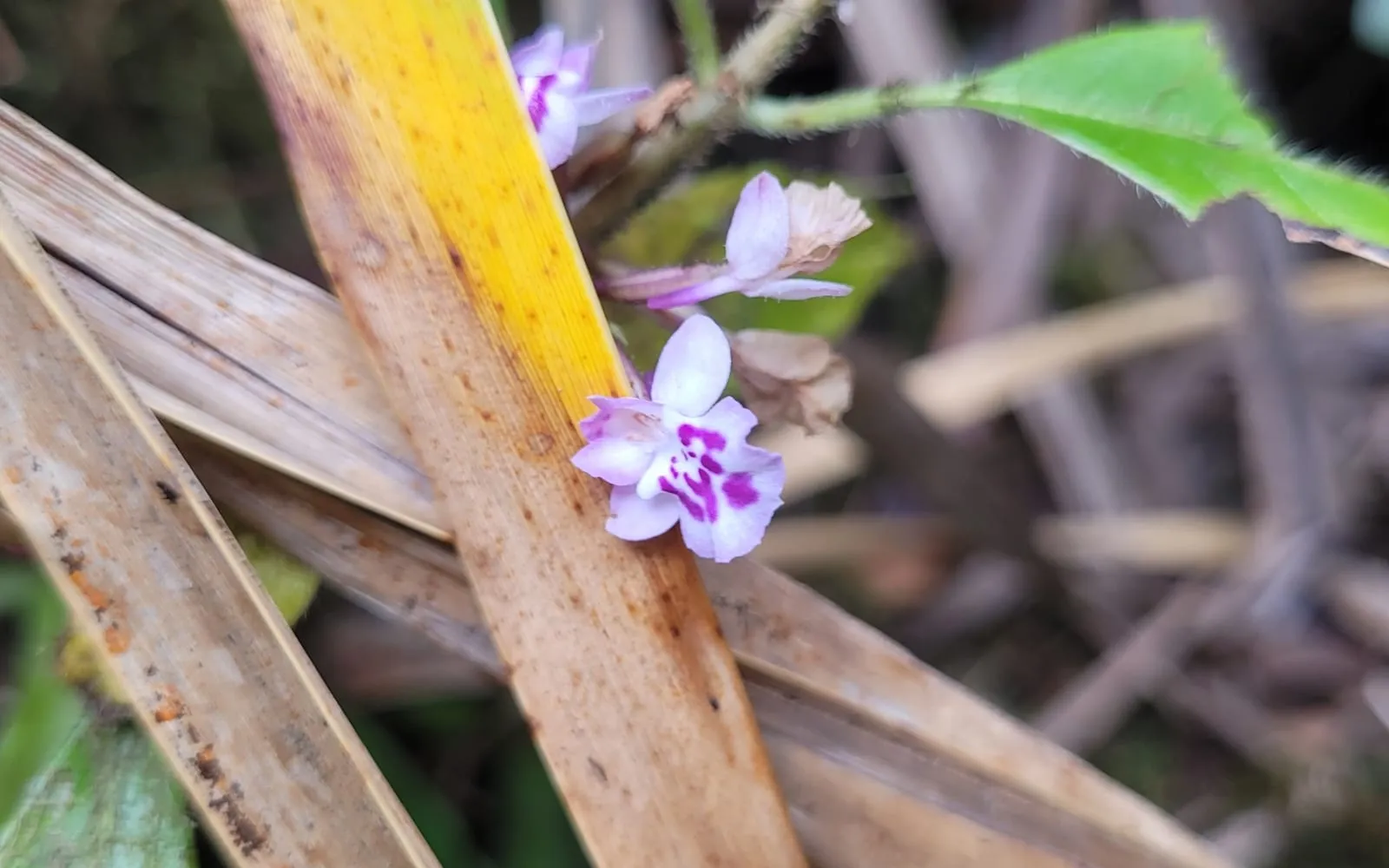
The distinguishing feature is the scaly stem: the flowering axis has small scale-like bracts that give the species both its name and its field identity. Above them sit a few small flowers in pink to mauve or purple, each with the spur typical of the genus. The leaves are modest, one or a few near the base, and a small tuber underground stores the plant between seasons. It is an inconspicuous orchid overall, and the scaly bracts along the stem are the detail to check when telling it from its many Madagascan relatives.
Where it is from
The species is native to Madagascar, growing among rocks, on mossy banks and in grassy places where seasonal moisture collects. Its climate is warm with a pronounced wet season and a dry one, and the orchid grows during the rains and rests in the dry period. Its association with rocky and mossy sites suggests roots that need both moisture and good aeration during growth, plus a substrate that drains sharply instead of holding stagnant water. That is a useful pointer for anyone attempting to reproduce its conditions.
How it grows
The plant renews itself yearly from a small tuber, sending up its scaly-stemmed spike and foliage with the warm rains, flowering, setting seed, forming a new tuber, and dying back as the dry season arrives. Its fine seed germinates in nature where suitable soil fungi occur, and it otherwise increases slowly by tuber. With little cultivation history, a grower would take direction from its rocky, mossy, seasonally wet habitat, aiming for a moist, well-aerated growing season and a drier warm rest.
Through the seasons
Onset of the warm rains wakes the tuber, and the scaly flower stem and leaves develop as warmth and moisture return.
Peak of the wet season is the main growth and flowering time, warm and humid.
Close of the rains turns the leaves yellow and the plant slows towards rest.
Dry season is dormancy, the tuber kept warm and mostly dry until the rains return.
Care difficulty
This is a difficult, rarely grown orchid, so the guidance has to be cautious. It would need warmth and humidity in growth, sharp aeration at the roots, a warm dry rest and soft water, and it would not tolerate cold wet dormancy or a heavy stagnant medium. The practical difficulty is that little horticultural knowledge exists for the species, so any attempt is experimental, and wild collection is unreliable and harmful. The advice here describes its probable needs from its rocky, mossy habitat rather than a tested routine.
Watering
Watering would follow the wet season, with aeration kept central. During warm active growth the open medium is kept moist with low-mineral water while draining very freely, reflecting the mossy rock crevices it grows in, and watering eases as the leaves age. Through the dry dormancy the tuber is kept warm and barely moist, since cold saturated conditions rot it. The plant’s own growth is a better guide to starting and stopping than any set date.
Warning signs, diseases and pests
A soft tuber or blackened roots usually mean stagnant wet during growth, watering through the rest, or a dormancy kept too cold and damp, all corrected by better drainage and a warmer, drier rest. An over-dry rest can leave the small tuber failing to reappear. Under glass, aphids attack the soft spike, mealybugs and scale hide at the leaf bases, and fungus gnats breed in wet compost. Treat these gently and keep the growing area warm, humid, airy and sharply drained.
Growing environment
The plant would want warm, humid, bright conditions during growth, in the manner of an intermediate to warm greenhouse, with a very free-draining medium of fine bark, grit and moss that imitates the rocky, mossy sites it favours. Its dormancy should be warm and dry. Good light suits it, though the harshest direct sun through glass is best filtered, and the medium must stay open and aerated instead of dense and water-holding.
Feeding
Feed sparingly during growth with a very dilute balanced orchid feed applied now and again while the leaves are active. Its rocky mossy substrate is nutrient-poor, and heavy feeding leaves harmful salts, so a light touch suits it. Feeding stops as the plant enters dormancy and is withheld while the tuber rests.
Troubleshooting
What does squamosa mean? It means scaly, referring to the small scale-like bracts along the flowering stem, which are the easiest way to identify the species.
Does it want a stagnant wet medium? No. Coming from rocky, mossy sites, it needs moisture with sharp aeration during growth, then a warm dry rest.
Why is it seldom grown? Little cultivation experience exists, and it needs a warm humid, well-aerated growing season with a warm dry rest and specific soil fungi for seed.
How does it multiply? By slow tuber increase; seed depends on particular fungi and rarely germinates in ordinary pots.
Is it toxic to pets? No serious toxicity is recorded for the genus, but discourage pets from chewing it.
Where does it sit among the Madagascan orchids? It is one of a large group of small tuberous ground orchids on the island, distinguished from its relatives chiefly by the scaly bracts that clothe its flowering stem and by its preference for rocky, mossy sites where moisture and sharp drainage go together.
Scaly Cynorkis Orchid problem guides
Not sure what is wrong? See the common houseplant pests guide.