
Houseplant
Grass-Leaved Cynorkis
Cynorkis graminea
Also known as Cynorkis graminea
How to grow Cynorkis graminea, the grass-leaved cynorkis, a small Madagascan tuberous orchid with narrow grass-like leaves and pink to mauve flowers.
At a glance
- Difficulty
- Difficult
- Water
- Evenly moist in growth; ease off for any rest
- Light
- Bright indirect light
- Temperature
- Warm; keep above about 10 deg C
- Humidity
- High
- Hardiness
- USDA 10-12, RHS H1c, hardy to 10 C
- Type
- Perennial
- Height
- 15-30 cm
- Native to
- Madagascar
An orchid from Madagascar, grown in an open, bark-based or free-draining medium. It needs bright filtered light, an open root run, even moisture in growth and the seasonal rest of its origin. It is kept in the temperatures its origin suggests and frost-free unless known to be hardy.
Hardiness zones describe winter cold alone. Summer heat, humidity, rainfall and the length of the growing season decide as much, so treat the range as the outer limit rather than as a recommendation.
Not known to be toxic
Cynorkis graminea, the grass-leaved cynorkis, is not recorded among the seriously toxic plants, and related plants in its group are not listed as toxic by the ASPCA or the RHS. A pet or child that chewed a leaf would be unlikely to have more than a possible mild stomach upset.
Sources: ASPCA toxic and non-toxic plants, RHS potentially harmful garden plants
About
Cynorkis graminea is a small Madagascan orchid whose name means grassy, a reference to the narrow, grass-like leaves that distinguish it from relatives with broader foliage. It is a tuberous terrestrial that grows during the island’s warm wet season and rests underground when the weather turns dry, with a short spike of small pink to mauve flowers above its slender leaves. Madagascar is the centre of diversity for the genus, and this species is one of many delicate ground orchids that grow among grasses and low herbs there. It is rarely cultivated, so this guide focuses on recognition and the tropical seasonal cycle that any attempt to grow it would have to follow.
Appearance and character
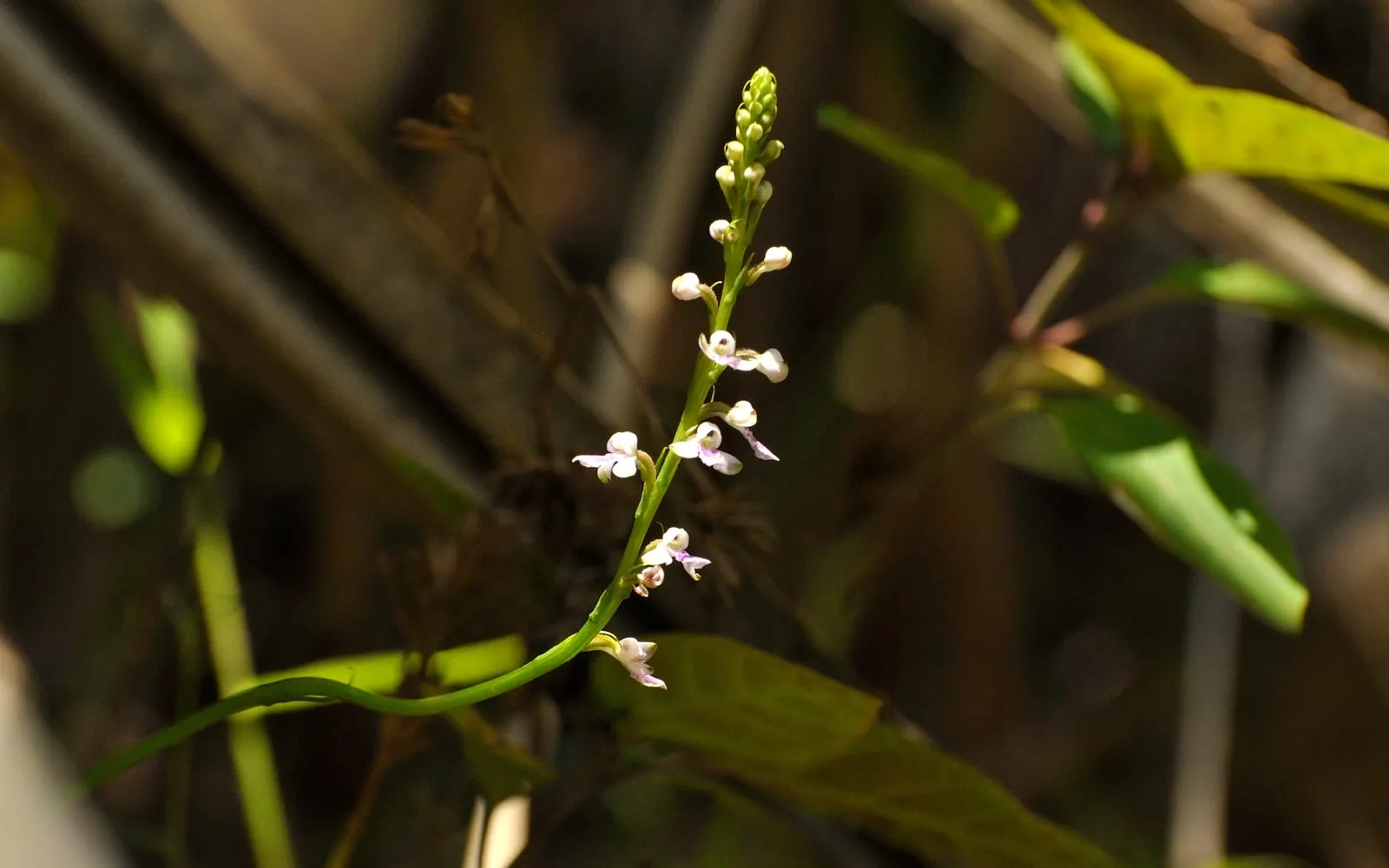
The most obvious feature is the foliage: narrow, elongated, grass-like leaves that blend into the surrounding grassland and make the plant hard to spot out of flower. From among them rises a thin stem bearing a few small flowers, usually pink or mauve with a spur, sometimes with fine hairs on the flower stem as in others of the genus. A small tuber underground stores the plant’s reserves through its dormant months. The grassy leaf shape and small spurred blooms identify the species in the field.
Where it is from
The species is native to Madagascar, growing in grassland and open grassy places, often on slopes or among rocks where its narrow leaves are hidden by taller vegetation. The prevailing climate is warm with a distinct wet season and a dry one, and the orchid grows through the rains and rests during the dry period. A grower has to follow that warm wet-and-dry rhythm, since the plant behaves nothing like a cool temperate terrestrial and needs heat and humidity during active growth.
How it grows
Each year the plant regrows from a small underground tuber, producing its grassy leaves and flower spike with the warm rains, setting seed, forming a fresh tuber, and dying back as the dry season arrives. Its fine seed germinates in nature where the appropriate soil fungi are present, and vegetative increase is by the gradual production of tubers. Because so few plants reach cultivation, most understanding of its growth comes from field observation, and a grower would be working largely from its natural rhythm instead of from an established horticultural routine.
Through the seasons
Return of the warm rains starts growth, and the grassy leaves and flower stem push up as warmth and moisture arrive.
Middle of the wet season is the main growth and flowering time, warm and humid.
End of the rains turns the leaves yellow and the plant begins to die back.
Dry season is the resting phase, with the tuber kept warm and mostly dry until the rains return.
Care difficulty
This is a difficult and seldom-grown orchid, so the guidance has to be cautious. It would need warmth and humidity in growth, a warm dry rest, very sharp drainage and soft water, and it cannot survive a cold wet dormancy. The practical difficulty is the scarcity of both plants and cultivation experience, which leaves success uncertain even for an experienced grower, while collecting from the wild is unreliable and harmful. What follows outlines the plant’s probable needs drawn from its grassland habitat instead of a tested method.
Watering
Watering would track the wet season. During warm active growth the open medium is kept evenly moist with low-mineral water, always draining freely so the tuber is never left in stagnant wet, and watering eases as the grassy leaves age. Through the dry dormancy the tuber is held warm and only just moist, because cold saturated conditions rot it. Following the plant’s own leaf growth to decide when to water and when to stop is more dependable than any fixed schedule.
Warning signs, diseases and pests
A soft tuber or blackened roots point to wetness during rest or a dormancy kept too cold and damp. Move the tuber to warmer, drier storage. An over-severe rest that dries the small tuber out can also leave it failing to reappear. Under glass, aphids attack the soft spike, mealybugs and scale hide among the leaf bases, and fungus gnats breed in wet compost. Deal with them gently by hand or with a mild control, and keep the growing environment warm, humid and airy to discourage them.
Growing environment
The plant would need warm, humid and bright conditions during growth, along the lines of an intermediate to warm greenhouse, with a free-draining medium of fine bark, grit and a little leaf mould like the loose grassland soil it grows in. Its dormancy should be warm and dry instead of cold. Good light suits it, since it grows among open grassland, though the harshest direct sun through glass should be filtered to avoid scorching the fine leaves.
Feeding
Feed sparingly through the growing season, offering a very dilute balanced orchid feed now and then while the leaves are active. Grassland soils are lean, and strong feeding leaves salt residues that harm the roots, so a light hand is best. Feeding stops as the plant enters dormancy and is withheld entirely while the tuber rests, since it is not making active growth then.
Troubleshooting
Why is it called grass-leaved? Its narrow, elongated, grass-like leaves are its defining feature and give the species its name, blending it into grassland when not in flower.
Should the rest be cold? No. As a tropical Madagascan plant it needs a warm dry dormancy, not the cold rest a temperate orchid would take.
Why is it rarely grown? Few plants reach cultivation and little horticultural experience exists, so a grower must work from its natural warm wet-and-dry cycle.
How does it multiply? By slow tuber increase; seed needs specific soil fungi and rarely germinates in ordinary pots.
Is it toxic to pets? No serious toxicity is recorded for the genus, but keep pets from chewing the foliage as a precaution.
Grass-Leaved Cynorkis problem guides
Not sure what is wrong? See the common houseplant pests guide.