
Houseplant
Anacamptis-Like Orchid
Cynorkis anacamptoides
Also known as Cynorkis anacamptoides
How to grow Cynorkis anacamptoides, the anacamptis-like orchid, a Madagascan highland orchid with a conical spike of pink flowers.
At a glance
- Difficulty
- Difficult
- Water
- Evenly moist in growth; ease off for any rest
- Light
- Bright indirect light
- Temperature
- Warm; keep above about 10 deg C
- Humidity
- High
- Hardiness
- USDA 10-12, RHS H1c, hardy to 10 C
- Type
- Perennial
- Height
- 15-30 cm
- Native to
- Madagascar
An orchid from Madagascar, grown in an open, bark-based or free-draining medium. It needs bright filtered light, an open root run, even moisture in growth and the seasonal rest of its origin. It is kept in the temperatures its origin suggests and frost-free unless known to be hardy.
Hardiness zones describe winter cold alone. Summer heat, humidity, rainfall and the length of the growing season decide as much, so treat the range as the outer limit rather than as a recommendation.
Not known to be toxic
Cynorkis anacamptoides, the anacamptis-like orchid, is not recorded among the seriously toxic plants, and related plants in its group are not listed as toxic by the ASPCA or the RHS. A pet or child that chewed a leaf would be unlikely to come to serious harm beyond a possible mild stomach upset.
Sources: ASPCA toxic and non-toxic plants, RHS potentially harmful garden plants
A Madagascan orchid that mimics a European one
Cynorkis anacamptoides belongs to a large group of small terrestrial orchids centred on Madagascar and tropical Africa. Its name comes from its resemblance to the European pyramidal orchid, Anacamptis: both have dense, conical spikes of pink flowers, even though they are only distantly related and grow in very different habitats. It is a tuberous plant of the Madagascan highlands, one of well over a hundred species in the genus Cynorkis, most of them known only to specialists and to the botanists who study the island’s orchid flora.
What it looks like
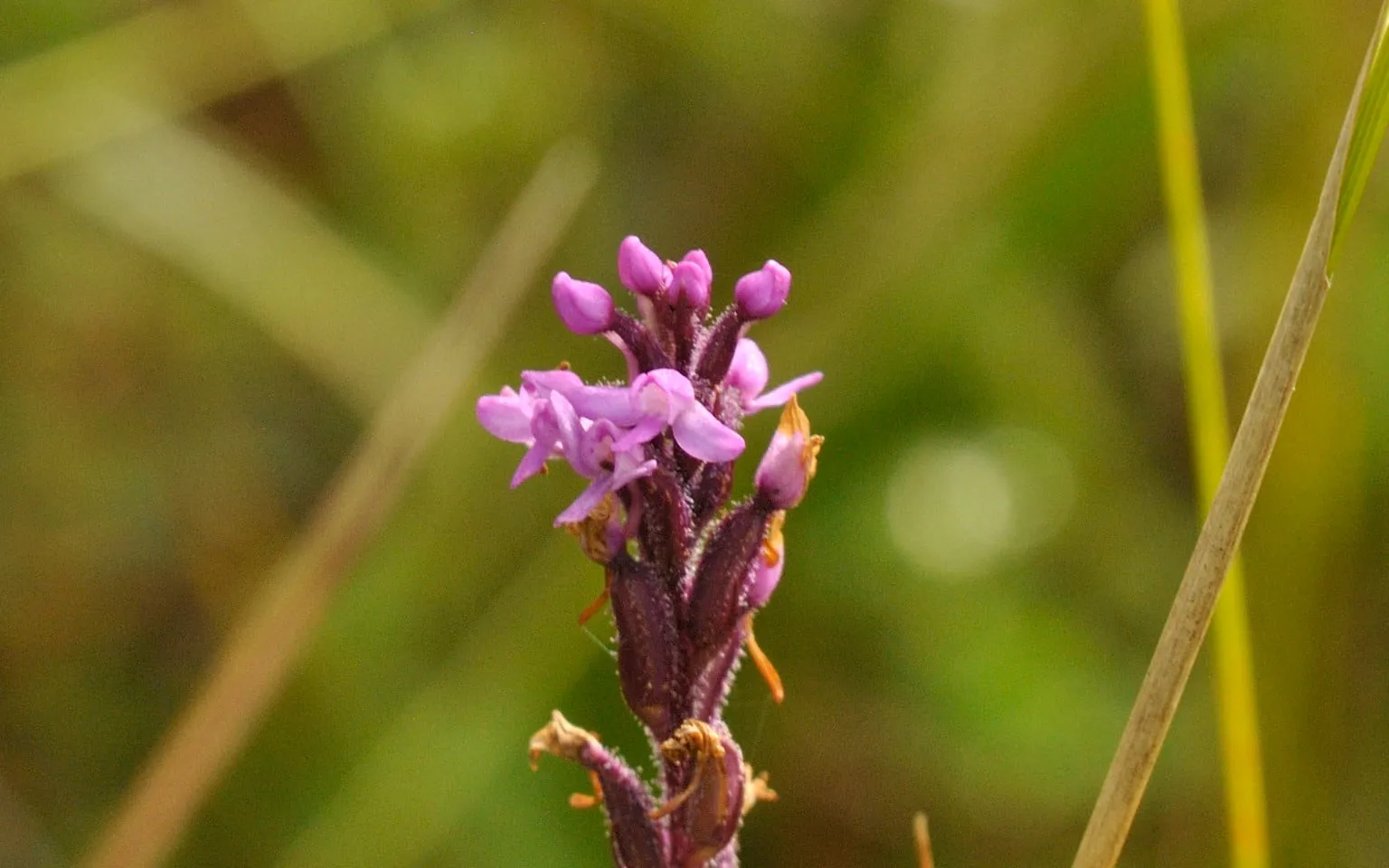
The plant grows from an underground tuberoid, sending up a slender stem with one or a few soft green leaves near the base. The flowers gather into a compact, tapering head, each small bloom pink to rosy-purple with a lobed lip and a short to slender spur behind. Like its relatives, it has fine hairs, sometimes gland-tipped, on the flowering parts, which is a common trait in Cynorkis. The neat, cone-shaped spike raised on a wiry stem, together with its Madagascan origin, distinguishes it from the hooded and marsh orchids of the northern temperate zone.
Its highland home
Cynorkis anacamptoides grows in the humid uplands of Madagascar, on damp, mossy banks, in seasonally moist grassland, among rocks and on the humus-rich margins of highland vegetation. It grows in a climate with a warm, wet season followed by a cooler, drier rest, during which the plant dies back to its tuberoid and stays underground. Madagascar’s central highlands, cooler and wetter than the coastal lowlands, provide the mild, moist conditions it favours.
Growth, dormancy and pollination
The plant follows the wet-and-dry rhythm of its habitat: it grows and flowers through the rainy months and then retreats to its dormant tuberoid as the ground dries. Insects visit the pink flower spikes for nectar in the spur and carry pollen between the flowers. Fertilised blooms ripen the dust-fine seed typical of orchids. Each tiny seed depends, in the wild, on a soil fungus to trigger germination and feed the seedling through its earliest underground growth.
Growing it
Unlike the hardy European and North American terrestrials, several Madagascan Cynorkis are grown by dedicated orchid specialists, since their tuberous, seasonally dormant habit can be matched in cultivation. A grower who understands the wet-and-dry cycle can keep such a plant in an open, free-draining terrestrial mix, watering freely through the warm growing season, feeding weakly, then keeping the dormant tuberoid barely moist and frost-free through the rest. Even so, the species is demanding and uncommon in collections, and any plant should come from responsibly propagated, nursery-raised stock instead of from wild-collected tubers.
The dormant tuberoid is the storage organ, so it should not be treated like an ordinary leafy houseplant rootball. Once the leaves have died back, keep the medium only just moist enough to stop shrivelling. Too much water at that stage rots the tuberoid before the next growth cycle can begin.
Conservation
Madagascar’s endemic orchids face pressure from the clearance and burning of highland vegetation, and wild collecting for trade adds pressure on scarce species. Like all orchids, Cynorkis anacamptoides is covered by the CITES convention, which regulates international trade, so plants and tubers may not be moved across borders without the proper permits. Buying only artificially propagated stock, and never wild-dug material, keeps demand from harming wild populations. The genus also depends on protecting the island’s highland habitats.
An island of orchids
Madagascar is one of the major centres of orchid diversity, home to many hundreds of species found nowhere else, and Cynorkis is among the genera that have diversified there, with scores of forms across the island’s varied uplands and forests. Cynorkis anacamptoides is a terrestrial species of damp highland grasslands and mossy banks, rather than the tree canopy where many tropical orchids grow. Its resemblance to a distant European orchid is a coincidence of shape. Unrelated plants can develop similar flower spikes when they attract insects in similar ways.
The rhythm of wet and dry
Cynorkis anacamptoides follows Madagascar’s seasons of rain and drought. Through the warm, wet months it grows fast, sending up leaves and its cone of pink flowers, and it stores food in an underground tuberoid. When the dry season sets in, the plant dies back to that tuberoid and stays dormant below the surface until the next wet season starts growth again. This cycle is the key to understanding the species, and it is what a grower must copy: water well in growth and keep the resting tuberoid barely damp.
Growing a highland Cynorkis
Because their tuberous, seasonally dormant habit can be matched under glass, several Madagascan Cynorkis are grown in specialist collections, and Cynorkis anacamptoides can be grown by an experienced grower who can meet its needs. It needs a cool but frost-free, humid, airy spot, an open, gritty, free-draining terrestrial compost, generous water and weak feeding through the growing season, and a distinctly drier, cooler rest for the dormant tuberoid. Even then it is demanding and short-lived if mistreated, so it is a plant for the dedicated grower using nursery-raised stock, not a beginner’s windowsill orchid.
Questions readers ask
Why is it called anacamptis-like? Its dense, conical pink flower spike resembles that of the distantly related European pyramidal orchid, Anacamptis.
Where does it come from? The humid highlands of Madagascar, where it grows on mossy banks and in seasonally moist grassland.
Can it be grown in a pot? More readily than the hardy temperate orchids, if a grower matches its warm wet growing season and cool drier dormancy, but it remains a specialist’s plant.
Does it die back each year? Yes; it dies back to an underground tuberoid through the dry season and regrows when the rains return.
When does it flower? During the warm, wet growing season of its highland home.
Anacamptis-Like Orchid problem guides
Not sure what is wrong? See the common houseplant pests guide.