
Houseplant
Fastigiate Cynorkis
Cynorkis fastigiata
Also known as Cynorkis fastigiata
How to grow Cynorkis fastigiata, the fastigiate cynorkis, a small Madagascan tuberous orchid that seeds itself into the pots of other orchids.
At a glance
- Difficulty
- Difficult
- Water
- Evenly moist in growth; ease off for any rest
- Light
- Bright indirect light
- Temperature
- Warm; keep above about 10 deg C
- Humidity
- High
- Hardiness
- USDA 10-12, RHS H1c, hardy to 10 C
- Type
- Perennial
- Height
- 15-35 cm
- Native to
- Madagascar
An orchid from Madagascar, grown in an open, bark-based or free-draining medium. It needs bright filtered light, an open root run, even moisture in growth and the seasonal rest of its origin. It is kept in the temperatures its origin suggests and frost-free unless known to be hardy.
Hardiness zones describe winter cold alone. Summer heat, humidity, rainfall and the length of the growing season decide as much, so treat the range as the outer limit rather than as a recommendation.
Not known to be toxic
Cynorkis fastigiata, the fastigiate cynorkis, is not recorded among seriously toxic plants, and related plants in its group are not listed as toxic by the ASPCA or the RHS. A pet or child that chewed a leaf would be unlikely to have more than a mild stomach upset.
Sources: ASPCA toxic and non-toxic plants, RHS potentially harmful garden plants
About
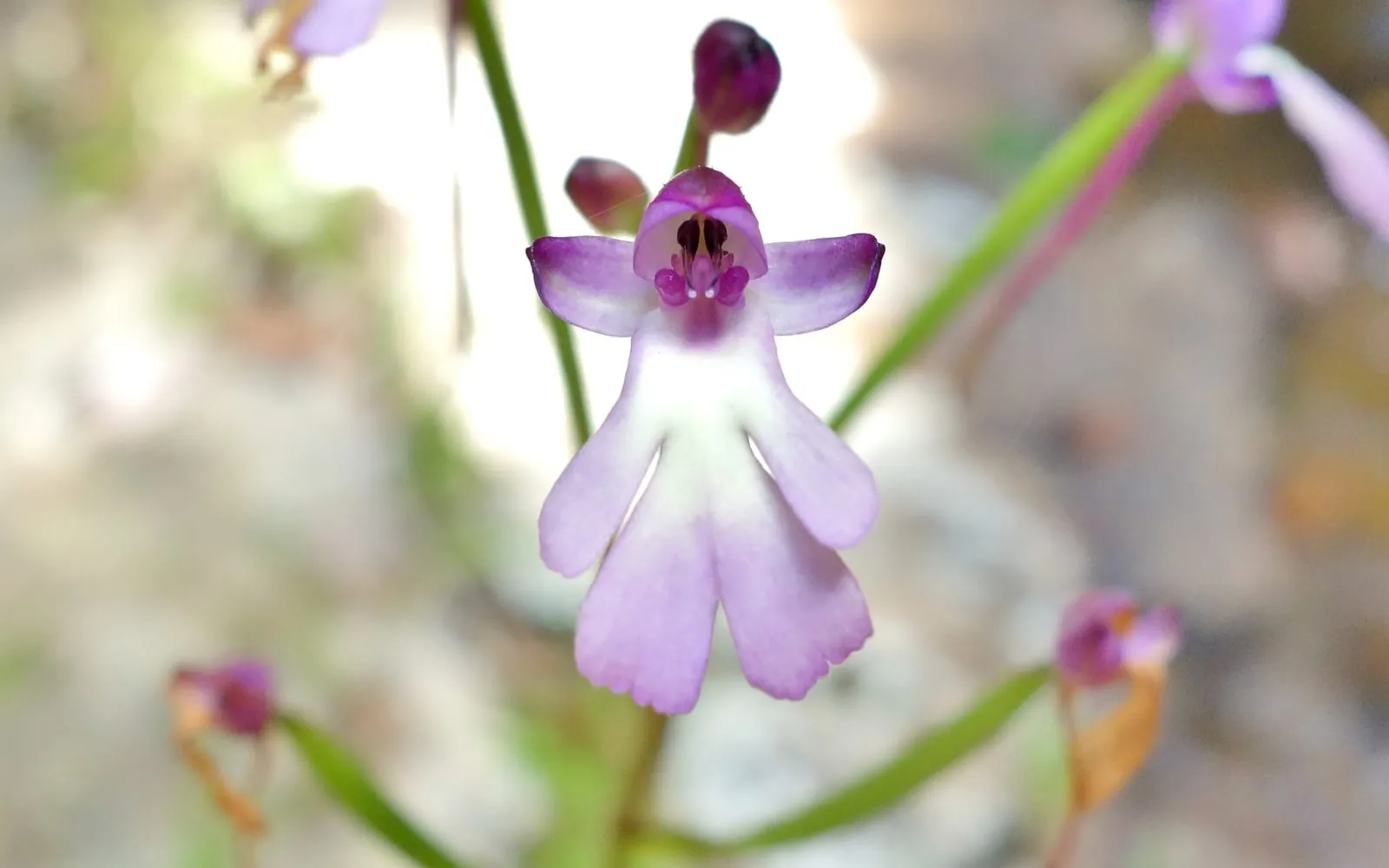
Cynorkis fastigiata is a small tuberous orchid from Madagascar, and it is the member of its genus most likely to turn up unexpectedly in a grower’s collection. Widespread and adaptable in the wild, it often appears in the pots of other cultivated orchids, sprouting from wind-blown seed and behaving almost like a weed. That makes it one of the easier Cynorkis to keep, though it is still a seasonal plant that grows in the warm wet months and rests as a tuber through the drier cool ones. Its flowers are small, white to pale pink and spurred, carried on a short spike above a single leaf. This guide covers how to recognise it and how its tropical seasonal rhythm differs from the cool-growing terrestrial orchids it is often grown alongside.
Appearance and character
The plant is modest in size, producing a single soft green leaf and a slender stem topped with a few small flowers. Each bloom is white to blush pink, sometimes with a touch of darker colour on the lip, and carries the slender backward spur typical of the genus. The inflorescence is often finely glandular-hairy, a feature worth checking with a hand lens when identifying it. Below ground is a small rounded tuber that stores the plant through its rest. It is a small plant, and its habit of self-sowing is as important in cultivation as its flowers.
Where it is from
The species is native to Madagascar, where it grows in a range of habitats from rocky and mossy ground to banks and disturbed places. Madagascar’s climate over much of the island brings a warm wet season and a cooler drier one, and this orchid grows during the rains and rests through the dry months. Because it comes from the tropics instead of a temperate mountain, it needs warmth and humidity while in growth. That separates it from the cool-loving Cape terrestrials and changes how it should be grown.
How it grows
The plant grows again each year from a small tuber, sending up its leaf and flower spike with the onset of the warm rains, then dying back to the tuber as the dry season arrives. It sets and scatters fine seed, which germinates readily where suitable fungi are present. That lets it colonise neighbouring pots and makes it comparatively easy to keep going. New tubers form during the growing season, so a healthy plant can slowly increase, and seedlings may appear around it without help.
Through the seasons
Onset of the warm wet season starts growth from the tuber, and the leaf and flower spike develop; increase watering and warmth at this point.
Peak growing season is warm and humid, when the plant flowers and builds its new tuber.
End of the rains is when the plant dies back. The leaf yellows and watering is reduced.
Cool dry season is dormancy; the tuber is kept largely dry and warm-ish until the rains return.
Care difficulty
For a Cynorkis this is one of the more forgiving species, though it still needs its seasonal cycle. It needs warm humid conditions and moisture during growth, then a drier rest, and it rots if kept wet and cold or if never allowed to die back. Its weedy vigour makes it achievable where many of its relatives are not, though a grower who waters it year round or exposes the resting tuber to cold damp will still lose it. It is easier than many Cynorkis only if you follow that wet-and-dry cycle.
Watering
Water generously during the warm growing season, keeping an open medium moist while the leaf and spike are active, then taper off as the leaf ages and withhold most water through the dry rest. Warm rainwater or another low-mineral source suits it, and good drainage prevents the tuber sitting in stagnant wet. During dormancy the tuber should be kept barely damp. Use the growth stage to decide when to start and stop, rather than a fixed date.
Warning signs, diseases and pests
A tuber gone soft or roots turning dark usually mean the plant was kept too wet during rest or grown too cold and damp, and warmer, drier dormancy corrects it. Failure to reappear can also follow a rest that was too harsh and dried the small tuber to nothing. Under glass, aphids gather on the soft spike, mealybugs and scale shelter at the leaf base, and fungus gnats breed in constantly wet compost. Manage these by hand or with a gentle treatment, and keep the growing area warm, humid and airy.
Growing environment
Provide warm, humid, brightly lit but not scorching conditions during growth, closer to a tropical intermediate greenhouse or a warm bright windowsill than to a cold frame. The medium should be open and free-draining, based on fine bark, perlite and a little moss or leaf mould, so it holds moisture while still draining well. Because it comes from the tropics, keep it warmer through dormancy than a Cape terrestrial. Avoid cold wet conditions, which can rot the small tuber.
Feeding
Feed lightly during the growing season. A very dilute balanced orchid feed given every few waterings while the plant is in active growth is sufficient, and overfeeding leaves salts that damage the fine roots. As the leaf ages and the plant goes into dormancy, stop feeding. Give none while the tuber is resting, since it is not making active growth then.
Troubleshooting
Why did an orchid appear in another pot? This species self-sows freely, so seedlings often spring up in the pots of neighbouring plants where the seed has drifted and found suitable conditions.
Is a bare pot in the dry season a problem? No, that is its natural dormancy; keep the tuber warm and barely moist and it will regrow when the warm wet season returns.
What water should I use? Low-mineral water such as rain or reverse osmosis, ideally warm, to spare the roots dissolved salts.
How does it multiply? By new tubers each season and by self-sown seed, which makes it one of the easier Cynorkis to keep going.
Is it toxic to pets? No serious toxicity is recorded for the genus, but discourage pets from chewing the leaf.
Fastigiate Cynorkis problem guides
Not sure what is wrong? See the common houseplant pests guide.